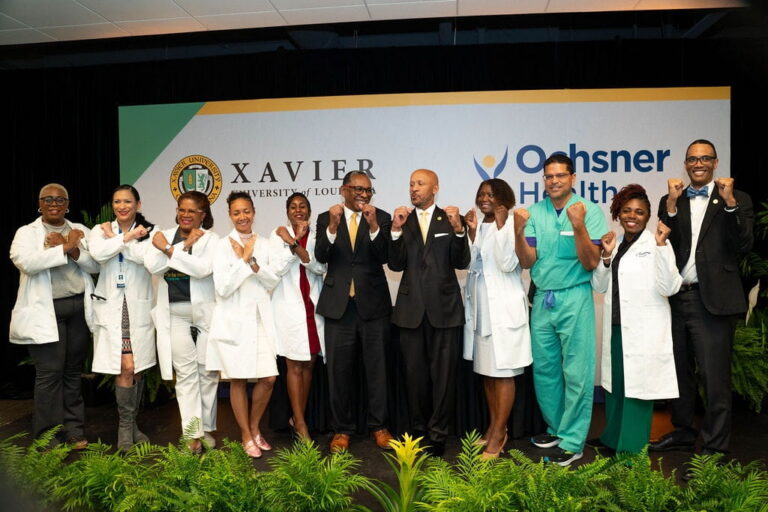
Cedars-Sinai hosted a Henrietta Lacks Symposium on Friday, March 28, to honor Henrietta Lacks’ legacy and advance equity in healthcare. The symposium featured panels, and a Q&A session with Rebecca Skloot, author of “The Immortal Life of Henrietta Lacks,” and members of the Lacks family.
Henrietta Lacks, a Black tobacco farmer, unknowingly made an immeasurable contribution to modern medicine when her cells were taken without her consent in 1951. Her cells, known as HeLa cells, became the first immortal human cells grown in a laboratory and have been vital for developing the polio vaccine, cloning, gene mapping, in vitro fertilization, and other scientific advancements.
The symposium emphasized the importance of sharing Henrietta Lacks’ story. As Mischa Harris, MPH, BSHA, Associate Director at Cedars-Sinai, stated, “If you or a loved one has had a polio vaccine, if you’ve had the COVID-19 vaccine, you carry a part of Henrietta Lacks with you” Nicole Anderson, JD, MBA, Vice President Academic Affairs & Executive Vice Dean Academic Administration at Cedars-Sinai, highlighted the necessity of learning about Henrietta’s story, “her personhood, the mistreatment of her family in the years after her passing, and to really confront ethical legacies head on”.
https://www.instagram.com/cedarssinaihsu/p/DHY3dS3Oj6P/?img_index=6
Henrietta Lacks’ story is especially important for modern-day clinical trials and Black Americans. The history of unethical medical practices in the United States, such as the Tuskegee Syphilis Study, has created a deep-seated mistrust of the medical establishment within the Black community. This mistrust often leads to underrepresentation in clinical trials, which can have dire consequences.
“The reason it’s important to have diverse voices at the table is we’re moving medical care forward,” added Harris. “They need to be able to participate in that progress and receive benefits of it as well”.
Henrietta Lacks’ experience is a stark reminder of the need for transparency, consent, and ethical conduct in medical research. Her legacy has spurred conversations about patient rights, informed consent, and the equitable distribution of benefits from scientific advancements.
The publication of Rebecca Skloot’s book in 2010 brought increased attention to the Lacks family and Henrietta’s legacy. Skloot shared her motivation for writing the book, saying, “I learned about it in a basic biology class when I was 16 years old. I learned about HeLa cells, which is like when a lot of people learn about the cells, but I just had a teacher, who knew her name, wrote it on the board and it was like, she was a Black woman and that was it and then, erased the board and I just became obsessed, but nobody knew anything else about her”.
In 2013, the Lacks family and the National Institutes of Health (NIH) reached a historic agreement establishing the HeLa Genome Data Use Agreement, allowing the family to join a panel that reviews research proposals using the full HeLa genome sequence data.
The symposium also addressed issues of health equity and ethical practices in research. Anderson noted the importance of having the symposium to “open the dialogue around trust and also to ensure that we are having a dialogue about equitable access to care, equitable access to clinical trials”.
The event underscored Henrietta Lacks’ significant impact on medicine and the ongoing need to address the ethical considerations surrounding her story. As Anderson stated, “Our ultimate goal is for everyone to learn about Henrietta Lacks’ story, the mistreatment of her family, to carry her story in the unique and essential roles that we perform, and to uphold the values that are imbued within Cedars Sinai”.


By subscribing, you consent to receive emails from BlackDoctor.com. You may unsubscribe at any time. Privacy Policy & Terms of Service.