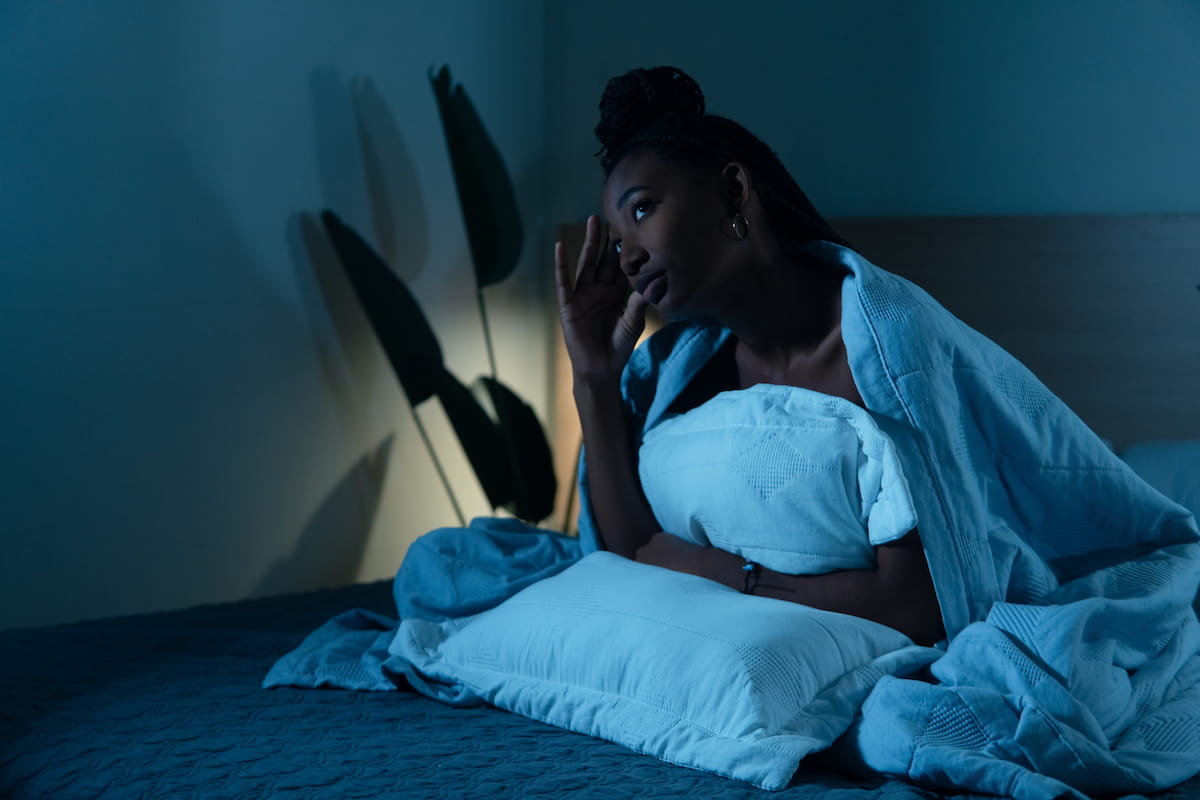
After a long day of work, school, caring for children, and other daily tasks, the last thing you want to worry about is whether you can fall asleep.
Unfortunately, many people in the United States struggle with sleep issues that prevent them from getting a good night’s rest — an essential component of overall health.
For Black Americans, studies show that sleep disparities persist, raising concerns that poor sleep patterns are a public health issue for this community.
A recent report from the Centers for Disease Control and Prevention (CDC) finds that about 30 percent of U.S. adults aren’t getting the recommended seven hours of sleep. Adults ages 50 to 64 are the most affected, though insufficient sleep spans all age groups.
The data show adults ages 50 to 64 are the most affected, though poor sleep habits cut across all age groups.
Good sleep promotes good health, according to the American Sleep Apnea Association and other sleep experts, who note that sleep makes up one‑third of a person’s life and influences nearly every aspect of physical and mental well‑being.
The association said, “It is a fundamental part of our overall health and wellbeing.”
RELATED: 10 Tips for a Better Night’s Sleep
There are several ways to improve your nightly rest. Aim for at least seven hours of sleep, keep a consistent bedtime routine, limit screen time before bed, and talk to a doctor if you regularly struggle to fall or stay asleep.
Via Mayo Clinic, here are some simple steps that can help you build better sleep habits:

Avoid caffeine, nicotine, and alcohol close to bedtime. In addition to phones and electronic devices, stimulants can make it harder to fall and stay asleep.
Keep your bedroom cool, dark, and quiet. Use blackout curtains, a fan, or earplugs if needed. Try calming activities before bed, such as reading or deep breathing.
Regular physical activity can improve sleep quality. Just avoid vigorous exercise right before bedtime.
Write down worries, practice relaxation techniques, or set aside time earlier in the day to unwind.
If you regularly struggle to fall asleep, stay asleep, or feel rested, speak with a doctor. Persistent sleep problems can signal an underlying condition — and getting help is an important step toward protecting your long‑term health.
RELATED: 9 Steps to Fixing Your Sleep Schedule
A recent CDC report showed that 40.2 percent of non-Hispanic Black adults report getting less than seven hours of sleep (short sleep duration) on average, which is the highest rate among major racial/ethnic groups.
Extremes of sleep duration vary for racial and ethnic groups, according to a report from the National Institutes of Health (NIH), part of the U.S. Department of Health and Human Services.
Research from the National Institutes of Health and related studies also finds that Black Americans experience higher rates of short sleep duration, poorer sleep quality, and more sleep disorders compared with white Americans.
According to the NIH report, Black people sleep roughly 35-60 minutes less per night than do white people.
Another study, conducted by Yale University, adds to growing evidence that Black Americans face the most persistent sleep gaps in the country.
Published in JAMA Network Open, the analysis reviewed data from 2004 to 2018 and found that short sleep — fewer than seven hours per night — increased across all groups, but remained consistently highest among Black people.
Lead author Dr. César Caraballo‑Cordovez, a postdoctoral associate at Yale’s Center for Outcomes Research and Evaluation, said the findings show a long‑standing pattern. “We found that Black people, on average, were persistently less likely to report sleeping such recommended duration,” he said.
“Specifically, we found that over the 15 years we analyzed, Black people had the highest prevalence of both short sleep duration [fewer than 7 hours] and long sleep duration [more than 9 hours].”


By subscribing, you consent to receive emails from BlackDoctor.com. You may unsubscribe at any time. Privacy Policy & Terms of Service.