A smartphone app can help individuals with advanced cancer deal with symptoms and maintain their quality of life, according to new research.
The SUPPORT+ app asks them each week to complete a short questionnaire about their physical and emotional symptoms, researchers reported at a meeting of the American Society for Clinical Oncology (ASCO) in Chicago.
Patients using the app had a better quality of life than those receiving usual care, who had to take it upon themselves to proactively report any new or worsening symptoms, researchers said.
“This randomized clinical trial demonstrates that proactively monitoring symptoms using a digital platform, combined with timely nurse follow-up, can help maintain quality of life and reduce unplanned hospitalizations,” said lead researcher Dr. Wendy Wing-lok Chan, a clinical associate professor of oncology at the University of Hong Kong in China.
For the study, researchers recruited more than 1,200 people with advanced cancer who were not being actively treated for cancer. They came from six palliative care clinics in Hong Kong.
Roughly half were assigned to use the SUPPORT+ app, in which they provided a weekly self-assessment of their symptoms.
The app itself provided practical guidance on managing mild or moderate symptoms. More severe or worsening symptoms were referred to a team of palliative care nurses for review, with a nurse reaching out by phone to provide support.
After 18 weeks, about 12 percent of people in the app group experienced a decline in their level of functioning, compared with more than 17 percent in the usual care group, researchers found.
Overall quality-of-life scores increased among app users after 18 weeks but declined among those with usual care.
The number of ER visits was similar between the two groups, but app users had fewer hospital admissions and shorter hospital stays.
“People with cancer frequently suffer from symptoms such as pain, fatigue, or sleep disturbance, and often bear those symptoms silently. When patients are able to report symptoms and receive help, they feel better, and that can lead to better outcomes,” said Dr. Toby Christopher Campbell, who reviewed the findings. He’s a thoracic medical oncologist and health chief of palliative care at the University of Wisconsin in Madison.
“This trial adds to the evidence base that patients, with high-quality reporting and interventions, can improve their symptoms and their quality of life,” he added in a news release. “As the trial uses a mobile app for symptom monitoring, patients need to be savvy enough to interact with an app and implement the instructions given.”
RELATED: This Clinical Trial Boosted Patient Survival for Advanced Colon Cancer
Black people in the United States often face barriers to supportive cancer care, including delayed referrals to palliative care services. Research has found that Black patients are less likely to receive specialty palliative care despite experiencing significant symptom burdens.
Having tools that bring symptom monitoring into the home may help patients communicate concerns sooner and advocate for their needs. However, it’s important to note that technology should support — not replace — the relationship with the healthcare providers.
Palliative care is a specialized form of care for patients with chronic or serious illnesses, such as cancer, dementia, or chronic kidney disease. It focuses on symptom relief and quality-of-life improvement and can begin at any stage of illness. Palliative care can supplement chemotherapy, radiation, immunotherapy, and other cancer therapies. Services — including symptom management, mental health support, advance care planning, spiritual care, and care coordination — are typically offered in hospitals, specialized clinics, or at a patient’s home.
Here are some questions you can ask about palliative cancer care:

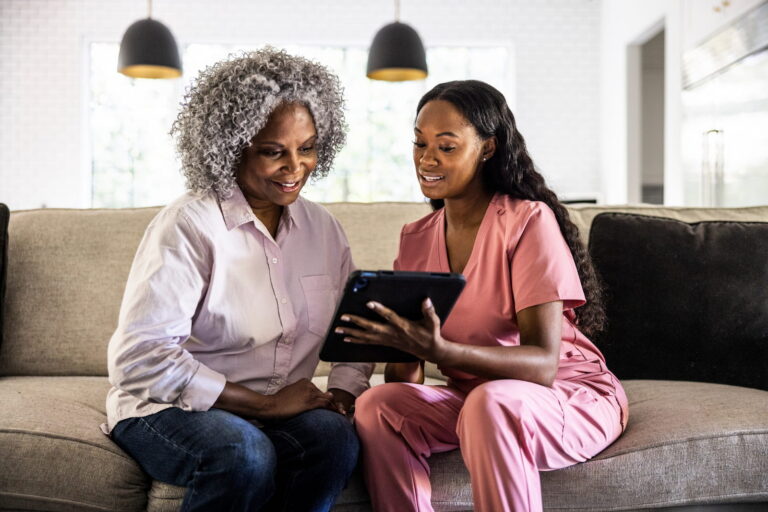
One of the SUPPORT+ trial’s key findings was that caregivers frequently helped patients use the app. In fact, researchers found that many users interacting with the app were caregivers rather than patients themselves.
Adult children, spouses, siblings, or friends can often help manage appointments and symptoms for patients with cancer. The Black community, in particular, often relies on strong informal caregiving networks to support loved ones in need. Digital tools may make coordinating care easier and help caregivers recognize when medical attention is needed.
RELATED: Invisible to Essential: Understanding Clinical Trials for Caregivers
A smartphone app won’t cure advanced cancer, but it may help people live more comfortably and confidently by catching problems before they escalate. For Black patients, who have historically faced barriers to supportive cancer services, tools that improve communication and symptom management could become another way to help ensure their voices are heard throughout the cancer journey.
More information
The American Cancer Society has more on living with advanced and metastatic cancer.
SOURCE: American Society for Clinical Oncology, news release, June 1, 2026


By subscribing, you consent to receive emails from BlackDoctor.com. You may unsubscribe at any time. Privacy Policy & Terms of Service.