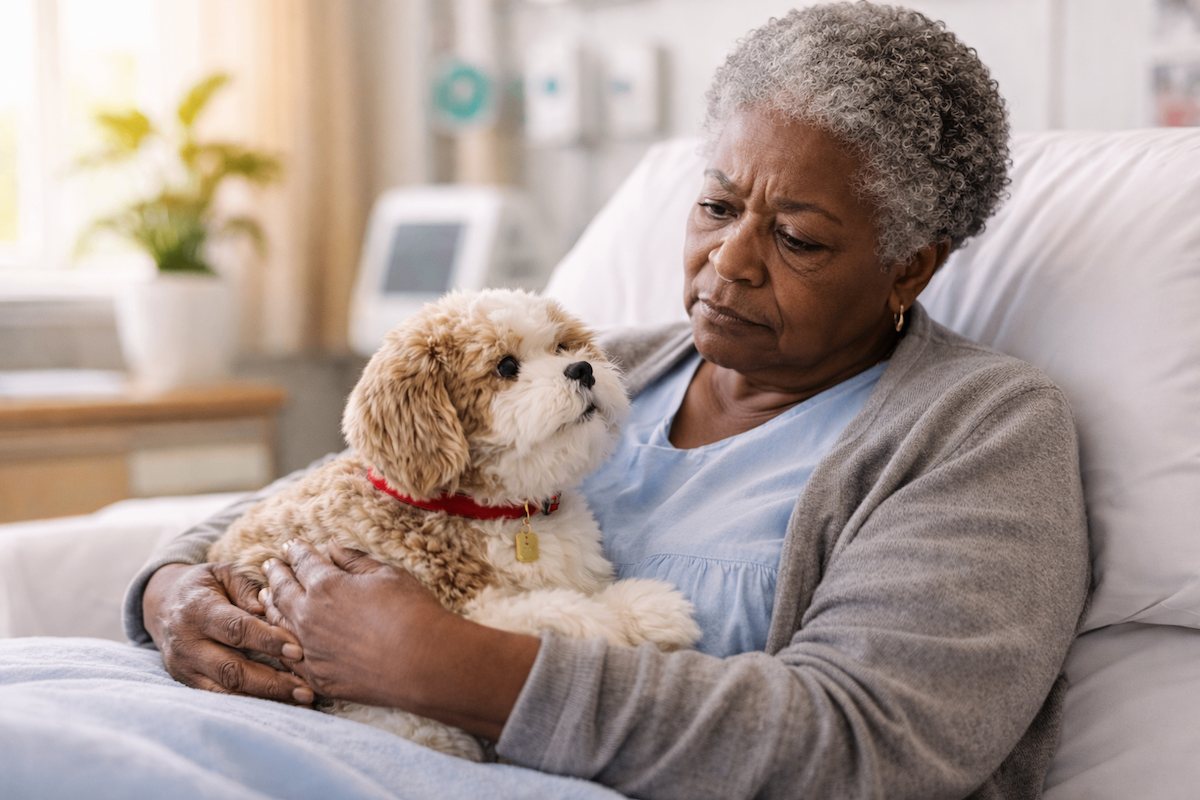
Dogs are often called man’s best friend, and for participants in a recent clinical trial, that special bond extends to robotic dogs. In a year-long, non-pharmacological study conducted by Florida-based Sarasota Memorial Health Care System (SMH), researchers explored how robotic pet therapy influenced emotional and behavioral outcomes among seniors with mild to moderate dementia.
Led by principal investigator Joanna D’Elia, MSN, RN, GERO-BC, CPHQ, the Robotic Pet Study was among the first to implement this non-drug therapy in a hospital setting. The robotic pets are designed to be lifelike; the cats purr and blink when touched, and the dogs bark and wag their tails in response to sound and movement.
Within the first 48 hours of hospital admission, patients chose either a dog or a cat and were allowed to take their companion home upon discharge. The purpose was to offer comfort and companionship to patients who may have had limited visits from friends or family during their hospital stay.
As a nurse who has spent years caring for older adults, D’Elia has seen how confusing and distressing hospital stays can be for people with dementia. It often triggers delirium and prolonged recovery times. “I wanted to find a way to engage patients with dementia and give them companionship in the hospital; something beyond sitting in a room focused solely on medical care,” D’Elia explained.
The study – funded by SMHF board member, Deb Kabinoff – included older adults living with mild to moderate dementia. In the randomized study, half of the patients had a robotic companion pet with them during their hospital stay, while the remainder received standard hospital care.
“My philanthropic focus has always been on supporting innovative ideas and technology,” Kabinoff explained. “What made this project so compelling was not just the technology, but my own knowledge of the comforting effects a pet can have, and their potential to soothe dementia patients when they’re in such an unfamiliar environment.”
Researchers found that patients who were offered companion pets showed more stable heart rate and blood pressure, a lower risk of falls, and shorter hospital stays overall. After discharge, these patients were more likely to return home than to be admitted to long-term care. Caregivers noted that the addition of companion pet therapy provided them with a welcome respite in caring for their loved ones.
SMH Chief Medical Officer James Fiorica stressed the lack of resources in community hospitals to conduct research trials typically conducted by academic institutions.
“We’re one of the few community health systems able to bring forward innovative ideas and turn them into reality,” Fiorica noted.
Hospital-based trials bring research directly to the community. This reduces travel burdens, fosters trust and familiarity in healthcare settings, and encourages participation. For populations historically underrepresented in clinical research, this approach ensures that findings are relevant and equitable.
Non-pharmacological treatments are vital for managing conditions like dementia, particularly in communities affected by health disparities. For example, a recent cardiovascular study examining the effects of fasting and sleep on heart health integrated the intervention into participants’ daily routines, eliminating the need for frequent trial visits. This approach makes participation more accessible and less burdensome, allowing patients to engage in treatments without disrupting their everyday lives.
Much like the cardiovascular study, the companion pet trial, and the potential development of others like it could increase accessibility for Black patients and others in underserved communities. These approaches can reduce symptoms, slow cognitive decline, and improve overall quality of life without the side effects associated with medications.
An estimated 5.8 million Americans live with Alzheimer’s disease or related dementias (ADRD), with African Americans disproportionately affected. Black patients are twice as likely as their white counterparts to develop ADRD and often face later diagnoses. Socioeconomic and lifestyle factors such as access to healthcare, environmental conditions, exercise, and nutrition play a role in these disparities.
Across the board, the Black community is significantly underrepresented in ADRD clinical trial research. This, of course, is consistent with other conditions such as heart disease and diabetes. Barriers to clinical trial participation are well-known, but initiatives like the SMH dementia trial could help to bridge that gap over time. This is especially significant since Black patients with dementia often have higher rates of hospitalization, higher costs, and longer lengths of stay.
Bringing non-pharmacological interventions, such as the companion robotic pet study, into acute-care facilities and hospitals would allow underserved patients to fully participate in research efforts. Interventions in familiar healthcare settings increase accessibility for the underserved. They also help build trust and engagement in communities historically underrepresented in clinical trials.


By subscribing, you consent to receive emails from BlackDoctor.com. You may unsubscribe at any time. Privacy Policy & Terms of Service.