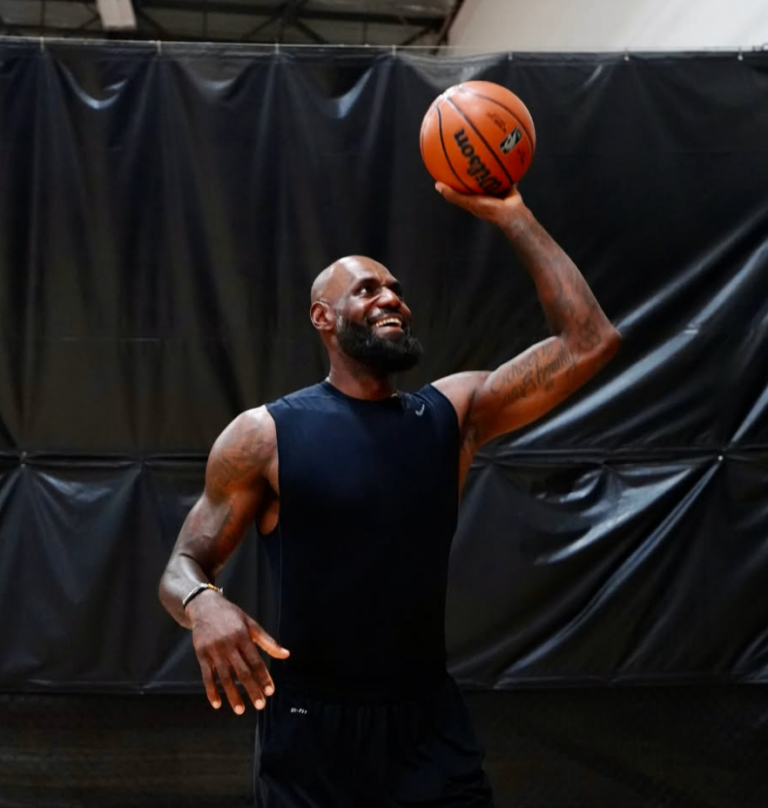
For more than two decades, LeBron James has made the extraordinary look routine.
Now 41, James is preparing for his record-breaking 24th NBA season. But keeping his body ready to compete at that level requires so much more than showing up for practice.
According to ESPN’s Dave McMenamin, James is managing chronic arthritis in his left foot while his lower back also continues to receive special attention after sciatica sidelined him last season.
The conditions themselves aren’t entirely new. Official NBA injury reports listed James with “left foot joint arthritis” and “right sciatica” last season. What’s new is ESPN’s reporting that the arthritis is chronic and continues to require special attention as James enters his 24th season.
And James has already been candid about just how disruptive sciatica became. When he returned to practice last season, James described the uncertainty that could greet him before he’d even really started his day.
“You wake up one day, and you hope that when you step down from the bed, you don’t feel it,” James told ESPN.
For a man whose body has been central to his profession for more than 20 years, James’ experience offers a useful reminder for the rest of us: Being able to keep going doesn’t necessarily mean nothing is wrong. And persistent pain isn’t automatically something you’re supposed to accept because you’re getting older.
RELATED: Chronic Joint Pain in Adults: When It’s More Than “Just Aging”
According to McMenamin, James’ workday begins well before team practice.
He reportedly arrives at the Philadelphia 76ers’ training facility around 7:45 a.m. to work with his longtime athletic trainer, Mike Mancias. His preparation includes stretching, activation work, and other treatments, with special attention paid to his left foot and lower back.
That maintenance follows a difficult stretch with sciatica.
James missed training camp, the preseason, and the first 14 games of the 2025-26 regular season because of sciatica affecting his lower back and right side. It was the first time in his career that he missed the beginning of a season, and James later called the experience a “mind test.”
He also revealed it wasn’t his first time dealing with the condition. James said he also dealt with sciatica during the summer of 2023.
And for anyone who thought he was exaggerating about his condition, King James had a message.
“I pray you never get it,” James told reporters.
The comment says a lot about a condition that often gets reduced to “back pain.”
RELATED: Joint Pain or Arthritis? How to Tell the Difference
Arthritis isn’t one disease. The term encompasses conditions that affect joints and surrounding tissues.
James’ specific type of arthritis has not been publicly identified, so we shouldn’t assume he has osteoarthritis. What has been reported is that he has chronic arthritis in his left foot.
Osteoarthritis is the most common form of arthritis. According to the CDC, it occurs when changes in joint tissues lead to breakdown over time. Symptoms can include pain, stiffness, swelling, and decreased range of motion.
And here’s an important distinction: Although osteoarthritis becomes more common with age, the CDC says it isn’t simply a regular part of getting older.
Previous joint injuries and repeated stress on a joint can increase the risk of developing osteoarthritis. Other risk factors include obesity, family history, and age.
Most of us haven’t put our bodies through more than two decades of professional basketball. But old sports injuries, physically demanding jobs and years of repetitive movement can affect joints, too.
That’s why you shouldn’t automatically dismiss persistent joint pain as the price of getting older.
RELATED: Can Rheumatoid Arthritis Come On Suddenly?

The other condition James has been managing is very different.
Sciatica isn’t a disease on its own. According to MedlinePlus, it describes symptoms caused by a problem involving the sciatic nerve, which runs from the lower back down the back of each leg.
When the nerve is injured or compressed, it can cause pain, weakness, numbness, or tingling that travels from the lower back through the buttock and down one leg, sometimes reaching the foot or toes.
For some people, it may feel like a mild tingling or dull ache. For others, the pain can be sharp or burning and severe enough to interfere with movement.
James’ description of waking up and wondering what he’d feel when his foot hit the floor puts that into perspective.
Because sciatica is a symptom of another problem, determining what’s affecting the nerve matters. Possible causes include a herniated disk, spinal stenosis—a narrowing of the spinal canal that can put pressure on nerves—and certain injuries. James’ underlying cause has not been publicly disclosed.
His experience also shows how stubborn recovery can be.
During his rehabilitation last season, James temporarily gave up some of his favorite indulgences, including wine and chocolate chip cookies. “I was like, well, if I’m going to be out and I can’t play the game that I love, then I want to sacrifice something else that I love as well,” James later explained.
But he didn’t claim those changes cured his sciatica. He described the discipline as part of giving his body the “best possible chance to recover.”
That’s a much more useful takeaway than assuming one food, stretch, or treatment makes nerve pain disappear.
RELATED: Relieve Sciatica Pressure With These Tips
James’ situation gives a clear example of why the word pain doesn’t tell us much about what’s actually happening inside the body.
His foot arthritis involves a joint. Sciatica involves a nerve. Both can hurt. Both can interfere with movement. Both may require ongoing management, but they aren’t interchangeable—and neither is every ache that starts showing up as we age.
Injuries and other health conditions can cause similar symptoms. That’s why treating every nagging ache with the same combination of rest, pain relievers, and “I’ll see how it feels next week” isn’t always the best strategy.
It’s easy to start adjusting your life around things like:
You make some changes like, you stop running, you take the stairs less, you sit differently. Or maybe you buy a new pair of sneakers and take an over-the-counter pain reliever. Sometimes you joke to your friends (and yourself), “I’m sure not 25 anymore!”
But persistent or recurring pain deserves attention, particularly when it starts changing how you move or what you’re able to do.
Arthritis symptoms can include:
Sciatica may cause:
Some symptoms shouldn’t simply be waited out. MedlinePlus recommends seeking medical attention for symptoms including severe pain following a fall or injury, unexplained fever with back pain, weakness or numbness in the buttocks, thigh, leg or pelvis, or difficulty controlling your bladder or bowels.
When moving hurts, you may want to stop. But depending on the cause, appropriate physical activity can actually help manage symptoms.
For osteoarthritis, the CDC recommends physical activity to help reduce pain and improve function. And with sciatica, MedlinePlus notes that bed rest isn’t recommended; treatment may include gradually returning to activity, exercise, medication, and physical therapy.
That doesn’t mean pushing through serious pain. In fact, that’s almost the opposite of what LeBron’s routine demonstrates: staying active and taking pain seriously can exist at the same time.
RELATED: Get Moving! Lack of Movement Now Can Mean Limited Movement Later
The most useful part of James’ story may not be that he’s still playing professional basketball while managing arthritis and the lingering effects of sciatica.
It’s what happens before he plays.
The early arrival. The stretching. The activation work. The treatment. The trainer. The attention to the parts of his body that need it. In other words: maintenance.
James has also been clear that recovering from sciatica required patience and discipline. He changed parts of his routine. He repeatedly did the rehab. Even when he returned to the court, he didn’t pretend that being able to play meant the experience hadn’t taken a toll.
Most of us don’t have an NBA medical staff waiting for us at 7:45 in the morning, but we can stop treating persistent pain as something we’re automatically supposed to live with.
And don’t assume taking care of pain means you’re getting old, or that being tough means ignoring it.
LeBron James has spent more than two decades showing us what elite physical performance looks like.
At 41, he may be showing us something just as important: Longevity isn’t about having a body that never hurts. It’s about paying attention when it does.


By subscribing, you consent to receive emails from BlackDoctor.com. You may unsubscribe at any time. Privacy Policy & Terms of Service.