
Most people can tell you their weight. They may know whether they’ve gained a few pounds, lost weight recently, or stayed about the same. But ask about their blood pressure, cholesterol, blood sugar, or triglycerides, and the answer may be very different. Your weight can be useful information, but it doesn’t tell the whole story about your health. Several other numbers can give you and your doctor a better look at your risk for heart disease, stroke, diabetes, and other health problems.
Think of these numbers like the dashboard in your car. You don’t need to be a mechanic to understand a warning light. In the same way, you don’t need to be a medical expert to keep track of basic health numbers. Knowing them simply gives you more information to discuss with your healthcare provider. As Dr. Berry Pierre explains, numbers such as blood pressure, blood sugar, cholesterol, and waist measurement can signal early changes in your health before you notice symptoms. Here are some of the numbers worth knowing.
Blood pressure measures the force of blood moving through your arteries. It’s shown as two numbers, such as 118/76. The top number is the pressure when your heart beats, and the bottom is the pressure when your heart rests.
High blood pressure often has no clear symptoms, so many people don’t know they have it. If it stays high over time, it can raise the risk of heart disease, stroke, kidney problems, and other health issues.
Under the American Heart Association’s 2025 blood pressure guidelines, normal blood pressure is below 120/80 mm Hg. A reading of 120–129 with a bottom number below 80 is considered elevated. Stage 1 high blood pressure begins at 130–139 or 80–89.
One high reading doesn’t always mean you have high blood pressure. Stress, activity, caffeine, and even feeling nervous at the doctor’s office can affect a reading. Your healthcare provider may want several readings before deciding what they mean.
Ask your doctor: My blood pressure is higher than normal. Should I check it again, and how often should I monitor it?
RELATED: 6 Healthy Heart Numbers That Count
“Your cholesterol is high” doesn’t tell you everything you need to know. A cholesterol test usually gives you several numbers, including LDL and HDL.
LDL is often called the “bad” cholesterol because high levels might cause fatty buildup inside the arteries. HDL is commonly called the “good” cholesterol because it helps carry cholesterol away from the arteries.
The American Heart Association explains LDL and HDL cholesterol in more detail and notes that LDL contributes to plaque accumulation that can increase the risk of heart attack and stroke.
There isn’t one perfect LDL number for everyone. Some people may have a goal below 100 mg/dL, while people at higher risk for heart attack or stroke may need a much lower goal. Your doctor should look at your cholesterol along with your age, medical history, family history, blood pressure, diabetes status, and other risk factors.
Ask your doctor: What should my LDL goal be based on my personal health history?
RELATED: Q&A: What Do Cholesterol Numbers REALLY Mean?
Triglycerides don’t always get as much attention as cholesterol, but they’re another important number on your blood test. Triglycerides are a type of fat found in your blood, and your body uses them to store extra energy. High triglycerides, along with high LDL or low HDL, can increase heart health concerns.
According to the American Heart Association’s cholesterol guidance, a triglyceride level below 150 mg/dL is generally considered normal. High triglycerides can be connected to a number of factors, including physical inactivity, smoking, alcohol use, certain eating patterns, weight, medical conditions, and genetics. Again, don’t panic over one number. Ask what it means when combined with the rest of your health information.
Ask your doctor: My triglycerides are high or borderline. What could be causing that, and what changes would help most?
Blood sugar is another number worth knowing—even if you don’t have diabetes. A fasting blood glucose test tells you how much sugar is in your blood at that moment, while an A1C test gives a bigger picture by showing your average blood sugar over about the past three months.
According to the CDC’s diabetes prevention guidance, an A1C below 5.7 percent is considered normal. An A1C between 5.7 and 6.4 percent falls within the prediabetes range, while 6.5 percent or higher is in the diabetes range. Your healthcare provider should make the diagnosis and may need additional testing. For fasting blood sugar, values below 100 mg/dL are generally considered normal, while 100–125 mg/dL fall within the prediabetes range. These numbers matter because blood sugar problems can develop without obvious symptoms. Finding changes early gives you and your healthcare team more time to decide what to do next.
Ask your doctor: Is my blood sugar where it should be, and when should I have it checked again?
RELATED: Diabetes And Heart Disease: 4 Numbers You Should Know
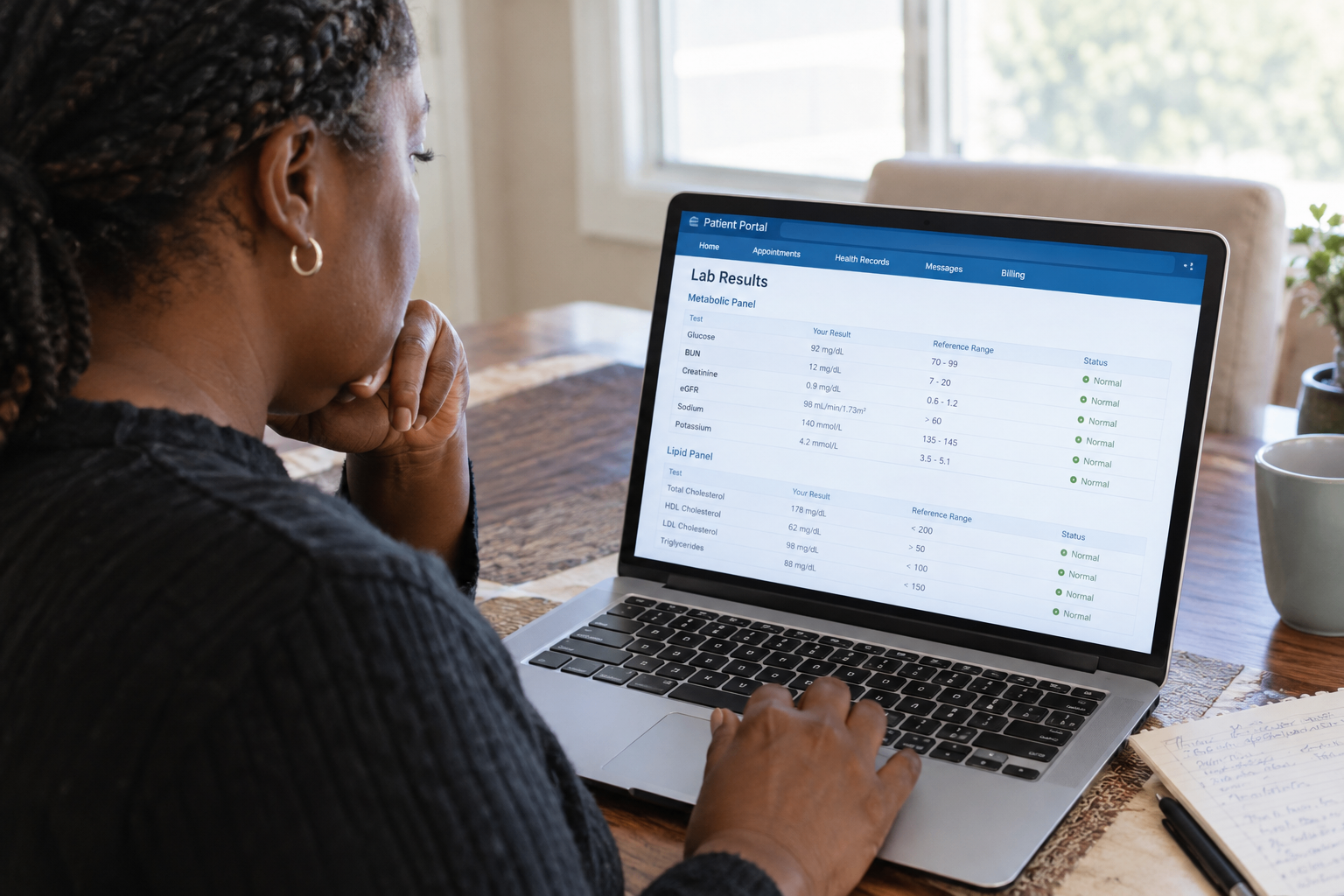
The number on the scale isn’t the only way to look at body-related health risks. Your doctor may also consider your waist measurement or another metabolic marker. Waist measurement can be useful because excess fat around the abdomen is linked to a higher risk of conditions such as heart disease and diabetes. As Dr. Berry Pierre notes in his guide to important health numbers, waist measurements above 40 inches for men and 35 inches for women have traditionally been used as markers of increased health risk.
These numbers don’t tell the full story for everyone. Your body type, health history, and other factors can affect what they mean for you. Your doctor may use other measurements to better understand your health. The goal isn’t to judge your body—it’s simply to learn more about your overall health.
Seeing a “bad” number on a lab report can be scary, but one result doesn’t always tell the full story because health numbers can change. Instead of focusing on one reading, track how your numbers change over time. For example, is your blood pressure slowly rising? Has your LDL improved since your last visit? Is your A1C moving closer to or farther away from the prediabetes range?
Johns Hopkins Medicine recommends knowing and tracking key heart-health numbers because they can help you and your healthcare provider see your overall health picture and make changes when needed. You can keep a simple note in your phone or use your patient portal to record:
Add the date next to each result. Over time, you’ll have a much clearer picture than you would from one test alone.
“Borderline” can be one of the most confusing words to hear at a doctor’s appointment. If your provider tells you a number is borderline, don’t leave without asking what that means for you. Try asking:
If your result is borderline, ask your doctor simple questions like: “How close is my number to the recommended range? Should we test it again? Do I need to make any changes? Does my health or family history affect this result?”
A borderline result doesn’t always mean something is wrong. Your doctor may simply want to monitor the number, retest later, or suggest small changes to help protect your health.
Your doctor’s office is a good place to get health screenings because your provider can review the results with your medical history. But there are other options too. Pharmacies, health departments, community health centers, workplaces, churches, health fairs, and local events may offer screenings.
The American Heart Association has also worked with churches, pharmacies, libraries, and other community groups to make blood pressure checks more accessible. Community screenings are a good starting point, but discuss any unusual results with a healthcare provider.
Perhaps the most important thing to remember is that these numbers aren’t a report card. Having high blood pressure, high cholesterol, or elevated blood sugar doesn’t mean you’ve “failed” at being healthy. Genetics, age, medications, medical conditions, stress, availability of healthy foods and healthcare, physical activity, and many other factors can affect your results. Knowing your numbers simply gives you information, and information gives you something to work with.
The next time you have a physical or blood work done, don’t stop at asking about your weight. Ask about your blood pressure, cholesterol, triglycerides, and blood sugar. Find out whether another measurement would be useful for you. Write the results down and ask what they mean for your health.


By subscribing, you consent to receive emails from BlackDoctor.com. You may unsubscribe at any time. Privacy Policy & Terms of Service.
Enter your name and email to receive the download link.