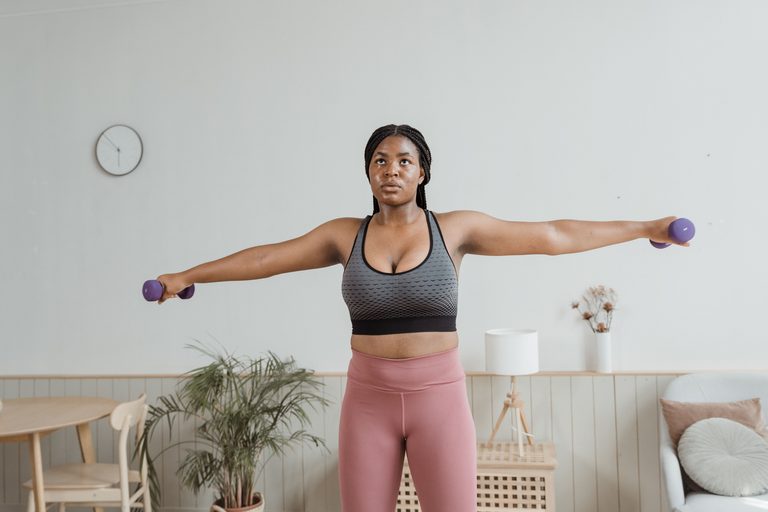
Before you’ve even left the house, you’ve already made a dozen decisions.
Which shirt won’t rub under your arms? Will those jeans irritate your thighs? Is today a day for a wireless bra? Should you wear dark colors, just in case?
For people living with hidradenitis suppurativa (HS), getting dressed isn’t just about style. It’s part of managing a chronic skin condition.
If you’ve ever wished someone would simply tell you what clothes are least likely to irritate your HS, you’re not alone. In fact, research published in the International Journal of Women’s Dermatology found that more than half of dermatologists reported they never counsel patients about clothing modifications as part of HS care. Yet clothing is something people with HS have to think about every single day.
HS causes painful bumps, abscesses, and tunnels beneath the skin, most often in places where skin rubs together—under the arms, beneath the breasts, around the groin, between the thighs, and other skin folds. While clothing won’t treat HS, choosing fabrics and fits that reduce friction can make a meaningful difference in your comfort.
Black women are disproportionately affected by HS, and many spend years searching for answers before receiving a diagnosis. Once diagnosed, they often find themselves navigating another challenge that isn’t talked about enough: how to get dressed in a way that supports their skin without sacrificing their confidence.
Here’s what can help.
Living with HS means clothing can become part of your daily strategy.
You may worry about drainage showing through your clothes, bandages becoming visible, or an active flare making it uncomfortable to sit through a work meeting, attend church, go on a date, or spend time with friends and family.
If you’ve ever planned an outfit around your HS instead of the occasion, you’re far from alone.
Getting dressed shouldn’t feel like another obstacle, but for many people with HS, it does. The good news is that small changes can go a long way toward making your day more comfortable.
RELATED: 5 Things That Make Your HS Worse During Summer
According to the Mayo Clinic, HS most commonly develops in areas where skin rubs against skin. That makes fabrics that trap heat or create friction especially uncomfortable during a flare.
Look for clothing made from breathable materials such as:
These fabrics tend to allow better airflow and may feel gentler against sensitive skin.
A 2021 review published in Dermatology also recommends selecting fabrics and undergarments that minimize friction and irritation in HS-affected areas.
One member of the myHSteam community shared that while their flares usually aren’t painful, they become uncomfortable when clothing rubs against affected skin. Their advice to others: choose loose-fitting clothing whenever possible.
Another member said they wear “cotton or soft dresses or a nightgown with nothing underneath,” explaining that it “eliminates the rubbing that causes pain.” They also shared that they avoid jeans because they tend to trigger more flare-ups.
Try to limit:
RELATED: Stay Confident and Fresh: Top 5 Tips for HS Management
When you have HS, tighter isn’t always better.
Instead of clothing that hugs every curve, consider pieces that leave a little room between the fabric and your skin.
Many people find relief with:
The goal isn’t to wear oversized clothing all the time. It’s reducing unnecessary rubbing in the places where HS tends to flare.

Whether you wear bras, underwear, compression shorts, boxers, boxer briefs, or undershirts, your first layer of clothing often sits exactly where HS tends to develop.
The Dermatology review notes that choosing appropriate undergarments can be an important part of reducing irritation.
Depending on where your HS flares, consider trying:
If elastic bands, underwire, thick seams, or tight-fitting undergarments sit directly over an area where you commonly flare, experimenting with different styles and fabrics may make a noticeable difference.
Comfort isn’t giving up; it’s making choices that help your body feel better.
Not everyone has the luxury of dressing exactly how they’d like.
Healthcare workers, warehouse employees, construction workers, welders, restaurant staff, and many others may wear uniforms or protective clothing that can’t be easily changed.
One of myHSteam members from New York shared that, as a welder, they’re required to wear jeans nearly every day.
“Winter months are better for me,” they wrote, “but during the summer, it’s so hard to control with the heat.”
If your work clothes are irritating, make adjustments where you can, such as choosing softer undergarments, moisture-wicking base layers, or changing into more comfortable clothing as soon as your workday ends.
HS can change quickly, so having a few essentials nearby can make unexpected flare-ups easier to manage.
Consider keeping:
Many people also choose darker colors during active flares because they’re less likely to show drainage.
Remember, stains happen. They’re a reality of living with HS, not a reflection of your hygiene or how well you’re managing your condition.
So it’s laundry day, and when you have HS, what you wash your clothes with matters almost as much as what you wear.
Cleveland Clinic recommends avoiding products with fragrances and dyes for HS-affected skin — and that guidance applies to your laundry detergent, not just your skincare. HSDisease.com takes it a step further, specifically advising people with HS to choose laundry soap free of dyes and fragrances, noting that those additives can increase irritation and worsen the condition.
Look for widely available fragrance- and dye-free options like All Free & Clear, Seventh Generation Free & Clear, or Arm & Hammer Sensitive Skin.
A few other laundry tips that can help:
One practical tip from the HS community: a thin feminine hygiene pad placed between a draining lesion and your clothing during the day can protect the fabric and reduce how much needs to come out in the wash.
Living with HS isn’t only physically uncomfortable; it can also change the way you see yourself.
Many people with HS live with scars or post-inflammatory hyperpigmentation after lesions heal. For people with darker skin tones, those dark marks may be more noticeable and take longer to fade, making some feel self-conscious about showing their skin.
Several members of the myHSteam community shared that HS changed the way they dress because of scarring.
One member wrote, “I can’t wear short pants and dresses either, as the scarring is quite bad and really dented my self-esteem.”
Another shared, “I would love to be able to wear the clothes I used to and not feel dumpy. I would do almost anything to have my self-esteem and confidence back.”
Those feelings are valid. But your fashion identity isn’t gone — it’s just evolved.
If replacing your closet isn’t in the budget, don’t worry. Focus on small swaps that make a big impact — a wireless bra, softer boxer briefs, seamless underwear, one breathable undershirt, a pair of relaxed-fit pants you can reach for during a flare.
And remember: style doesn’t begin and end with clothing. Accessories — jewelry, shoes, hats, scarves, bags — exist entirely outside of the areas where HS tends to flare. A bold earring, a great pair of shoes, a silk scarf, a structured handbag: none of those touch your underarms, thighs, or torso. They’re yours, completely unaffected, on every kind of day.
If HS has made you feel like you’ve lost your sense of style, start there. Build outfits outward from an accessory you love. Let the comfortable, breathable base do its job quietly while something else carries your style statement.
A few ideas worth trying:
Your style hasn’t disappeared. It just moved somewhere HS can’t reach.
RELATED: I Was a Teen When HS Took Over My Body — Now I’m Fighting Back
Living with HS means your needs may change from one day to the next.
Some days you can wear almost anything. Other days, your favorite jeans or fitted shirt simply aren’t worth the discomfort.
Your personal style doesn’t disappear because you have HS. Whether your wardrobe is colorful and bold, polished and professional, or built around comfort, you deserve clothes that help you feel like yourself.
Getting dressed may never be effortless with HS. But with breathable fabrics and a few reliable outfits you can count on, your closet can help you face the day with confidence.


By subscribing, you consent to receive emails from BlackDoctor.com. You may unsubscribe at any time. Privacy Policy & Terms of Service.
Enter your name and email to receive the download link.