You love your braids. Your scalp? Not always.
For some women, the itching, irritation, or burning that can come after a fresh install is enough to make them question whether the protective style is worth it. And recent testing has given consumers another reason to pay closer attention to what’s actually in the synthetic braiding hair they’re putting on their heads.
Now, a Black woman-owned company is taking a different approach: Instead of simply changing how synthetic braiding hair is processed, Rebundle is changing what it’s made from.
The company recently received a U.S. patent for technology used to make synthetic hair from plant fibers. Rebundle founder and CEO Ciara Imani May announced the patent approval in June 2025, according to People of Color in Tech (POCIT). May said the patent protects the technology behind the company’s braidbetter extensions, including their texture, durability, and scalp comfort.
So, could plant-based braiding hair be a better option for people with sensitive scalps?
It’s an intriguing possibility—but “plant-based” doesn’t automatically mean itch-free, hypoallergenic, or healthier.
Here’s what we know so far.
Plant-based braiding hair isn’t simply a strand of banana fiber wrapped around your natural hair.
Rebundle’s patented process uses plant fibers, including banana fiber, to create synthetic hair. The patent describes methods for processing and modifying plant fibers so they can be transformed into hair.
Rebundle says its braidbetter hair is made using repurposed banana fibers and biopolymers and is 97 percent plant-based. The company also says its product is USDA Certified Biobased.
That’s important because the innovation isn’t simply about using something “natural.” It’s about developing a plant-based fiber that can function as braiding hair, hold up during installation, maintain its texture and appearance, and stay in place for weeks.
The U.S. Patent and Trademark Office granted Rebundle a patent for a method of making synthetic hair from plant fiber.
Black women have been questioning braiding hair for years.
We’ve talked about the itching. The burning. The smell when a fresh pack is opened. The mystery of what exactly is coating those synthetic strands we’re about to wear against our scalps for weeks at a time.
Now, there’s more data to add to that conversation.
In 2026, Consumer Reports tested 30 braiding-hair products for heavy metals, volatile organic compounds (VOCs), and microbiological contamination.
The results?
Most of the products tested contained detectable amounts of at least one of three heavy metals: lead, arsenic, or cadmium. Rebundle’s braidbetter hair contained lead, although the amount was among the lower levels detected, and no arsenic or cadmium was detected.
Consumer Reports also found VOCs in every product tested. But that finding needs some context: The levels varied widely, and the organization’s estimated exposures to most VOCs were well below its reference doses. Rebundle’s hair had one of the lower total VOC levels in the test and was the only product tested without detectable toluene.
So, should you look at a bag of synthetic braiding hair and panic?
No. But you should start asking more questions. Like: If plant-based braiding hair is supposed to be a different approach, does that mean it’s chemical-free?
Not necessarily.
Even Rebundle’s plant-based hair contained detectable lead. The company told Consumer Reports that lead can occur at low levels in soil and plant-derived materials and said it was investigating the possible source.
That’s a good reminder that “plant-based,” “natural,” and “chemical-free” aren’t interchangeable terms. A product can be made largely from plant-derived materials and still contain substances consumers may want to know about.
In other words, changing the material may be part of the solution—but it isn’t the whole safety conversation.
This is where we need to pump the brakes on the hype.
Rebundle says braidbetter has been tested for skin and scalp safety. But a company’s testing and marketing claims aren’t the same thing as independent evidence that plant-based braiding hair prevents allergic reactions or scalp irritation.
And a patent doesn’t prove that a product is healthier.
A patent protects an invention or process. It doesn’t establish that the finished product is safer than every other type of braiding hair.
That’s why the most useful question isn’t simply “Is plant-based hair safer?”
It’s “Could changing the material reduce some of the problems associated with conventional synthetic braiding hair?”
Possibly, but that answer isn’t established yet.
RELATED: The Secret to Long, Healthy Hair? Start With Your Scalp
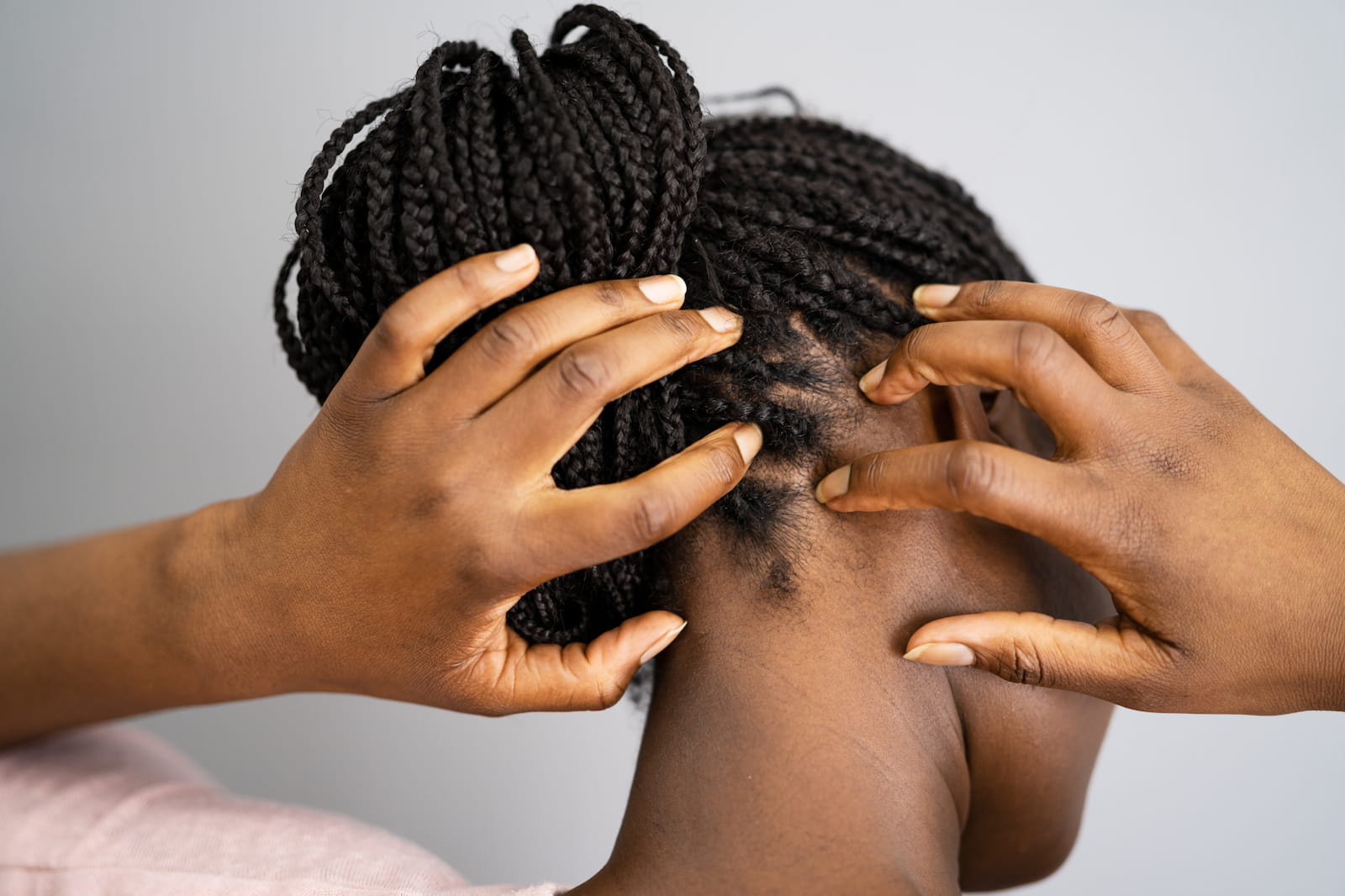
The hair itself may be part of the problem, but it isn’t necessarily the only one.
Scalp irritation after braiding can have multiple causes, including:
And then there’s the installation itself. Braids installed too tightly can place tension on hair follicles and contribute to traction alopecia. So even if you choose a different type of braiding hair, a painfully tight style can still damage your hair and scalp.
In other words, changing the fiber doesn’t eliminate every risk associated with protective styling.
If your scalp is burning, swelling, developing sores, or becoming increasingly painful after an install, don’t assume you just have to “tough it out.” Those symptoms deserve attention.
RELATED: All Natural Scalp Detox Recipe
Rebundle isn’t alone in trying to change the braiding-hair experience. Other Black-owned and Black-founded brands are taking different approaches.
The approaches—and the amount of independent evidence behind their claims—vary. But together, they point to a bigger shift in the braiding-hair industry: Companies are experimenting with new materials, different processing methods, and more testing rather than treating scalp irritation as something that consumers just have to accept.
If you’ve had problems with braiding hair before, you don’t necessarily have to give up your favorite protective style, but there are a few things to keep in mind:
The braiding-hair conversation has changed.
We’ve gone from simply asking “Why does my braiding hair make me itch?” to asking what’s actually in these products and whether manufacturers can make them differently.
Rebundle’s patented plant-fiber technology represents one possible answer.
It doesn’t prove that plant-based braiding hair is healthier. It doesn’t mean every plant-based product will be irritation-free. And it certainly doesn’t mean conventional synthetic hair is automatically dangerous.
And Rebundle isn’t the only company looking for a better way. From plant-based fibers and biodegradable collagen to newly engineered synthetic fibers and more rigorous product testing, a growing number of companies are challenging the idea that braiding hair has to be itchy, chemically treated, and leave consumers guessing about what’s actually in it.
For Black women who love protective styles but have spent years dealing with uncomfortable scalps, that’s a development worth watching.
The goal isn’t just a beautiful install. It’s a protective style that actually feels protective.


By subscribing, you consent to receive emails from BlackDoctor.com. You may unsubscribe at any time. Privacy Policy & Terms of Service.