
Somewhere along the way, we picked up the idea that managing blood sugar levels means giving our all to an hour-long workout at the end of a long day. We have been taught to think that some workouts are not as effective as others, and high intensity should be a part of your routine.
When it comes to managing glucose, the radical news is that it can be a whole lot smaller and gentler than that. One of the most effective things you can do takes about five minutes, and you can do it in your kitchen, your cubicle, or your favorite chair.
Let’s break down how small movements throughout the day can have a much greater impact than you think.
It’s not really sitting that’s an issue. Your body is designed to take moments of rest. It’s sitting for hours without a break where things get tricky.
When we stay planted in one spot for a long stretch, our muscles essentially go quiet, and quiet muscles get lazy about pulling sugar out of the bloodstream. Researchers call this “uninterrupted sitting,” and study after study links long, unbroken hours of it to higher blood sugar, higher insulin levels, and a greater risk of type 2 diabetes over time.
Here is the part that surprises people: this holds true even if you exercise regularly. You can crush a workout at 6 a.m. and still spend the next ten hours sitting in a way that works against you. The stillness in between matters more than we give it credit for.
None of this is meant to shame the sitting. Most of us sit because life asks us to, whether we are working, commuting, caregiving, or finally resting after a long day. What helps is learning to break up all that stillness in small, doable ways.
RELATED: Diabetes or Not, Here’s Why You NEED to Know Your Glucose Levels
When you get up and move, even a little, your muscles wake up and start using the glucose already circulating in your blood for energy. Working muscles can pull in sugar without needing much insulin to help, simply because they are contracting and demanding fuel. A few minutes of walking, marching, or stretching once an hour, especially after a meal, gives that circulating glucose somewhere useful to go instead of hanging around and spiking your levels.
We are not talking about a marathon. As little as five to ten minutes of light movement every hour can make a difference. Think of it as tapping your muscles on the shoulder and saying, hey, put this sugar to work.
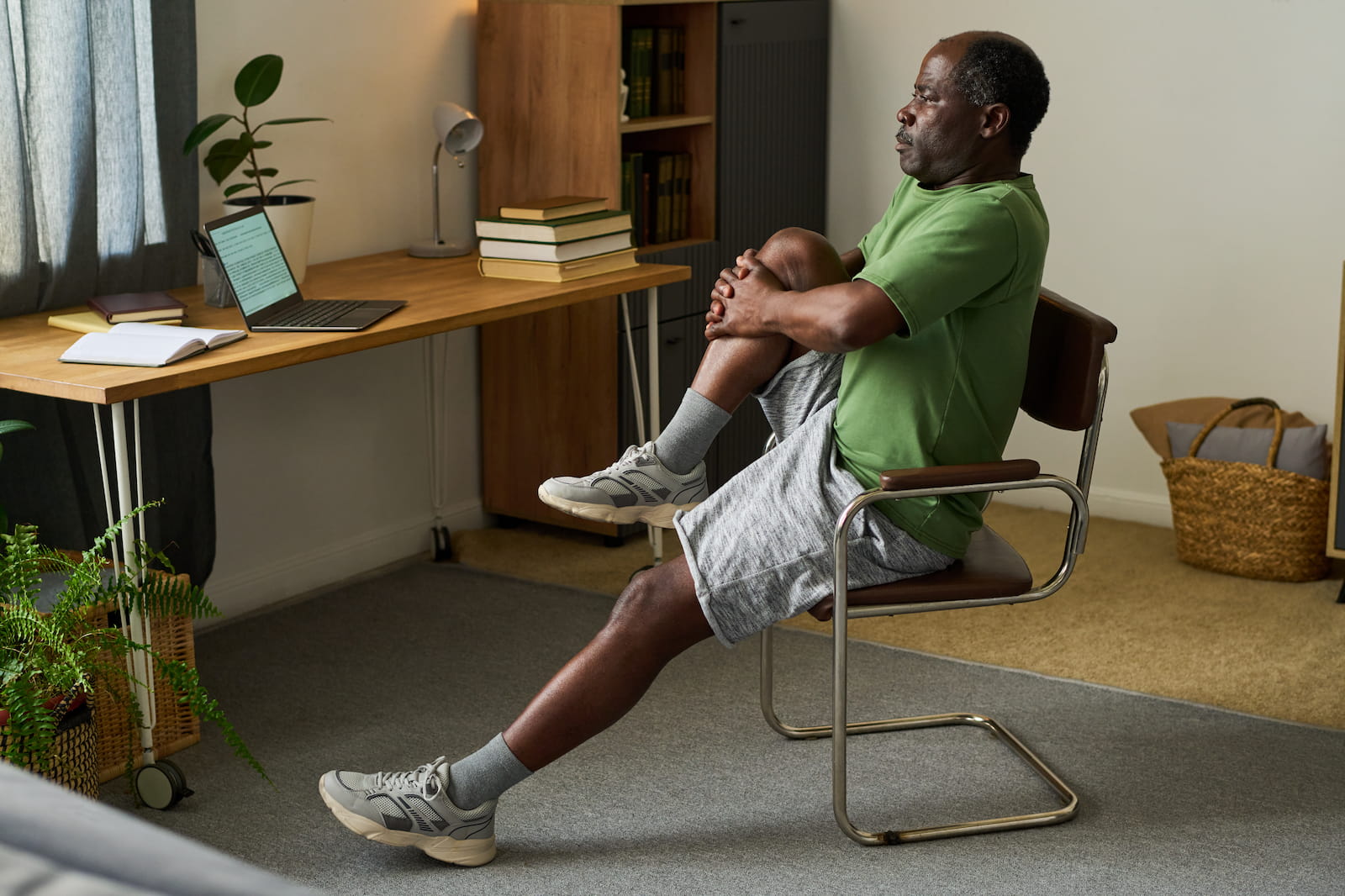
This is where a lot of us get it twisted. We assume one solid workout cancels out a whole day of stillness. But when it comes to blood sugar, spreading your movement is the hack you’re missing.
Breaking up your sitting with brief movement throughout the day keeps your glucose steadier than saving all your effort for a single session. Frequency and consistency carry more weight here than intensity. A few minutes every hour beat one heroic hour once a day.
RELATED: Continuous Glucose Monitors (CGMs): Which One is Best for You?
This habit belongs to everybody. You do not need to stand, run, or even leave your seat. What matters is that your muscles get to work.
If you live with limited mobility, chronic pain, an injury, or balance concerns, try seated marching, lifting your arms overhead, or gentle chair yoga. Resistance bands are wonderful for seated strength work and easy to keep close by. If you use a wheelchair, rolling yourself around the room or through the house counts beautifully, and so does arm cycling.
Never underestimate the humble household task! Putting away dishes, folding laundry, or watering your plants all get your body moving. The goal is simply to interrupt the stillness in whatever way your body allows today.
Here are a few gentle ways to start building your hourly glucose management habit:
You will miss hours. You will have days where you sit through everything and move through nothing, and that is okay. This is not a test you can fail, but a rhythm you get to return to, again and again, one small break at a time.
Your blood sugar does not need you to be perfect. It just needs you to keep coming back to yourself, five minutes at a time.



By subscribing, you consent to receive emails from BlackDoctor.com. You may unsubscribe at any time. Privacy Policy & Terms of Service.
Enter your name and email to receive the download link.