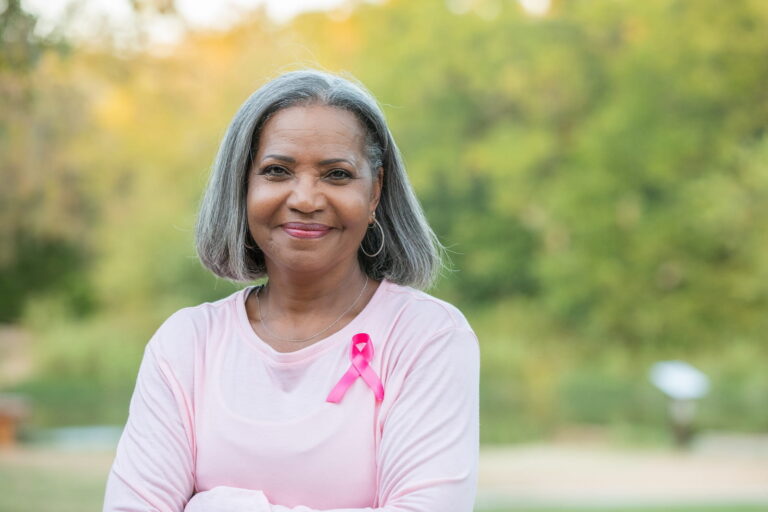
In 2018, three years into her metastatic breast cancer diagnosis, Stephanie Walker was out shopping with her husband when she started to feel short of breath. At first, she blamed it on some weight gain, but within just a few minutes, she had trouble catching her breath followed by pain in her chest.
“I think I’m having a heart attack,” Stephanie said to her husband.
They rushed to the hospital. There, the staff ran tests and scans, ruled out a heart attack, and sent her back to the lobby to wait. The pain was concerning, but it wasn’t enough to make her scream.
When a nurse came out into the lobby and started to look around, Stephanie assumed they were coming for the elderly woman in a wheelchair next to her. They beelined for Stephanie instead. “We need you to come back,” the nurse said. “Don’t move too fast. Don’t breathe really fast.” That’s when they told Stephanie — you have a pulmonary embolism.
Her first thoughts were: where did it come from? Why do I have a pulmonary embolism?
What Is A Pulmonary Embolism?
In order to understand a pulmonary embolism, we need to first understand all the terms for a blood clot:
– Venous Thromboembolism (VTE) is the umbrella term for any blood clot that forms in a vein. A blood clot is blood that has thickened and clumped together inside a vein.
Types of VTE include:
– Deep Vein Thrombosis (DVT) — when a blood clot forms in a deep vein, usually in the leg, thigh, pelvis, or even in the arm. Sometimes, a piece of this blood clot can break off and lead to a pulmonary embolism.
– Pulmonary Embolism (PE) — when a piece of a blood clot breaks loose and travels to the lungs, it can become stuck in a lung artery, blocking blood flow from the heart.
When these conditions are a result of cancer or its treatment, they are called “Cancer Associated.” Having cancer, undergoing chemotherapy and other cancer treatments, surgery, and central lines/ports can all increase your risk of developing DVT and/or PE.
When Stephanie saw the doctor, he said, “We see this in cancer patients all the time.” But Stephanie hadn’t seen blood clots, DVT, or PE written in any of her medical paperwork. No one had warned her.
According to the CDC, cancer patients — especially those on chemotherapy — have a much higher risk of DVT. And Black women are at higher risk for cancer-associated venous thromboembolism (VTE) than any other race.
While these risks are real and deserve your attention, it’s important to move forward with treatment anyway. Cancer is a much bigger threat to your health than the potential risk of a blood clot. So what can you do?
Don’t Ignore the Symptoms
“When I go back and think about it, my leg started hurting a week before,” says Stephanie. “I had been traveling. And I never thought anything of it.” Now, Stephanie advocates for other breast cancer patients (and all cancer patients) to pay attention to the symptoms.
DVT will occur on one side of the body—usually in the leg, but can happen in an arm or around a port/central line. DVT can also move towards your lung, so the location of your symptoms may move too. Keep an eye out for any of the following:
– Pain similar to a charley horse or a cramp that doesn’t go away
– Swelling
– Tenderness
– Skin that is warm to the touch
– Redness or discolouration of the skin (may look like a rash)
A PE can develop from an untreated DVT, but it can also occur on its own. Keep an eye out for any of the following:
● An unusually fast or irregular heartbeat
● Chest pain or tightness in the chest or back (can feel similar to indigestion)
● A drop in blood pressure, lightheadedness, dizziness, or fainting
● Shortness of breath, trouble breathing, or becoming easily winded
● Cough (with or without blood) or wheezing
● Swelling
● Feeling tired or lethargic
What You Can Do
1. Trust your gut and don’t dismiss symptoms. If something feels strange, take it seriously. This is not the time to push through or walk it off.
Blood clots are dangerous. But if you develop one, recognizing it early, getting to a hospital, and starting treatment quickly can prevent severe symptoms.
2. Ask your doctor about your risk for blood clots and the possibility of preventative medication. Anyone diagnosed with cancer is more prone to blood clots, but your doctor should assess these risk factors:
– If anyone in your family has a history of blood clots
– A personal history of blood clots, fractures (broken bones), heart disease, diabetes, hypertension, heart failure, or hyperlipidemia – Smoking
– Obesity
– Age (the older you are, the higher your risk)
– Pregnancy (during pregnancy and postpartum, your risk increases) – Race (Black women are at higher risk for developing a cancer-related blood clot.)
– Certain breast cancer treatments
3. Stay hydrated.
When you’re dehydrated, your blood can thicken and become stickier (think molasses). Thick blood flows through your veins more slowly, making it easier for a blood clot to form.
Drinking plenty of water keeps your blood thinner and allows it to flow more easily, supporting good circulation and lowering your risk of a blood clot.
4. Move around as much as possible.
You don’t have to run a marathon, but it’s important to get your blood flowing on a regular basis. Try not to sit or lie in one position for too long. Walking, stretching, yoga, dance parties… even wiggling your fingers and toes or flexing your hands and feet all help decrease your risk of a blood clot.
5. Make a plan for long roadtrips, train rides, or flights.
– Change positions often and get up as much as you can (bathroom breaks are a great chance to stretch your legs!)
– Bring a water bottle and stay hydrated.
– Wear compression socks for any trip over four hours
You can watch the episode where Stephanie shares her story with TOUCH, The Black Breast Cancer Alliance CEO Ricki Fairley on www.youtube.com/@touchbbca


By subscribing, you consent to receive emails from BlackDoctor.com. You may unsubscribe at any time. Privacy Policy & Terms of Service.