And I was just telling my esteemed panelists that this panel has probably got the hardest job of the day. Why? Because we're coming back from lunch. Everybody's got full bellies. Everybody's been laughing, joking, seeing friends that they haven't seen in a while, exchanging phone numbers, wanting to talk. "Girl, what you doing tonight?" All that good stuff. but we are back to talk about something important, today. So a little rule of thumb, a little housekeeping before we get started. If you see your neighbor, because I know it's not gonna be you, but if you see your neighbor doing this, you know, because it's after lunch, just remind them to do what they do during church when that happens.
If you find yourself doing this, just come up slowly and say, "Amen. Amen." And nobody will question you. Nobody will question you. All right? Today, I am so happy to serve as moderator for this panel today. This is one of the, the panels that I'm most excited for because it hits so many people, in my community. It's hit so many people in my own family. but we're talking about kidneys and kidney health today. I'm joined today by Dr. Janice P. Leah. We've also got Dawn P. Edwards. We've also got Dr. Laura Williams and Dr. Janice Desir. They'll tell you more about themselves as I ask them, their questions, but let's get right into it.
This is gonna be one of those panels y'all that y'all wanna write some stuff down and take it home and share it with your family. So first question is, I wanna set the stage.
Dr. Leah, March, this is Kidney Awareness Month. So could you help us just level set the conversation just explaining what is kidney disease and who's impacted most by kidney disease? Why is it so important? It's great. Thank you, Derek. thanks everyone for having and attending this panel. This is so-- such an important topic. And, you know, I've spent my, most of my adult careers in medicine taking care of kidney patients. So chronic kidney disease means when over time the kidneys are not doing the job they are intended to do, and that's excrete toxins from our blood and excrete, water and excess fluids that we drink in every day.
CKD is the short term for that. We have stages one through five. Five is the worst. That's when someone has pretty much no function of their kidneys, and after you have to have dialysis or a kidney transplant. Now, the issue with chronic kidney disease that's so alarming is that it can be, we call it a silent killer 'cause it can be asymptomatic. patients don't really know that they have it until more closer to the end stages. So we're here today to kinda talk about how we identify chronic kidney disease earlier. There's thirty million plus people in the US who have some form or stage of chronic kidney disease.
And then- Thirty million. Yes, thirty million. One in seven individuals have chronic kidney disease. The disparities really come to play with the minority populations. For example, African Americans make up thirteen percent of the US population, but they make up thirty percent of those who are on dialysis or need a kidney transplant.
So they're four times more likely to end up on dialysis compared to white counterparts. Also, Hispanics are two times more likely to progress to end-stage kidney disease. So, so it's a, a particular problem in those communities. The other important factor is the risk factors. If I did a poll of everyone in here, I know that at least half would s- either say they have diabetes or high blood pressure or know someone in their family. Those are the major risk factors in having a family history of kidney disease. So if anyone in your family has it, you're at risk, and so we have to get the word out about that.
The disparities don't just stop there. Once we get diagnosed with chronic kidney disease, there are disparities in care. There's disparities in access to medications that, that patients need. There's the social determinants of health. There's reduced food or increased f- food insecurities, access to healthcare, so they can't benefit from early, diagnosis. Now, let's get to the phosphorus part. so the kidneys- What is that first? Yeah. Phosphorus is a mineral that's in our bone. It keeps us having healthy bones, but it's something that has to get excreted by the kidneys.
So if you don't have normal kidney function, you can't get rid of the excess ph-Waste products including phosphorus. So phosphorus build, remember, phosphorus is a mineral, it's like a rock. Mm-hmm. If you get too much of it, so your blood vessels get calcified- Okay and your tissues, your heart. So you're, you're predisposed to bone issues, fractures, a lot of bone pain, and then hardening of the arteries that lead to- heart disease, heart attacks, strokes, et cetera.
So this is why this is so important for us to have this conversation because if you need to get a kidney transplant and you've had high phosphorus levels over time, your blood vessels are calcified, and so that transplant has to be connected to the arteries that, in your body. And if there's calcifications in the blood vessels, guess what? That kidney is not gonna work well. It's not gonna get the proper blood flow. Okay. Dawn. Yes. being a patient- Yes when did phosphorus become important for you? can you share a story about how it's personal for you? Yes. thank you so much for having me here to share my journey with you.
Thank you, everyone, and thank you to blackdoctor.org for highlighting this very important topic. so I'll share with you about how phosphorus and phosphorus-lowering therapies and, how all of this is so important to a kidney patient. I was diagnosed with kidney disease at the age of twenty-two after giving birth to my beautiful daughter, and that's not normal. I don't have hypertension or, diabetes. I had something called scarlet fever when I was an infant, and it led to, down the line, kidney failure. but phosphorus became important to me almost immediately after my diagnosis.
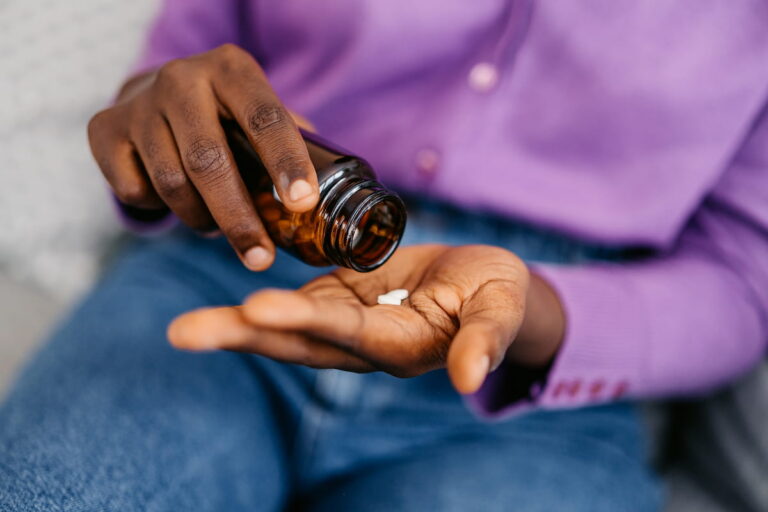
However, back in the nineties, education was very limited, so I didn't know what it was. I started to find out about it down the road. there's medications that a dialysis patient takes called phosphorus-lowering therapies, and you take these huge pills, at, with every meal and snack. So depending on what your blood levels are, that determines how many pills you take.
So I had to take three pills with every meal and every snack. Now, being a twenty-two-year-old, my diet was basically beer and a pizza, and those are high phosphorus foods. And sometimes I-- At that point, I didn't know the importance of these phosphorus-lowering drugs, so I just, you know, didn't take them. later on down the road when the doctors were telling me, "Well, your phosphorus is too high, and you gotta start taking your medications," I was, "Yeah, whatever." And I noticed that my skin was itching. And when I did take the pills with me, they're huge pills, so if I'm going out for all day, they don't fit in the cute little pillbox that ladies carry.
You gotta take a Ziploc bag and throw them jokers in there. And, and then if you're sitting down at a nice dinner table, how does that look, you pulling out these big horse pills, you know, throwing them back at the dinner table? So it's, the pill burden is huge. however, as I started to grow up and learn more about kidney disease and start my advocacy work, I learned that these phosphorus-lowering therapies were essential to me protecting my heart, for me to protect my bones, and for me to, to have that phosphorus level at an acceptable level for me to continue to, to feel well and to stay healthy.
And s- so I took my pills, and I also learned about home hemodialysis. So for the past twenty-plus years, I've been doing my dialysis at home myself, which is, another great topic for us to discuss another time. But, I get much better outcomes.
I wanted the best for myself, which is why I stuck to my medication regimen and doing my dialysis treatments. Well, we fast-forward thirty-four years, and last year I was called for my second kidney transplant, because everyone take note, transplant is a great treatment option. However, it's not a cure for kidney disease. So I had one kidney. It lasted six years, and it stopped working, and I had to go back on dialysis. So I went for a second transplant almost a year ago, and, we got all the way up to the operating room, and they opened me up, put me to sleep and everything, and when they got inside, they found out that my arteries had calcified, like Dr.
Lee just described, which means that they were too hard to sew the new kidney onto, so I lost the transplant. So I am back on dialysis. I probably will not be able to be a candidate for transplant again. howeverYou know, I'm, I'm living and I made it through. I'm back on dialysis, but my story is to be, make people aware of what this disease is, how important it is to get checked before we get to this point. Get-- It, it's a simple urine test, to get checked to make sure that you don't have those pre-markers for kidney disease, and if we already are dealing with that, home dialysis is something to look into.
Transplant is very important because it greatly improves the quality of life. But the medications, taking care of yourself, and keeping healthy while you wait or while you're in between these things is paramount in order for you to be able to live, a-as long as I have.
not many of us live thirty-four years with kidney failure. I believe the national data now is fifty percent of the patients diagnosed with kidney disease make it five years. Wow. So this is a scourge, particularly in our African American communities. And to those of us who have it already, we want people to know, to be aware, and to protect themselves from going down that road. And to those who don't have it yet, please don't, don't take this lightly. Kidney disease, one in seven, so that's, that's quite a few people in this room right now who may be in this chair in a few years.
So think about that. and- Well, no, Dawn, I was just gonna One, I was just gonna thank you. Yeah. Thank you for being here. Thank you. And then two, I just wanna ask you, just how are you feeling today? How you doing? thank goodness today, is a good day. I have good days and bad days, but I never stop my advocacy work. If I'm in bed, I got the iPad open, and I'm talking, on the iPad, doing meetings and, and advocating. But, I'm not gonna stop- Amen because you all are too important to me. So I wanna thank you for the invitation, and thank you for the time. Well, thank you.
Dr. Williams, Dawn mentioned, when she was twenty-two, she didn't really realize the importance of phosphorus. When should we start to h-have these conversations? What is it doing to the body? All that good stuff. Yeah, no, thanks, and I echo my, co-panelists in terms of, you know, the invitation to be here. I'm, the chief patient officer and chief medical officer at Ardelx, which is a small biotech company, headquartered in Boston.
And, I'm an internist by training. I did my subspecialty training in infectious diseases, but I've been working in drug development, at different pharmaceutical companies now for about thirty years. And y-you know, you hear these stories. I mean, one of the drugs that we worked on is, is one of those phosphate lowering therapies. And so it, it means a lot to me. But I got into this business, I think you guys heard a story earlier on, it was the height of the HIV epidemic, and, I was, doing my fellowship at University of Washington in Seattle, and I had a patient who, had HIV, full-blown AIDS.
I had admitted him to hospice. At the time, we only had AZT, so it was before we got all of the cocktail, you know, drugs that we have today. I admitted him to hospice. eventually we got one of those, drugs as, as a, a pr- a previous speaker talked about for compassionate use. We got a protease inhibitor. I gave it to him. He got so much better. he got kicked out, and I had to help him find an apartment. That was unusual, right? I mean, somebody goes to hospice, usually it's a celestial discharge. It's not, you know, going back out there in the world. And so that's what got me in-interested in drug development.
I wanted to know how these drugs came to be. And so, you know, you hear these stories, you hear Dawn's story, and it's particularly moving to me because she was actually very instrumental in us getting one of those phosphate lowering therapies approved with the FDA. When we had to actually tell our story, you know, we came in there, we had reams of data, all these data points, but the patient stories, that's what stole the day, right?
Because this is data with a soul. That's what that is, right? And so when you ask when should patients understand, you know, sort of phosphorus, just taking one step back, I mean, phosphorus is important. Bone, as Dr. Leah said, also, it's part of the energy unit in our body, so it's in every cell. It's absolutely important, right? And usually it's controlled very nicely, like, because the kidneys are working, and the kidneys basically get rid of any excess phosphorus that we take in our diet. But when they fail, then the phosphorus levels build up, and you've heard what happens when the phosphorus levels build up.
I think it's really important, first and foremost, to understandIf you have chronic kidney disease, not understand, but to know. She just gave you these numbers, like thirty-seven million folks in the US have chronic kidney disease. Guess what? Up to ninety percent of folks don't know it. Mm-hmm. That's right. Okay? So that's where you should start, right? And once you know that, that that is the case, you know, the nice thing now is that there are a number of drugs that hopefully slow the progression so that you don't get to stage five, which is what we call end-stage kidney disease or end-stage renal disease or kidney failure, all of those, right?
You don't wanna get there. But if you happen to get there, you have to know those numbers, and you have to advocate for yourself in terms of all of the available treatments that are out there. And that's why I started with the story on the HIV.
There are a number of new therapies that continue to come on board, but you may not even know it. Most dialysis patients don't know it. And phosphorus is so important. There's so many complications that dialysis patients have. But guess what? Phosphorus, high phosphorus carries the greatest risk of all of them. And so getting that phosphorus controlled is absolutely key. And so patients should know what their phosphorus levels are early on. And that's not a problem from a dialysis patient standpoint because their center actually measures their dial-- their phosphate level, once a month, at least, sometimes more frequently.
I would suggest that once you know you got chronic kidney disease, you start noticing all the other, you know, sort of variables that go with that, including phosphorus. Not waiting until, you know, God forbid, you get to end-stage kidney disease. So it's very important, and you've heard the complications. One of the big ones, though, again, is transplant readiness. You know, we know that if we actually try to put a, a, a transplant in a patient who has a, a really elevated phosphorus, that that graft is more likely to fail. Mm-hmm. So having it controlled is, while it's not an absolute requirement to get a transplant, every transplant, you know, workup looks at it and, and actually monitors it.
And if it's high, a lot of times you actually are not allowed to get on that transplant list. And so doing everything you can to get the phosphorus controlled is the, is the only way you can do it.
And there are three ways you do it. It's diet, it's dialysis, and it's medications. Oftentimes when you get to kidney failure, diet and dialysis are just not enough. And so you need these phosphate-lowering therapies. Wow. You know, I'll be honest, you know, before family members suffered from chronic kidney disease, I didn't know how important the kidney was. You know, you were just saying this, you know, and I'm thinking, wow, it's so important that we know about this before something happens, 'cause then people are like, "Oh, I didn't know the kidney was that important," until something goes on with the kidney.
Right. You know? Dr. Desir, you know, we've talking about, PLTs or phosphor-- phosphate-lowering therapies. If they're so important, why are there so many barriers to getting it done, and what are those barriers? Yeah. So, thank you also for the invitation, and I, I think what I wanna also do is, lay more foundation to what my co-panelists have all said. So you have Dr. Lee, who's in the space of, I'm gonna say, medical education and advancements in terms of what we as doctors need to know. And then you have Dawn, who's the root of everything with the patient experience, and Dr.
Williams, who's about innovation. But what I wanna lead you into is what, what is the clinician life in trying to deal with the challenges of what a patient like Dawn is living? So you have somebody who may be in what I'm gonna call a food apartheid, and what I mean when I say that is they were essentially impacted by generations, 'cause we're talking about generational health, of having to be in a community that doesn't have fresh food.
And when I talk about fresh food, phosphorus is absorbed in two different forms. We're gonna call it inorganic and organic, and your fresh, uncooked foods actually allow you to absorb phosphorus slower. It is your shelf-stored foods or your shelf-stored meats, your prepackaged sausage or ch-- you know, hot dogs, et cetera, that have high, high rates of phosphorus absorption. But if you have somebody who's in a community that doesn't have a fresh supermarket, but more so has bodegas or small kind of delis and such, I mean, they're listening and they're buying the turkey and they're buying the ham and they're doing all the good things as they understand what healthy means.
But the reality is those foods are so filled with additives that they're not getting the correct medication to support the fact that they're not in the right environment. So when we talk about access, access number one could be, yes, you're not getting the right medication. But then access number two is you're also not in the right environment to get the right foods. So Dr. Lee prescribes the right medication, Dr. Williams innovates and creates the new therapies, but Dawn's not getting it. Why? Right? Why? Because there is a entity that I'll say that is making rules that is not fully versed in the understanding of the lived experience, and the entity is making decisions based on dollars.
They're not making decisions based on the actual clinical outcomes. So what happens? You sacrifice essentially the longevity of patients' lives by the dollar for today, and that's the problem.
In order to have success and advancement and better access, you have to invest the dollar now for the savings later, and that concept is essentially social ROI. So part of my background is not only as a nephrologist, you know, working in the community, but also as a physician advisor trying to help hospitals in terms of healthcare quality.And when I look at charts across the United States, it is so striking to me that what we're trained to do is to look at the medicine, which is what we do, but at the same time, what we fail to do and I think needs to happen is we need to put social context in the way we're looking at the medicine.
So we can't just say, "Oh, your phosphorus is eight." Your phosphorus at eight is because you live in an area that doesn't allow you to have access to the right healthy foods. We need to maybe think about food as prescription for you, options of culinary medicine. And with that, think of the innovative binders that Dr. Williams creates as the option for you versus the cheaper option, which is what hon- honestly it comes down to being the, the barrier. The dialysis units have now been in charge with dispensing phosphate binders for those who are on dialysis, and what do you think they're gonna do?
Do you think they're gonna pick the most expensive one? No. They have a bottom line and a margin. They have people they need to keep employed and a unit they need to keep open. So they're gonna pick the most cost-effective one, but that's not necessarily what our patient needs, and that's the challenge.
We are working for an entity, and even though we were trained to do certain things, we are constricted with our toolkit for those who are in the nephrology space. And that's the area where I think all of the dialogue from earlier today, this concept of we need to start having these conversations about general he- general- generally sorry, generational health, that we need to start understanding that without our awareness about how where we eat, where we play, where we live impacts our health, that we're not gonna be able to make the right decisions to turn the shift and shift the tides towards more kind of, better health and wellness for our future generations.
Wow. Well said. Wow. Well said. So when you hear that, Dawn, what, what's your, just as a patient, what's your experience been with PLTs and, and phosphorus-lowering therapies? Well, as Dr. Tesia said, the, phosphate-lowering therapies are now a part of the bundle, which means that, well-intended, legislature is doing unintentional harm. Patients receive their phosphorus-lowering therapies for free, paid by CMS, who pays for eighty percent of dialysis care. So we don't have the co-pays to pay for phosphorus-lowering therapies. However, the unintentional harm comes because the dialysis centers are giving us the cheapest one- Mm-hmm which is calcium, and the, more expensive ones that may have iron, that may be, a, a small Tic Tac size tablet that you take once a day instead of with every meal and snack, those are not available to us because the dialysis center's not paying for that.
You get these free calcium ones right here, and you like that right there. And for us as patients, food is, yes, it's medicine, but for us as a people, food is love. When my mother goes in the kitchen and she make those lima beans and ham hocks and, you know, and she serves it- Cornbread? Is cornbread one? Cornbread. Okay. Yes, that's right. Just checking. Just checking. Cornbread, fried chicken on the side. Right? how can you say no when you smell those herbs and you smell everything cooking in the kitchen, and I have to say, "You know, I can't have that. I have to have this bro this turkey or chicken breast here," you know?
or out of convenience, a lot of dialysis patients, once they're done with treatment for three hours and an hour with transportation and waiting for transportation to go home, food's not in the, in the subject. Getting into bed is in the subject. So we're gonna stop at Popeyes right here and get that value meal and get into bed and try to rest from your treatment. So out of convenience, we're doing unintentional harm to ourselves. A patient that, gets up at five o'clock in the morning to go to a dialysis treatment has nothing, and they do a treatment, and you're exhausted afterwards, and you pick up something and go home because you're too weak to cook.
So as Dr. Laura said, if you don't take those medicines and make it to your treatments as scheduled, you can't even miss a dialysis treatment because you only go three times a week and your kidneys work twenty-four hours, seven days a week, so we're starting out at a deficit, so you have to make your health the priority.
So now that I'm eating clean and I'm saying no to all of those, outside foods, I'm finding out, like Dr., Tesia said, that the good home-cooked food- Mm-hmm is better than the stuff outside. So that's why I'm feeling a lot better- That's good and I'm feeling healthy 'cause I'm making better choices for myself. That's good. That's good. And Derek, if I could just- Yep I just wanna make sure people understand what when we say the bundle system and what that means, right? Mm-hmm. Because I think that's a really important piece of this whole story. so dialysis, is paid for So when a patient has kidney failure, dialysis is paid for by, by the government.
That started in 1972, right? Mm-hmm. and the payment-Initially was a fee for service. So a dialysis patient sits in a chair, whatever you have to do for that patient when they're there, you bill the government, they pay you. Well, there-- that includes their drugs, it includes the treatment, it includes the care that the, the, that the, dialysis team, the, the, the any blood work that's needed. And so that's-- that happened from nineteen seventy-two until two thousand and eight, and they started to see that there was one particular drug that was given during dialysis to help patients with anemia, with low blood count, was being overused, right?
So they were using too much of it, too much, too higher doses, using it in patients that probably didn't need it. and at the same time, the science was coming out saying that you're actually hurting patients by doing this, right?
So you couple the science with the dollars, and they said, "Okay, we're not gonna do this fee for service thing anymore. What we're gonna do is we're gonna give you a fixed rate." That's what bundle means. So a fixed rate. Now I sit in the chair, and I gotta have all those things, that I already talked about, but you're just gonna get a certain amount. Let's say two hundred and fifty bucks. So you figure out how you're gonna use it. So of course, you now have to-- you gotta pay for the dialysis itself, you gotta pay for the staff, you gotta pay for blood work, and you gotta pay for any medicines that are being administered while you're sitting in that chair.
And so what are you gonna do? You-- I only have two fifty. Right. I'm gonna use what I can use and do what I can do. Well, this is where we talk about social determinants of health, but this is a government determinant of health, right? Policy can actually, you know, make a huge difference here. And so these phosphate-lowering therapies, because they're oral only, they o-they can only be taken by mouth, right? So if it's a binder, you take it with food because it binds the phosphorus that's in the food. The newer drug is a blocker, it's not a binder, so it blocks the absorption of sodium.
I mean, of phosphorus. Sodium too. But of phosphorus, right? And, those are the two types of drugs, but that's it, right? And I, I at the end of the day, you're all-- I mean, it-it's, it's what we call the least costly alternative. So that's what's being chosen.
And the deal is, I guess what, what is most important is that, that you gotta preserve that physician-patient, you know, shared decision-making. You take it away when you have a protocol that says, "Hey, we're just gonna have these two drugs on our formulary, and that's it. And if the patients don't respond to it, oh, oh well." A-and that's a problem. And so these oral-only drugs were not part of that bundle system until the beginning of last year, January twenty twenty-five. and now they are in the bundle system, and it's problematic. There was a survey done by the American Association of Kidney Patients that said from January even through June that there was problems from a patient standpoint actually accessing these phosphate-lowering therapies.
Thirty-eight percent of patients said, "I got a problem. I can't get them." Seventy percent of physicians said, "I have a problem trying to prescribe them." So it's an issue. it's a big issue, and, that's one of the things that I think Dr. Desai was, was, was, was speaking about in terms of things that, you know, the system is doing that we, we obviously want to see fixed. Dr. Leah, you know, you've been at, Emory for thirty years. You're-- you've been teaching doctors. What are some things that, you would tell-- that you would want the doctors and families want to know about kidney health before all of this, you know, even start?
What, what should we know? Yes, a very important question. Early detection is key. you've heard some discussion already.
Urine test to tell if you're leaking protein into the urine. It's just a simple urine test. And then a blood test to determine what their percent kidney function is. It's called EGFR. Some of you have may heard the term creatinine. Those are things that are no-normally done when you go to your ph-physician for regular checkups. Now, the interesting thing is, I've been doing this for thirty years, see lots of patients, they come to me because they're almost ready for dialysis. And so what happened all these years before they got to this point? Well, they've been seeing other doctors, and no one picked up or realized the importance of what their kidney function was.
As, as I mentioned before, patients don't really have symptoms until the later stages. so the symptoms that they have are high blood pressure, poor appetite because you're not excreting the toxins, you feel really tired, and swelling in your legs. Those are some of the more prominent symptoms as you progress to the later stages. But you can be CKD stage three, even early stage four, and not have symptoms. So, so the, the key message that I try to teach, young students, and medical, physicians is pay attention to those numbers and also to make sure the patients-Are advocates for themselves.
You know, you need to go to your doctor, ask about what your kidney function is, ask if you have protein in the urine. You know, your grandmother had kidney disease, well guess what? You're likely to have it too. And so those types of things.
The other important issue that I think is a big takeaway from this whole meeting is advocacy, and I think a lot of younger physicians need to know that they need to be advocates for whatever disease process they're interested in, get involved with public policy. prevention is key. All of this information we've heard about dietary issues start early on, and make sure that they're aware of what those dietary issues and what the barriers are so they can advocate for better access. these therapies don't work if the patient can't take them- Right and if the physician can't prescribe them.
So really being advocates, in prevention and early detection I think are key. I wanted to also just say that, you know, this is, March is kidney month, but next month is Live Kidney Donor Month. Oh. Okay? And so one of the big problems, we've talked a lot about the issues with transplant and suitability because of poor medical conditions. There's great disparities in who can get a transplant, and African Americans particularly really, really low rates of transplant and wait longer on the transplant list. And so it's important that we are advocates and getting all the families to know that they can donate kidneys to improve the donation rate.
Thank you for that. Mm-hmm. Sure. wow, we are running a little bit low on time, but I wanna give everybody a chance just to end. You know, we've heard already that kidney is important. I mean, just going through the hood today, you can see there's dialysis center after dialysis center.
You know, you hear it from founder members. So I would ask each of our panelists, what's one thing that you would want to leave with us? What can we do starting today? W- how can you empower us today to change lives today? You can start. Dr. DeSir. No problem. I, I think I wanna actually jump off to what Dr. Lee just said in terms of advocacy, and one last quick learning point. part of the reason that I'm even here today is because I got involved with an organization called Nephrologists for Equitable Kidney Care. And I will tell you the lived experience of being here in ground zero in New York as a nephrologist and having to see that all that I was taught, I had to change and adapt what I was doing based on who I was treating, 'cause I was in a large academic hospital some days, and I was in a community hospital in the middle of South Bronx the other days, and they did not have the same resources.
And soon after that is when the American Society of Nephrology and NKF Task Force came out and made a change about the GFR equation that Dr. Lee mentioned, saying that it was biased. Because it used to be that there was a, a component in there for race, and it would falsely elevate your GFR. And so that meant that we were already in situations where our kidneys were getting damaged, and it was worsening as a consequence of that. But I say that now because the correction has actually helped advance transplant readiness in the sense that, people have gotten time back, and so maybe an average of two years has been credited to those individuals who were previously lower on the list, which were often Black and brown individuals.
But what's happening is, take things like phosphorus, and you take Don's story. Don's story is an example of what happens. You gave two years back, but now you're taking it away because you're actually not effectively treating us to optimize us for transplantation. So I guess if I would leave, it's that education of knowing, back to talking at the table, right? There are 30% of labs that have still not updated the GFR equation, and you have a broad audience across the United States. I encourage you to look at your blood work. I encourage you to tell your families, "Look at your blood work," because you don't know what part of the woods that they're in where that GFR might still be having that African American component.
And make sure if it's there, you let your doctor kindly know, "That's not up to date. Please tell me my correct GFR," and use that accordingly to kinda guide your decisions. I would also say, too, don't let this be the end of the discussion in your neck of the woods. Make sure you take this discussion back to your families and to your networks, because it is a public health crisis. And so it's not going to make shifts or changes until we all choose to start to talk about it. So good. So good. Yeah. Dr. Williams. I just wanna go back to one other thing that I shoulda said when we were talking about the whole bundle piece.
These oral drugs shouldn't be there. You can't give 'em during dialysis. You have to take 'em with food. So dial- at the, the, the drugs that are included when you're sitting in the dialysis chair are the drugs that are actually administered there.
These drugs can't do that, and so they never actually even should've been in the, the bundle. So that's a policy issue. The one takeaway, though, that I would say is what o- everybody else has already said, and we've heard it in previous panels as well, is really knowing your numbers. It is knowing your numbers. These are easy tests to do. Matter of fact, most of the time if you go for your annual checkup, they will do, some people call it a Chem-6. That's where the creatinine is. And then from the creatinine, they calculate the GFR and, and take into account what, you know, equation they're using for the GFR.
But know those numbers and follow them over time. And also, as, as Dr. DeSir said, you know, have the conversation. I mean, somebody said this morning, we don't talk about health when we get together. We don't talk about why, you know, Uncle Joe died of What he die of? I don't, I don't know. Mm-hmm. He just died. So- We all gonna die someday. No. Okay. No, but seriously, just, just have those, those conversations because they are really important, and, just know, know your numbers. Okay. And I just, I just wanna say really quickly, this is everyone's takeaway. we all go shopping, even if you don't go walk up and down the aisles in a supermarket, your Instacart, in a Whole Foods, in or something, look at the ingredients.
Read your labels. If there's stuff on there that you can't pronounce- put it back. And, you know, that's something that we can all start doing today, and that will help you to get your body in check, to stay healthy.
And this is good for the kids. They need to know how to turn a box around and look and see what's on there before you put it in your mouth 'cause you can't take it back after- afterwards. And, go and get your checkups regularly scheduled. we're not all, gonna be here forever, and you have to take that car to get the oil changed and all that. We have to do the same things for us, so take care of yourself now so that you don't have, chronic illness and things like that to deal with later. If I could go back, I would definitely do things a lot differently. Dr. Leah, close us out.
Well, I, you know, I just wanna emphasize again early detection. I think everyone in here needs to be advocates. Go back to your community. Spread the word. I'm very involved in community activities, church health fairs, et cetera. Those are all great platforms to really reach the community. And so that-- 'cause I would My major statement or belief is that the best patient is the educated patient. And so we need to just get the word out there. Advocacy is so important. one of the biggest, things in my career is being part of the American Association of Kidney Patients, and so they're very active in public policy.
For example, there's things that can be done that can really enforce this early detections through the United States Preventive Task Force. They haven't come out with any guidelines in twenty years for kidney disease recommendations and screening, so just efforts like that, I think, would be very helpful and go a long way.
Awesome. You know, this panel has, has dropped so many gems, for me personally. One of the things that, that I hear everybody saying is that your voice matters. You know, be an advocate just right where you are, an advocate in your family, in your community, with policy, wherever it is. Your voice matters, and I'm, I'm gonna take that to heart and actually do some things personally myself, within the next coming weeks. So please give another round of applause for this incredible panel- as we get ready for the next, the next panel. Thank you. Thank you. Thank you.