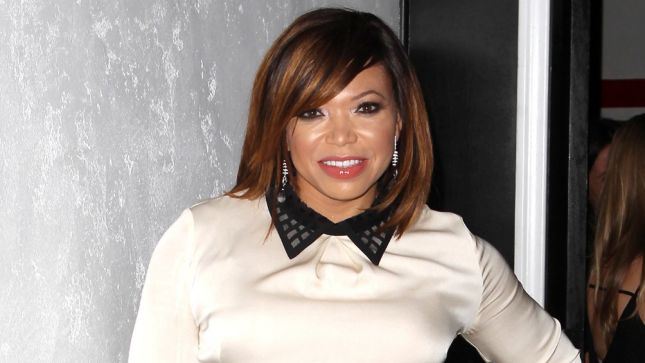
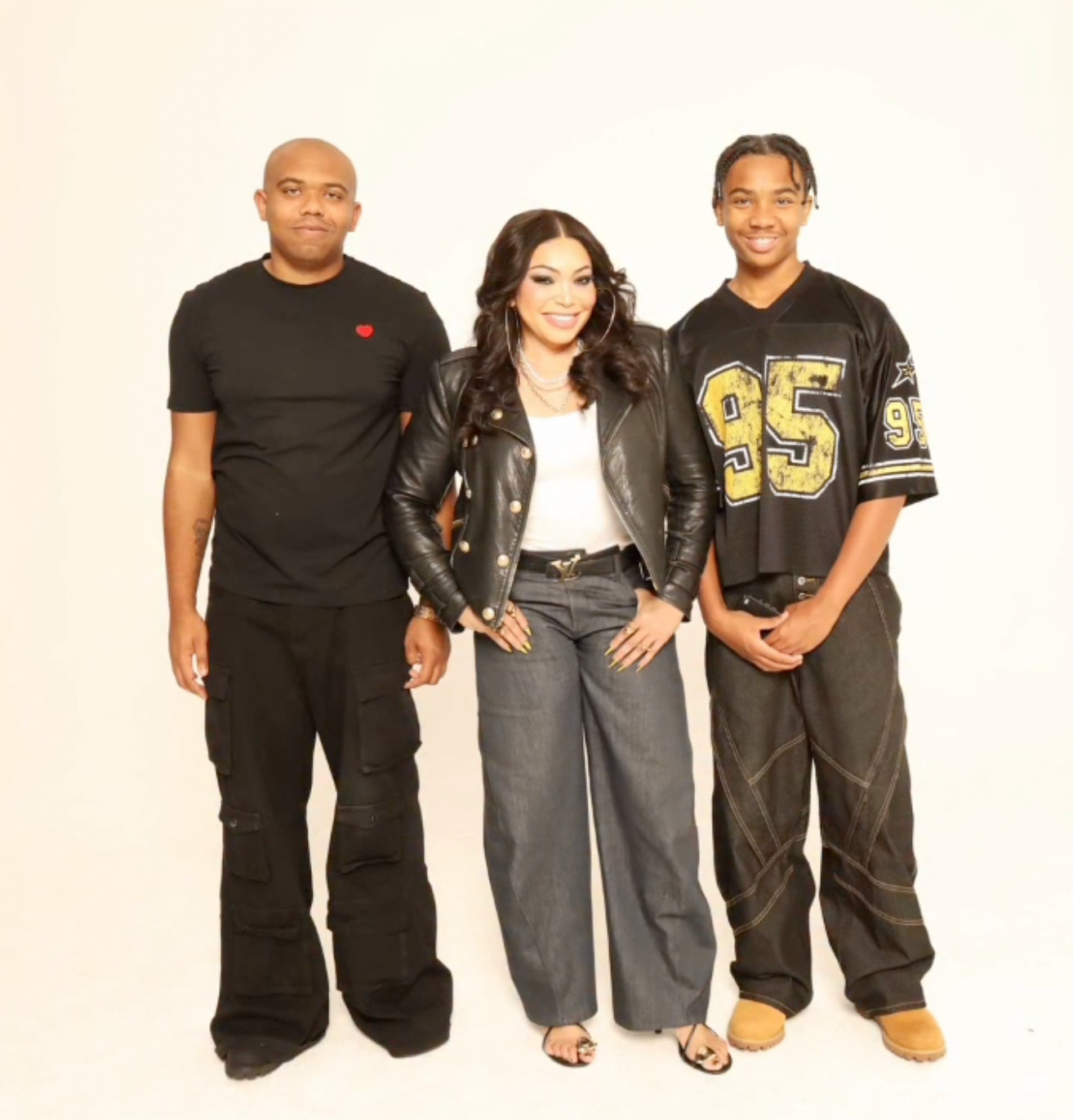
Tisha Campbell has spent years helping people understand autism through the experience of her son, Xen, 25.
She just didn’t know that one day the conversation would include her, too. At 57, the Martin and My Wife and Kids star recently revealed that she was diagnosed with both autism and ADHD after undergoing extensive evaluations with two specialists.
“I actually saw two specialists, and I took 12 tests each,” Campbell said during an appearance on Way Up With Angela Yee. The assessments ranged from written and oral tests to question-and-answer sessions.
The diagnosis came after decades of Campbell building a career in front of cameras, raising two sons (her younger son Zeke is 17) and advocating for Xen, who was diagnosed with autism as a toddler.
And rather than making Campbell question the life she has already lived, the diagnosis appears to be helping her understand it.
“I feel like I know myself so much better,” she said.
RELATED: 9 Biggest Signs of Autism in Black Adults
Campbell has described her diagnosis as AuDHD, a term that may be unfamiliar even to people who know about autism and ADHD separately.
AuDHD isn’t a formal diagnosis listed in the DSM-5. It’s an informal term that has emerged to describe people who have both autism spectrum disorder and attention-deficit/hyperactivity disorder.
The distinction is important: autism and ADHD are separate neurodevelopmental conditions, but a person can be diagnosed with both. That wasn’t always recognized. Previous diagnostic guidelines treated the conditions as mutually exclusive, but current criteria allow clinicians to diagnose autism and ADHD together.
For Campbell, getting there involved much more than taking an online questionnaire. She said she underwent the same kinds of testing her son had experienced, seeing two different specialists and completing multiple assessments with each.
Her therapist first encouraged her to get evaluated. After working through trauma and becoming more aware of her nervous system, Campbell said her therapist told her it was time.
RELATED: Am I Crazy? Signs of Adult ADHD Often Ignored
One thing Campbell began understanding differently after her diagnosis was how she moved through the world for decades.
“My whole entire life, I’ve masked in front of the public,” she told Yee, explaining that her loud personality and humor had sometimes helped her hide “in plain sight.”
Masking, sometimes called camouflaging, refers to ways some autistic people consciously or unconsciously hide, suppress, or compensate for traits to fit social expectations.
Campbell also talked about hiding her stimming, or repetitive movements and behaviors that can help some autistic people regulate themselves.
Then there were things she hadn’t necessarily hidden but hadn’t understood through the lens of autism. Campbell said acting and music have always been what she now recognizes as her “special interests”—subjects or activities that can hold particularly intense importance or focus for an autistic person.
She also described sensory differences. “I may not look like I need support, but I have earphones to block out sounds,” Campbell explained. “Everything comes at me all at once.” Suddenly, experiences she had carried for years had context.
Campbell’s story raises an obvious question: How does someone make it well into adulthood without knowing she’s autistic?
There isn’t one answer.
The National Institute of Mental Health notes that diagnosing autism in adults can be more difficult than diagnosing it in children, in part because some characteristics can overlap with conditions such as ADHD and anxiety.
Women and girls can face additional barriers to recognition. Research suggests that some autistic girls and women camouflage their traits by mimicking socially expected behavior, suppressing repetitive behaviors, or finding ways to compensate for difficulties that may not be obvious to other people. Studies have also found that autistic women may report more camouflaging than autistic men.
ADHD can be missed, too. NIMH notes that ADHD symptoms in girls and women are especially likely to have gone unrecognized during childhood. None of that means every woman who is outgoing, sensitive to noise, intensely interested in something or exhausted by social situations is autistic or has ADHD.
And that’s an important distinction in a social-media era when a list of relatable behaviors can quickly become a self-diagnosis. Campbell didn’t arrive at her diagnosis because she recognized herself in a TikTok. A therapist raised the possibility, and she sought professional evaluation.
RELATED: Black History of Health: Tisha Campbell
There was another revealing part of Campbell’s interview that had nothing to do with a diagnostic checklist. She specifically wanted a Black male therapist.
Campbell called Black men working in the mental health field “unicorns,” saying it had taken considerable effort to find one. Her therapist, Jonathan Abdullah, eventually became the person who encouraged her to pursue an autism evaluation. That relationship mattered to her.
It also speaks to something larger for Black patients: sometimes getting appropriate mental health care isn’t only about deciding to seek help. It’s also about finding a provider you feel comfortable enough to be fully seen.
Campbell has spent most of her life being seen by millions of people. But advocating for herself, being seen clinically, and understanding herself more fully was something different.
RELATED: Speak Up, Speak Out! 9 Ways to Advocate for Your Needs at the Doctor
An especially poignant piece of timing in Campbell’s story is that her son Xen was diagnosed with autism at 18 months old.
Campbell has spent years advocating for him, talking publicly about raising an autistic child and pushing back against assumptions about what he could or couldn’t accomplish. That journey eventually became her memoir, The A Word: A Mother’s Journey Through Autism and Love.
But Campbell’s own diagnosis isn’t in the book since she received it after she’d finished writing.
“I got the diagnosis after I wrote the book,” she told Yee.
In other words, Campbell wrote a book about what autism had taught her as a mother before discovering that it could teach her something about herself, too.
For Campbell, the answer seems to be a deeper understanding of herself.
According to NIMH, an autism diagnosis in adulthood can help people make sense of past challenges, recognize their strengths, and identify helpful support.
A diagnosis doesn’t rewrite Campbell’s past or change the career she’s built, but it gives her a new way to understand experiences she once had little explanation for, from sensory differences to behaviors she spent years hiding.
Maybe that’s the most meaningful part of her diagnosis. She isn’t discovering a different person. She’s learning more about the woman she’s been all along.
“I feel like I know myself so much better,” Campbell said. At 57, that’s a pretty powerful realization.

By subscribing, you consent to receive emails from BlackDoctor.com. You may unsubscribe at any time. Privacy Policy & Terms of Service.