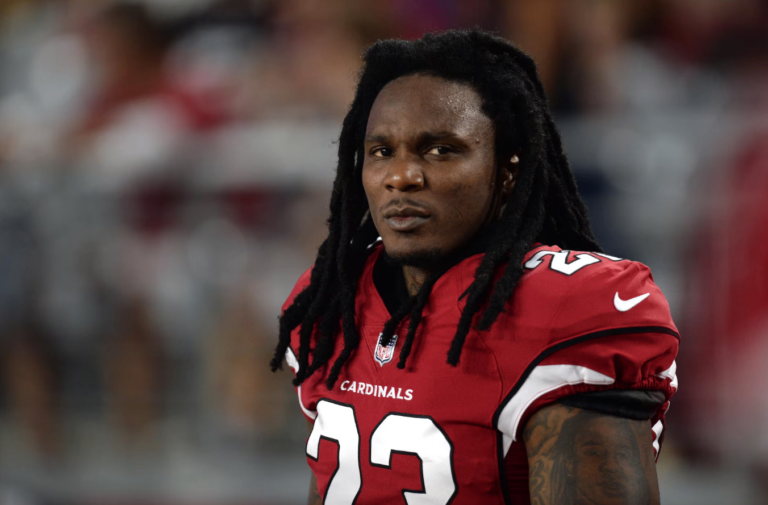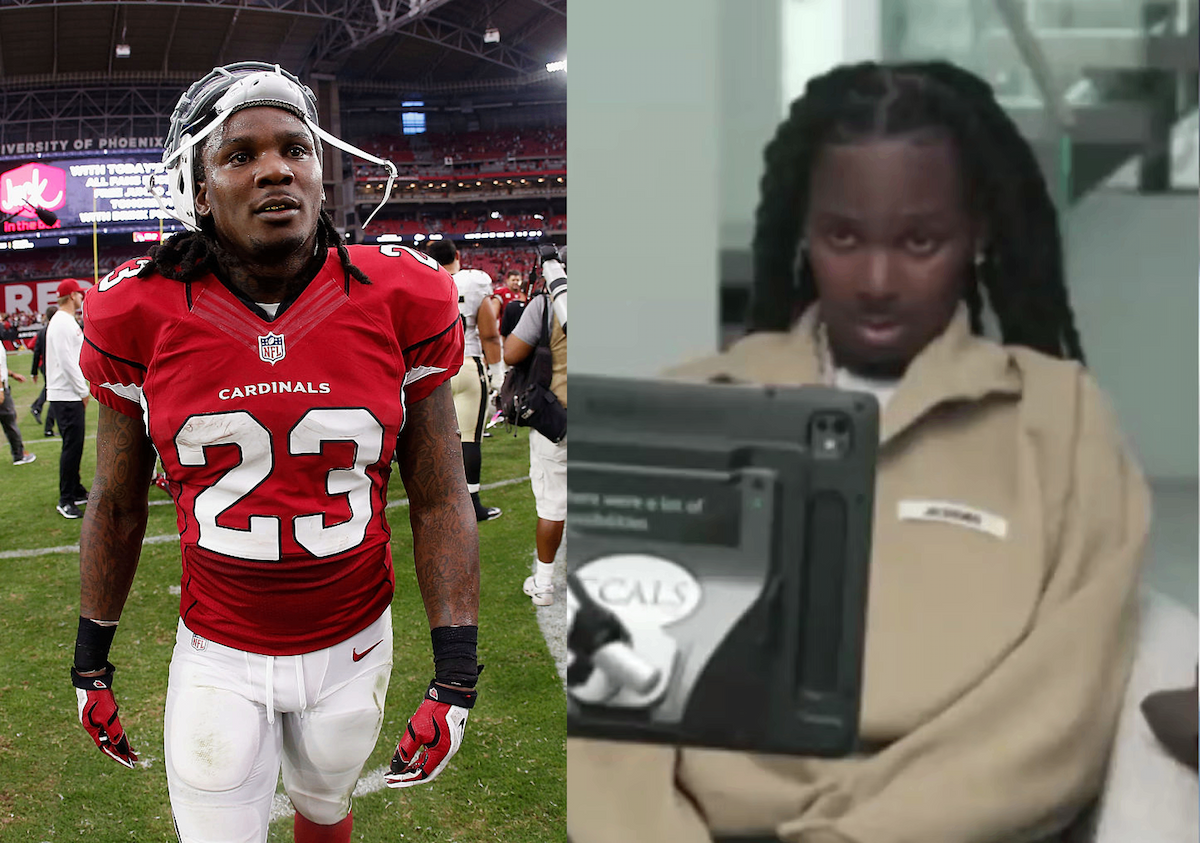
Chris Johnson was once one of the fastest men in the NFL. The former Tennessee Titans running back could outrun defenders, break tackles, and carry the ball for more than 2,000 yards in a single season.
Today, he struggles to hold a cup.
The former NFL star, who was diagnosed with amyotrophic lateral sclerosis (ALS) at 39 in 2025, has experienced a rapid decline in his physical abilities. He now uses an eye-controlled speech-generating device to communicate.
In a June 2026 Good Morning America interview with Michael Strahan, Johnson described how dramatically his life had changed. Just a year earlier, he could lift his young daughter so she could make a wish over her birthday cake. Now, he can no longer do that.
And although ALS has changed what his body can do, Johnson wants people to understand something important: He’s still the same person.
Johnson spent 10 seasons in the NFL, earned three Pro Bowl selections, and earned the nickname CJ2K after rushing for 2,006 yards in the 2009 season. After football, he remained active, working out regularly and enjoying time with his wife, Brittany, and their four children.
Then he noticed something unusual. “I first noticed weakness in my right hand,” Johnson told Strahan. “At first, it was little things like my grip didn’t feel right and I wasn’t as strong as I’ve always been.”
At first, Brittany suspected an old football injury or perhaps a pinched nerve. Given how many years Johnson had spent absorbing hits on the field, it seemed like a reasonable explanation. But the weakness wasn’t going away.
Johnson was eventually diagnosed with ALS, also known as Lou Gehrig’s disease, a progressive neurological condition that damages the nerve cells responsible for voluntary muscle movement.
The diagnosis came as a shock. Johnson said there was no known history of ALS in his family. His doctors believe he has sporadic ALS, the form that occurs without an established family history of the disease.
And the progression has been devastatingly fast.
According to the ALS Association, ALS affects motor neurons, the nerve cells in the brain and spinal cord that send signals to muscles. As those nerve cells deteriorate, muscles weaken and eventually lose function.
For some people, the first changes involve walking or balance. Others notice weakness in their hands, difficulty gripping objects, or changes in their speech. As ALS progresses, it can also affect the muscles needed for speaking, swallowing, and breathing.
What makes the disease especially difficult is that a person’s thinking and awareness may remain intact even as their physical abilities decline. Although some people with ALS develop cognitive or behavioral changes, many remain mentally alert throughout the illness.
During his interview with Michael Strahan, Johnson communicated using a speech-generating device controlled by his eye movements. Shortly after his diagnosis, his voice had been recorded, allowing the device to produce speech that sounds like his own.
Johnson can no longer speak the way he once did, but thanks to the technology, his family and viewers can still hear a voice that sounds like his own as he shares his story.
RELATED: Are Avid Exercisers at High Risk for ALS?
For someone who spent much of his life playing professional football, it’s hard to ignore.
In a September 2026 interview with PEOPLE, Johnson acknowledged wondering whether years of physical contact and repeated hits contributed to his condition. But he was careful not to claim a connection that hasn’t been established in his case. His doctors have not told him that football caused his ALS, and they haven’t identified a specific cause. Still, Johnson believes the relationship between contact sports, repeated physical trauma, and neurological diseases deserves further investigation.
And researchers are asking similar questions. The ALS Association has highlighted research suggesting that former NFL players face an elevated risk of ALS compared with people who never played professionally. A 2021 study published in JAMA Network Open examined more than 19,000 NFL players and found that they had nearly four times the rates of ALS diagnosis and death compared with the general U.S. male population.
However, an association doesn’t establish that football caused any particular person’s ALS. Researchers are still investigating what might account for the increased risk, including repeated head impacts and other factors associated with professional football.
For Johnson, the question is especially personal because his teenage twin sons play football. He and Brittany have discussed the risks, but Johnson has said he supports his sons continuing to play a sport they love while prioritizing their health.
His experience hasn’t given him a definitive answer about what caused his disease. It has made him more determined to get answers.
RELATED: Football Legend Marshawn Lynch on Mental Health Struggles and Going Beast Mode
Johnson’s diagnosis has also transformed everyday life for his wife and children. Brittany has become one of his primary caregivers, helping him navigate a disease that increasingly affects his independence. During their Good Morning America interview, she acknowledged how much their lives had changed and how demanding caregiving had become.
“She hasn’t left my side through any of this,” Johnson said of Brittany. “My kids are also a huge part of why I keep going.”
ALS is a disease that can progress unpredictably and often requires increasing levels of assistance. Caregiving can involve helping someone move safely, eat, communicate, manage medical appointments, and eventually address breathing difficulties.
It can also bring significant emotional and financial demands. The ALS Association offers resources for families and caregivers, including guidance on equipment, daily care, and support services.
RELATED: How to Survive Caregiving: A Comprehensive Guide
There is currently no cure for ALS, but treatments and supportive care can help manage symptoms, slow disease progression for some patients, and improve quality of life.
Johnson’s treatment has included standard ALS medications and participation in a clinical trial. After watching an interview with actor Eric Dane (who lived with ALS for 10 months before he passed away in February 2026) and neurologist Dr. Merit Cudkowicz, Johnson and his family contacted the physician about additional treatment options. Cudkowicz, a leading ALS researcher at Massachusetts General Hospital, became involved in his care.
During the Good Morning America interview, she discussed Johnson’s participation in a trial involving a treatment designed to reduce inflammation. Clinical trials are essential to ALS research, but experimental therapies are not guaranteed to work. Rigorous testing must establish their safety and effectiveness.
For people living with ALS, care often involves a multidisciplinary team that may include neurologists, respiratory specialists, physical and occupational therapists, nutrition professionals, and speech-language pathologists.
The goal is not only to address disease progression but also to help people maintain communication, comfort, and independence for as long as possible.
RELATED: 4 Common Myths About Clinical Trials
Johnson knows people remember him as a powerful, explosive athlete. But he doesn’t want his physical limitations to define him. ALS has changed what his body can do, not who he is as a husband, father, or the man football fans remember as CJ2K.
By sharing his experience, Johnson hopes to raise awareness, encourage research, and help other families facing the disease.
According to the ALS Association, diagnosing ALS can be challenging because its symptoms overlap with other conditions. Persistent, unexplained muscle weakness deserves medical attention, although most people experiencing weakness do not have ALS.
For Johnson, the need for answers is deeply personal. He’s experienced how quickly ALS can change everyday life, from holding a cup to lifting his child. But he doesn’t want his physical limitations to define him.
“I want people to know that I’m still me,” he told Strahan. “ALS has changed what my body can do, but it hasn’t changed who I am.”


By subscribing, you consent to receive emails from BlackDoctor.com. You may unsubscribe at any time. Privacy Policy & Terms of Service.