If you’re living with Chronic Spontaneous Urticaria (CSU), you’re all too familiar with the relentless cycle of hives and itching that seems to appear out of nowhere. Finding a treatment that actually works—and doesn’t just mask the symptoms—can feel like a full-time job.
Recently, researchers looked into whether acupuncture could be a viable tool for managing these “mystery chronic hives.” While the results from a major study in the Annals of Internal Medicine show some promise, they also come with an important reality check for patients looking for a definitive “cure.”
“Acupuncture is a traditional Chinese medicine practice [that] has been around for thousands of years,” said Dr. Chiti Parikh, executive director of the Integrative Health and Wellbeing Program at New York-Presbyterian in collaboration with Weill Cornell Medicine. “It is practiced by inserting thin needles into specific anatomic points in the body.”
Those specific points can be found in any general area of the body, and an acupuncture point for a symptom such as pain could be far away from where the pain is occurring. Needles are often left in place for 15 to 30 minutes.
RELATED: Diet, Stress, & CSU: How You Can Control Chronic Hives
Acupuncture is based on a concept that vital energy known as Qi flows through the body along certain pathways known as meridians, Parikh explained.
Imagine those channels of energy like streams of water flowing through your body. If something like a tree fell, it could block a stream.
“When these channels get blocked,” Parikh explained, “the flow of energy is impeded, leading to disease in the body.”
She said acupuncture is used to treat a host of symptoms and diseases.
“Research has shown that acupuncture may be helpful for several pain conditions, including back or neck pain, knee pain associated with osteoarthritis, headaches, cancer-related pain and postoperative pain, anxiety, fertility,” Parikh said.
Research compiled by the National Center for Complementary and Integrative Health shows that acupuncture may also help with:
Researchers conducted a clinical trial with 330 participants to see if acupuncture performed better than “sham” (placebo) acupuncture or no treatment at all.
The study used the Weekly Urticaria Activity Score (UAS7) to measure progress. This scale tracks the number of wheals (hives) and the severity of the itch over seven days.
RELATED: Hives With No Trigger? Here’s What An Allergist Wants You to Know
The study measured changes over four weeks of treatment. Here is how the groups compared:
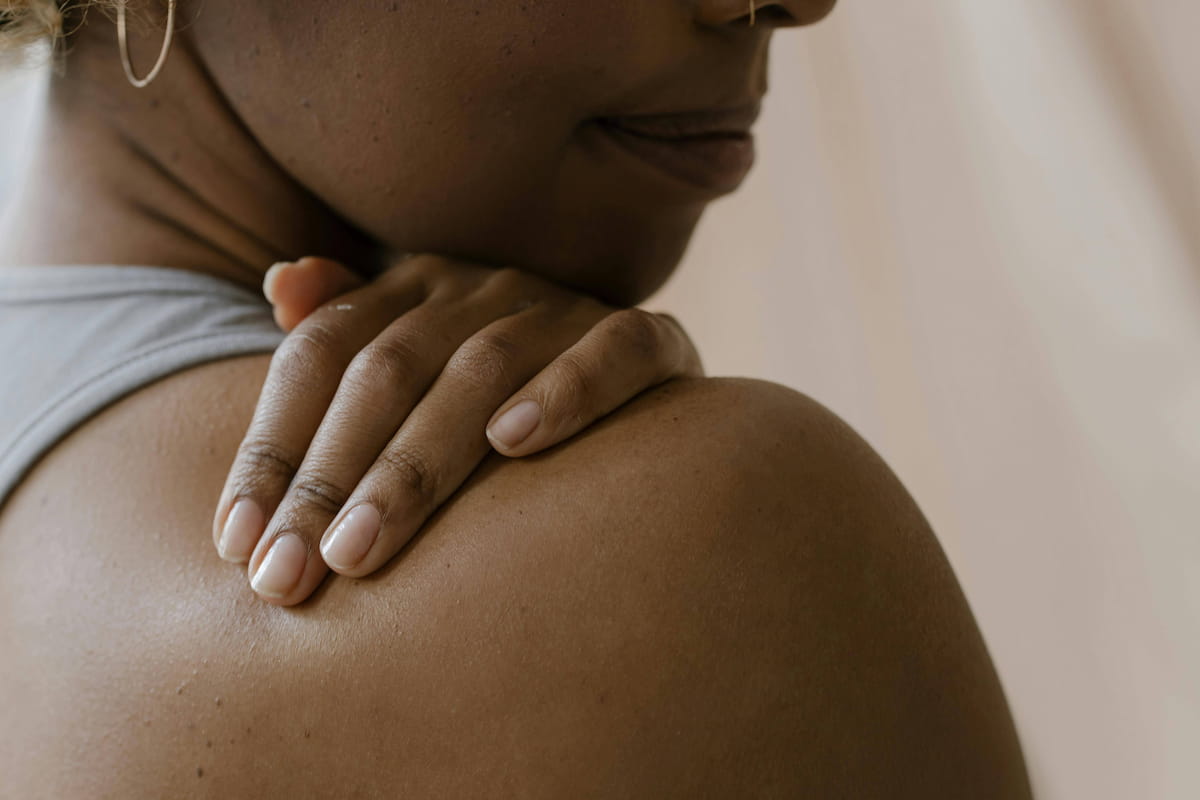
While the acupuncture group technically “won” the study, there is a catch. In medical research, there is a difference between a statistical improvement and a clinically significant one.
A “clinically significant” change is an improvement large enough that a patient would actually notice a meaningful difference in their daily life. Even though acupuncture lowered scores more than the placebo, the difference wasn’t quite large enough to meet the official threshold for a “meaningful” change for the average patient.
“This is the first description of the efficacy of acupuncture in yet another nonpain condition, albeit lacking in clinical importance in terms of the magnitude of the mean difference from baseline,” Mike Cummings, M.B.Ch.B., from the British Medical Acupuncture Society in London, writes in an accompanying editorial.
One of the most important takeaways for patients is the safety profile. The study reported:
Because the needles used for acupuncture are smaller than those used for other medical procedures, they’re “typically not painful,” Parikh said.
Compared to acupuncture, dry needling is a “relatively new technique,” Parikh said. While acupuncture needles are inserted into points along energy channels, dry needling inserts thicker needles that target trigger points within muscles to relieve tension and decrease pain, so dry needling may hurt. Licensed and trained acupuncturists can do acupuncture, whereas licensed and trained physical therapists can do dry needling.
Acupuncture is safe if it is “offered by a licensed, trained acupuncturist,” Parikh said.
In an online guide to acupuncture, the Mayo Clinic concurs.
“The risks of acupuncture are low if you have a competent, certified acupuncture practitioner using sterile needles,” it said, adding, “Single-use, disposable needles are now the practice standard, so the risk of infection is minimal.”
The Mayo guide advises patients who are considering acupuncture to tell their practitioner if they have a bleeding disorder, a pacemaker or are pregnant.
People who have a blood disorder or take blood thinners may bleed or bruise. Acupuncture procedures in which mild electrical pulses are applied to the needles may interfere with pacemaker operation. And some acupuncture points may stimulate premature labor, according to the Mayo Clinic.
You may feel some weakness after the treatment. “It is advised to rest and hydrate (drink water),” Parik said.
Six to eight acupuncture treatments are a common prescription, according to the Mayo Clinic. The number will depend on the condition being treated and how severe it is.
An acupuncture session may take up to one hour.
The Bottom Line: If you are struggling to manage your chronic hives, acupuncture might offer a modest boost in comfort, but it’s unlikely to clear your symptoms entirely on its own. Always consult with your allergist or dermatologist before starting a new treatment path.


By subscribing, you consent to receive emails from BlackDoctor.com. You may unsubscribe at any time. Privacy Policy & Terms of Service.