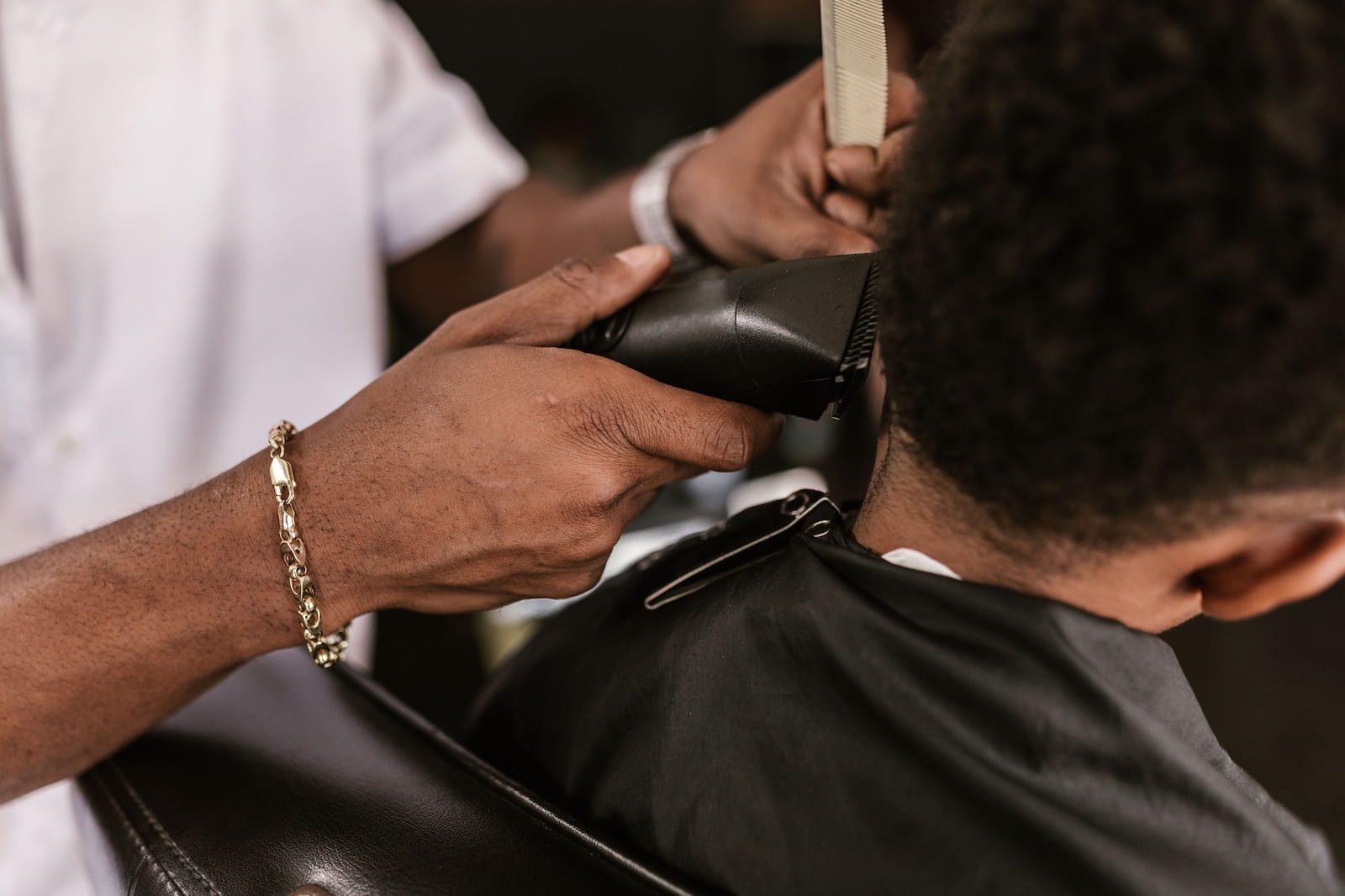
Your barber probably knows your scalp better than almost anybody.
He knows where your hair grows differently, where your lineup starts to thin, and whether that dry patch behind your ear was there two weeks ago.
So when he spins the chair around and says, “Hey man, you might want to get this checked out,” don’t automatically assume he’s talking about dandruff.
It could be scalp psoriasis.
Psoriasis is a chronic inflammatory disease that can show up anywhere on the body, including underneath your hair. And on Black skin, it doesn’t always look like the red, silvery plaques you may have seen in pictures.
According to the American Academy of Dermatology, psoriasis on Black American skin may appear purple with a gray scale or dark brown, which can sometimes make it harder to see.
That can make the barber chair an unexpected place to notice that something is going on with your scalp.
Can you still get your usual cut? Should you tell your barber you have psoriasis? Could clippers or a close cut make things worse?
Here’s what Black men should know before the cape goes on.
You see flakes on your black T-shirt. Your scalp is dry. Maybe it itches.
Dandruff, right? Maybe. But scalp psoriasis can look a lot like dandruff.
The American Academy of Dermatology says scalp psoriasis can range from a small patch to thick, inflamed areas with scale. It can itch, feel dry, crack, or bleed and may temporarily cause hair loss. Psoriasis can also extend beyond the hairline to the forehead, back of the neck, or behind the ears.
On darker skin, psoriasis may appear purple, gray, or dark brown instead of bright red.
So don’t assume every flaky scalp just needs a stronger dandruff shampoo. And don’t ask your barber to diagnose it.
A barber who sees your scalp regularly may notice a change, but figuring out whether you’re dealing with psoriasis or another scalp condition belongs to a healthcare professional.
RELATED: You Think It’s Dandruff, But It’s Not (And What to Do About It)
Yes, you should definitely tell your barber you have psoriasis
Not because psoriasis is contagious—it isn’t—but because your barber should know that your scalp may require a gentler touch.
If you have active patches, soreness, cracking, or bleeding, point those areas out before the haircut begins. You can also let your barber know if your dermatologist has told you to avoid certain products or practices.
Psoriasis advocate Diane Talbert, who has lived with psoriasis since childhood, shared that it took years to find a hairstylist who understood her scalp. Her current stylist knows her psoriasis isn’t simply “bad dandruff” and doesn’t try to scratch away the scale with a comb.
That’s the kind of understanding you want from the person who helps take care of your hair.
RELATED: 4 Vitamins That Are Great For Managing Psoriasis Symptoms

Once you realize you have scalp psoriasis, you may be able to get your usual cut as long as you don’t have an active flare.
The AAD advises people with scalp psoriasis to treat the area gently: scraping, scratching, aggressive brushing or combing, or nicking already-inflamed skin can trigger a flare and may contribute to temporary hair loss.
So resist the temptation to ask your barber to “get all that stuff off.” Safer options exist to loosen stubborn scale.
A dermatologist may recommend a scale softener containing salicylic acid or another treatment that helps loosen patches so medication can reach the scalp.
If you have thick plaques, open areas, bleeding, or a painful flare, tell your barber what’s going on. They may be able to work around irritated areas or adjust how closely they cut.
Sometimes the freshest possible fade can wait.
“Just shampoo more often” may be a simple suggestion, but that plan can interfere with how you actually care for your hair.
The AAD notes an important distinction for people of African descent: scalp psoriasis treatment may involve using medicated shampoo once or twice a week rather than assuming the same washing schedule works for every hair type.
Brooklyn hairstylist and barber Nigella Miller knows that balancing act personally. Miller, who has psoriasis, has shared that she washes her hair about once a week and pays close attention to product buildup and flaking as part of managing her scalp.
Hair texture, styling practices, and how frequently you wash your hair can all affect whether a treatment plan works in real life.
In a National Psoriasis Foundation discussion about psoriasis in skin of color, dermatologist Dr. Mona Shahriari explained that she considers hair texture, styling practices, and washing less frequently when treating scalp psoriasis in patients with skin of color. Oils, lotions, or foams may also work better with some hair textures and styles than treatments that require frequent shampooing.
Tell your dermatologist how often you wash your hair, how you style it, what products you use, and how often you’re sitting in the barber chair.
RELATED: A 3-Minute Routine for Softer, Calmer, Psoriasis-Prone Skin
If your barber notices something before you do, listen to them.
That doesn’t mean your barber gets to diagnose you. It means someone who sees your scalp every week or two may notice a change in an area you probably won’t see yourself.
There’s actually research behind the idea that the barber chair can play a role in Black men’s health.
In a paper published in the Journal of the American Academy of Dermatology, researchers described Black barbershops as potential partners in expanding access to dermatologic care. Because many Black men visit their barbers weekly or every other week, the researchers suggested educating barbers to recognize common skin and hair conditions and creating connections with dermatologists for referrals.
Think of your barber as another set of ears and eyes.
If someone who has been looking at your scalp every other Saturday for five years suddenly says, “That wasn’t there before,” that’s information worth paying attention to.
Persistent thick or scaly patches, significant itching or soreness, cracking, bleeding, or unexplained hair loss are good reasons to see a dermatologist. If you’ve already been diagnosed with psoriasis and those symptoms aren’t improving, you may need to adjust your treatment.
For plenty of Black men, the barber chair is routine, tradition, even family. Your barber gets a close look at parts of your scalp you can’t easily see yourself, and over time, he knows what’s normal for you.
That makes him an important set of eyes, but still not your dermatologist.
If your barber notices something, pay attention. If you already know you have psoriasis, let your barber know. And if your scalp is irritated, don’t sacrifice healthy skin for the sharpest possible lineup.
Most importantly, don’t spend months treating something as “just dandruff” because that’s what you’ve always called it.
Sometimes your barber holding the clippers is also the first person to notice when something has changed.


By subscribing, you consent to receive emails from BlackDoctor.com. You may unsubscribe at any time. Privacy Policy & Terms of Service.
Enter your name and email to receive the download link.