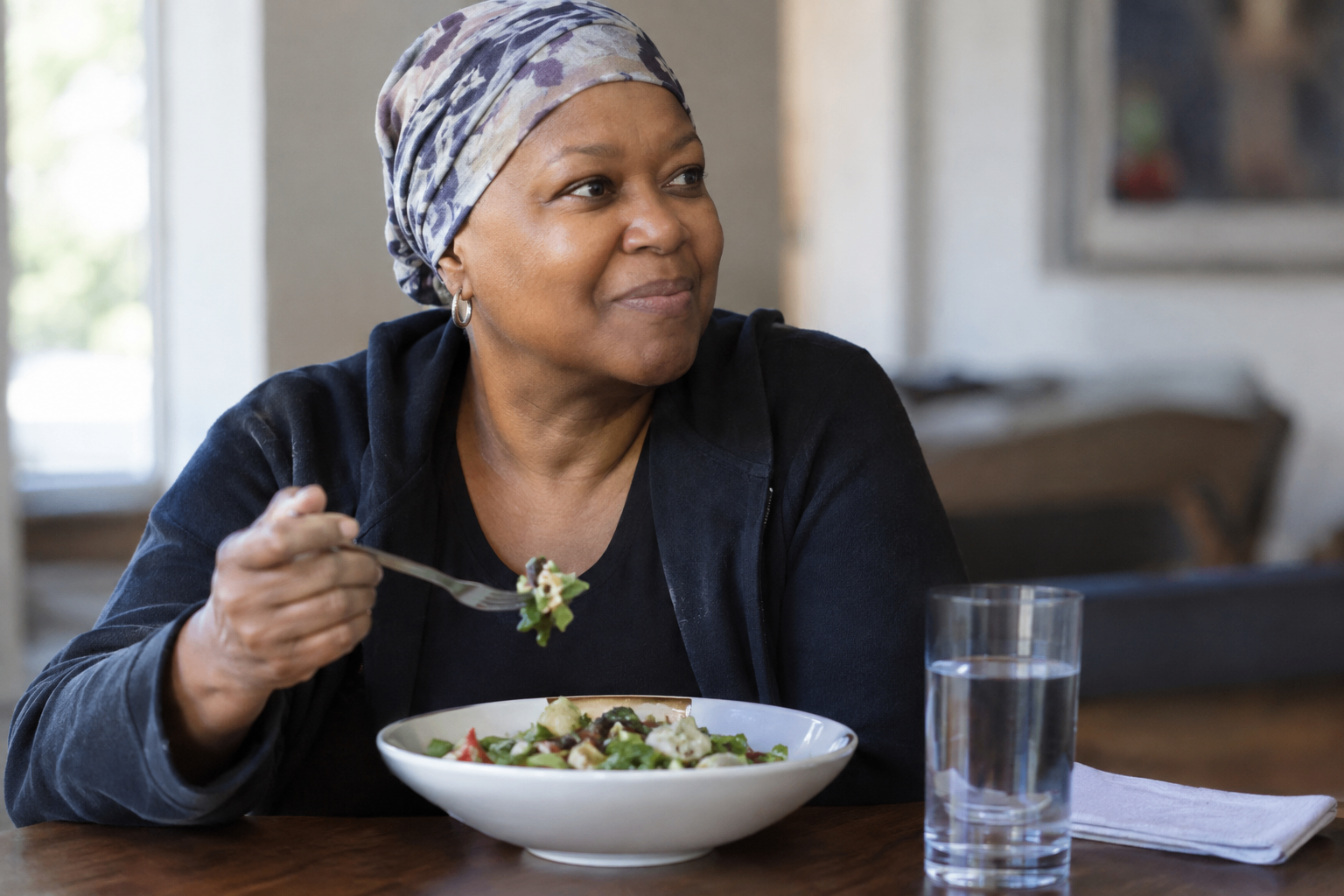
The smell of dinner cooking used to mean something good was about to happen. Now it’s the first warning sign of a rough night ahead. That shift where food goes from comfort to threat is one of the hardest parts of chemotherapy you may not be prepared for.
Chemotherapy can cause nausea, vomiting, appetite changes, fatigue, mouth sores, dry mouth, diarrhea, and changes in the way food tastes or smells. These chemotherapy side effects can make eating difficult, but getting enough fluids, calories, and protein remains important during treatment.
The good news is that you don’t necessarily have to force yourself to eat three large meals a day. For many people, eating five or six smaller meals and snacks throughout the day can make it easier to stay nourished, especially when nausea or a poor appetite makes larger meals unappealing.
What works best can vary depending on your treatment, symptoms, and overall health. If you’re struggling to eat or losing weight, ask your oncology team about seeing a registered dietitian who specializes in cancer care.
RELATED: 10 Must-Have Items When Going Through Chemotherapy
The American Cancer Society notes that many people do well with a light meal or snack about an hour before chemotherapy.
Focus on foods that are familiar, easy to digest, and provide some protein and carbohydrates.
Good options include:
Avoid particularly heavy, greasy, spicy, or strongly flavored foods if you know they tend to worsen your nausea.
It’s also important to stay hydrated throughout the day. Your fluid needs may vary depending on your treatment and other health conditions, so ask your care team how much you should drink.
RELATED: The Importance of Keeping Hydrated
Chemotherapy can affect people differently. Some people experience nausea during treatment, while others notice symptoms later. Nausea and vomiting can also lead to dehydration, so keeping fluids available and taking small sips throughout the day can help.
If you’re feeling nauseated, try smaller amounts of bland foods such as:
Some people find that cold or room-temperature foods are easier to tolerate because they have less smell than hot foods. If cooking odors trigger nausea, ask someone else to prepare your food or choose foods that don’t require much cooking.
Your oncology team may also prescribe medication to prevent or control chemotherapy-related nausea. Don’t wait until nausea becomes severe to ask about treatment. Antinausea medications are often most effective when used as directed by your care team.

Chemotherapy can cause mouth sores, tenderness, and dry mouth, which can make eating uncomfortable. The National Cancer Institute recommends trying softer foods when these side effects make eating difficult.
When your mouth is sore, choose foods that are soft, moist, and easy to swallow. Try:
Cold or room-temperature foods may also be easier to tolerate.
Avoid foods that can irritate a sore mouth, including spicy, acidic, salty, sharp, or crunchy foods. Citrus fruits, tomatoes, chips, pretzels, and other rough foods may be particularly uncomfortable when sores are present.
If you develop mouth sores, white patches, significant pain, or trouble swallowing, tell your cancer care team.
Changes in taste and smell are common during chemotherapy. Foods you once enjoyed may suddenly taste metallic, bitter, salty, or simply “wrong.”
Don’t force yourself to eat foods that make you nauseated. Instead, experiment with different temperatures, textures, seasonings, and protein sources. If meat tastes unpleasant, alternatives such as eggs, chicken, fish, beans, dairy products, or nut butters may be easier to tolerate.
The American Cancer Society suggests switching to plastic forks, spoons, and knives if foods develop a metallic taste.
RELATED: What to Pack for Chemo: 15 Things Women Say They Couldn’t Live Without
There’s no single “recovery diet” you need to follow after chemotherapy. Still, you can focus on gradually returning to foods that provide the calories, protein, vitamins, and minerals your body needs.
If your appetite is still low, continue with smaller, more frequent meals rather than forcing yourself to eat large portions.
Choose foods such as:
Protein is especially important because your body needs it to maintain muscle and support healing. The American Cancer Society notes that people recovering from chemotherapy, surgery, or radiation often need extra protein to heal tissues and fight infection. If you’re having trouble getting enough protein or calories, your cancer care team or a registered dietitian can help you find practical options.
If diarrhea is one of your chemotherapy side effects, your diet may need to be adjusted temporarily. Your care team can help you determine which foods and fluids are appropriate based on the severity and cause of your symptoms.
RELATED: What to Eat When Treatment Changes Your Appetite
Chemotherapy can cause several side effects that make it harder to eat or drink enough. Common problems include:
These symptoms can increase the risk of dehydration, weight loss, and malnutrition if they persist. Tell your oncology team if you’re consistently struggling to eat or drink, losing weight without trying, vomiting frequently, or having difficulty swallowing.
A registered dietitian who specializes in oncology nutrition can also help you create a plan based on your symptoms, treatment, and nutritional needs.
RELATED: 10 Actions Every Chemotherapy Patient Should Take
Chemotherapy can weaken the immune system and increase the risk of foodborne illness, according to the American Cancer Society. That’s another reason to pay attention to how food is prepared and stored during treatment.
Wash your hands before preparing or eating food, keep raw meat separate from other foods, cook foods thoroughly, refrigerate leftovers promptly, and avoid foods that your cancer care team has advised you to skip.
If your oncology team tells you that your white blood cell count is low or that you are at increased risk for infection, ask specifically whether you need additional food-safety precautions.
You don’t have to figure out chemotherapy nutrition on your own.
If nausea, mouth sores, taste changes, diarrhea, constipation, or loss of appetite are making it difficult to eat, tell your cancer care team. Your doctors may be able to adjust medications or recommend treatments to manage the symptoms.
And if you’re losing weight or struggling to get enough food and fluids, ask whether a registered dietitian can help.
Chemotherapy can change how food tastes, how hungry you feel, and what your body can tolerate. Give yourself permission to adjust. Smaller meals, softer foods, different flavors, and convenient snacks may make eating easier on difficult days.
The goal isn’t to eat perfectly. It’s to give your body the nutrition and hydration it needs while you go through treatment, and to get help when side effects make that difficult.

By subscribing, you consent to receive emails from BlackDoctor.com. You may unsubscribe at any time. Privacy Policy & Terms of Service.
Enter your name and email to receive the download link.