Pancreatic cancer can be a silent killer, especially for people who inherit mutant genes that greatly raise their risk for the disease.
However, there’s new hope of preventing the cancer among these high-risk people: A vaccine that trains their immune systems to hunt and kill the rogue cells that carry the mutant gene.
In a small study, 18 of 20 participants at high genetic risk for pancreatic cancer developed the hoped-for immune response to the vaccine.
Better yet, over a follow-up of 16.5 months, no one in the study developed the pancreatic lesions that are known to be precursors to full-blown cancer.
“This is just the beginning, but the findings suggest that the immune system is getting activated,” said study co-senior author Dr. Elizabeth Jaffee, deputy director of the Johns Hopkins Kimmel Cancer Center in Baltimore.
“We have more work to do, but this is a good start aimed at prevention, which no one had thought about doing before,” Jaffee added in a Hopkins news release.
Her team’s findings were published today in Cancer Discovery.
The American Cancer Society projects that more than 67,000 Americans will be diagnosed with pancreatic cancer this year and almost 53,000 will die from the disease. Because the cancer can progress for a long period of time without symptoms, it is often detected too late for effective treatment.
RELATED: Pancreatic Cancer 101: What Black Americans Need to Know
In about 10 percent of cases, people have inherited gene mutations from a parent that have made them especially vulnerable to the disease. These individuals are highly prone to developing lesions on the pancreas that can develop into cancers, Jaffee’s team explained.
Study co-senior author Dr. Neeha Zaidi said the only hope for these at-risk individuals right now is to “undergo surveillance to monitor for [pancreatic] changes over time.” If such changes are detected, the affected part of the pancreas is surgically removed.
Even that is no guarantee against pancreatic cancer, however.
“The chances of [post-surgical] recurrence are up to 80 percent, and many precursor lesions to pancreatic cancer are microscopic and thus undetectable by imaging,” noted Zaidi, an associate professor of oncology at Hopkins’ Sidney Kimmel Comprehensive Cancer Center.
But what if precursor lesions could be prevented altogether?
Mutations in a gene called KRAS are known to be responsible for 90 percent of hereditary pancreatic cancers, the researchers explained.
They had previously developed mKRAS-VAX, a vaccine that targets the six most common KRAS mutations linked to these cancers. The vaccine trains the immune system to seek and destroy any cells carrying these culprit genes.
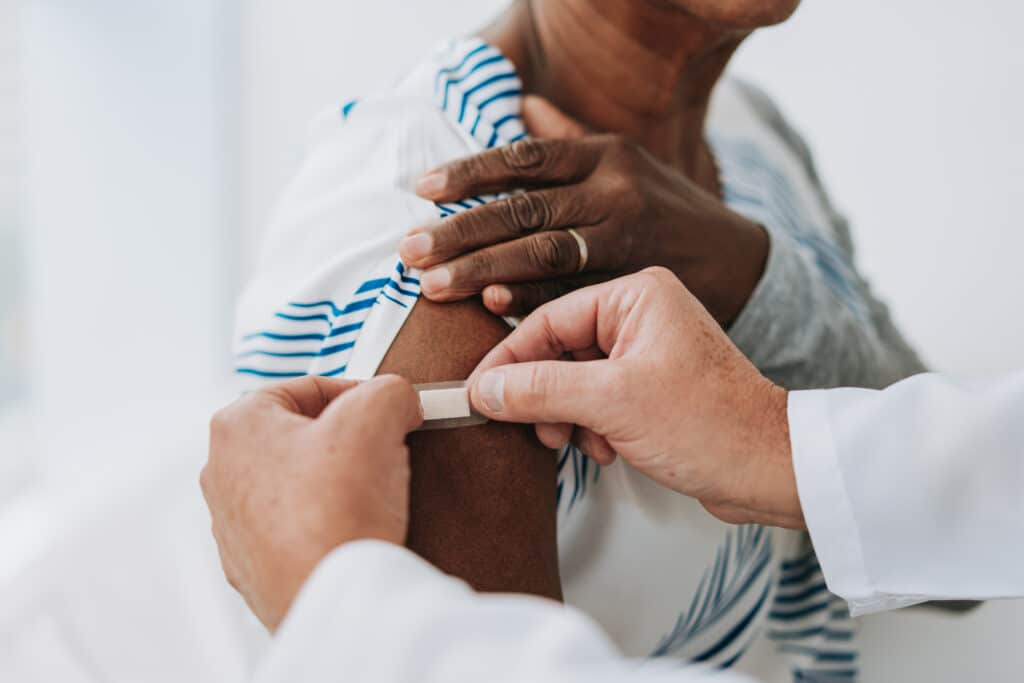
Over the course of 13 weeks, the 20 at-risk participants in the study received under-the-skin injections of the vaccine at weeks one, three, five and 13.
Immune responses were tracked via blood sampling for 16.5 months, and they were closely monitored for signs of pancreatic cysts, lesions or tumors.
Beyond the general absence of lesions or cancers, the Hopkins team also observed a shrinkage or elimination of pancreatic cysts in 37.5 percent of those who got the vaccine, versus 6.8% among unvaccinated people.

“Overall, this study represents the first proof of concept for the use of vaccines for interception of pancreatic cancer in human patients,” Zaidi said in a journal news release.
“This long-lasting response is particularly noteworthy when assessing for possible interception of cancer, which requires long-lasting immunity,” she added. “In addition, the vaccine was safe and well tolerated, supporting its use in larger cancer interception studies.”
The researchers stressed that this trial was small in size and designed to assess the safety and immune response elicited by the vaccine; it does not confirm that the vaccine prevents pancreatic tumors.
Still, the trial’s success does support “proof of concept” that the vaccine might work, and will spur efforts to larger clinical trials.
“More studies are needed to find the best vaccine approaches, the best targets and the ideal timing for vaccination,” Jaffee explained.
RELATED: Blacks Are Dying of Pancreatic Cancer, But We’re Missing From Clinical Trials
For Black patients, advancements in pancreatic cancer prevention, such as this vaccine, are especially important to pay attention to. While researchers are still exploring new ways to detect and treat this disease much earlier, ensuring that clinical trials include diverse participants is critical. Without representation from different communities, researchers may miss important differences in genetics, risk factors, access to care, and treatment response.
More information
Find out more about PDAC at Pancreatic Cancer UK.
SOURCES: Johns Hopkins University, news release, July 16, 2026; American Association for Cancer Research, news release, July 16, 2026


By subscribing, you consent to receive emails from BlackDoctor.com. You may unsubscribe at any time. Privacy Policy & Terms of Service.