BlackDoctor dedicates this story to Terri Lee, who is retiring today at Merck at VP of State Government Affairs and Policy. With more than 30 years of legislative policy experience, Terri Lee was named to the Pennsylvania City & State 2023 Healthcare Power 100. Terri is a recipient of the NOBEL Women Inaugural Women of Distinction Award and was recognized by the Healthcare Businesswomen’s Association for her work to protect public interest and promote public health policy. She also received the National Black Caucus of State Legislators Corporate Achievement Award for Partnership & Social Responsibility and was honored as one of Merck’s Most Amazing Women and received the One Merck Global Diversity and Inclusion Award for her work with external partners. Terri is a charter member of Phi Beta Omega Chapter of Alpha Kappa Alpha Sorority, Inc., and a member of The Links, Inc.-Philadelphia Chapter. She has dedicated her career to advancing legislative policy that improves access to innovative medicines and healthcare for those most in need.
“Some families, they pass down property. Other families, they pass down recipes. Some families might even pass down watches and money, which is great,” BlackDoctor’s Derrick Lane stated as he welcomed the audience filtering into The Strand Theatre for the first morning discussion at BlackDoctor House Martha’s Vineyard in Oak Bluffs, MA. “Other families, they might pass down stuff like high blood pressure, diabetes, bad cholesterol — all of that sort of stuff that impacts our daily life.”
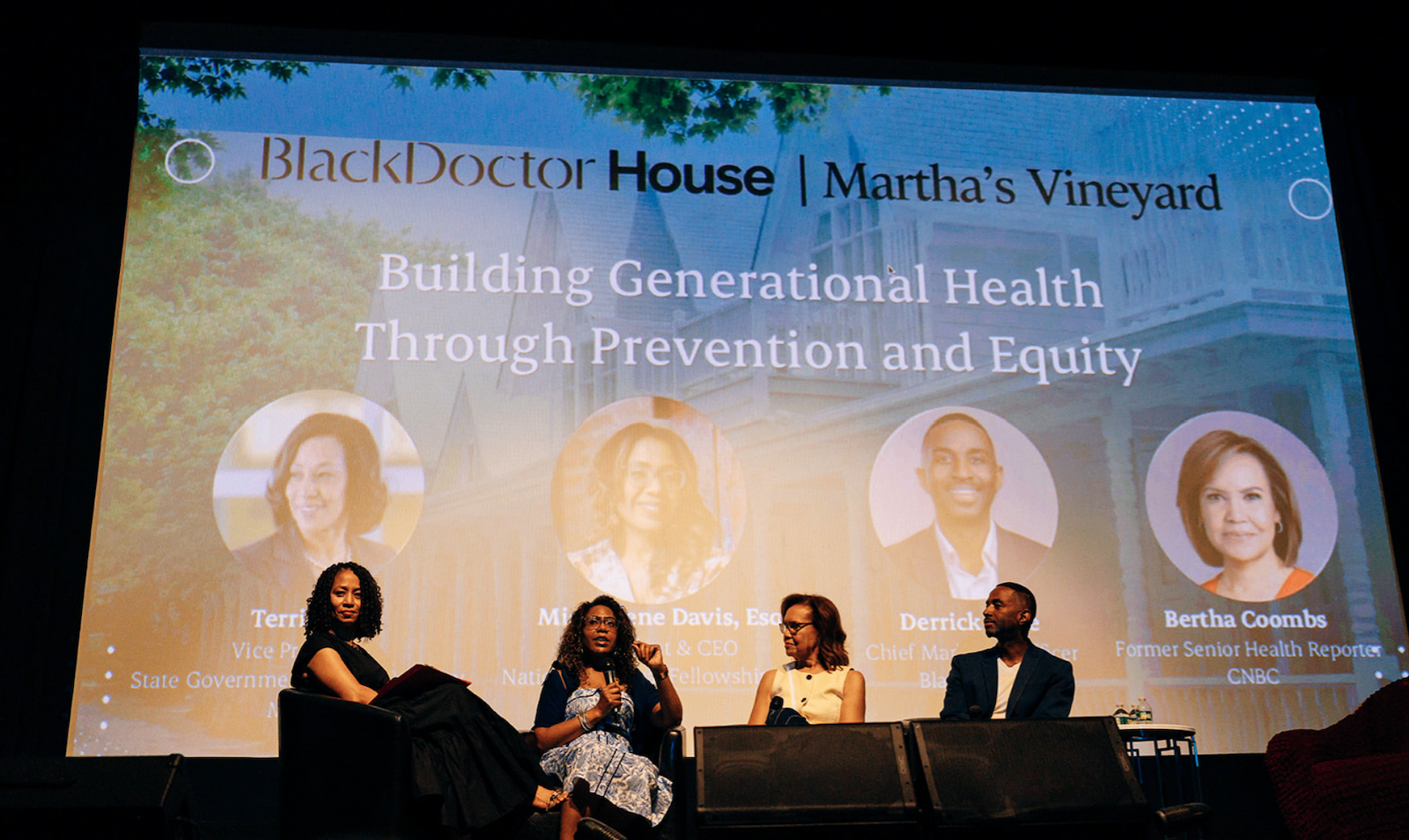
Lane’s candor immediately set the stage to go from policy to personal for “Building Generational Health Through Prevention and Equity,” one of the cornerstone conversations of BlackDoctor’s inaugural two-day summer summit held on Aug 12 -13.
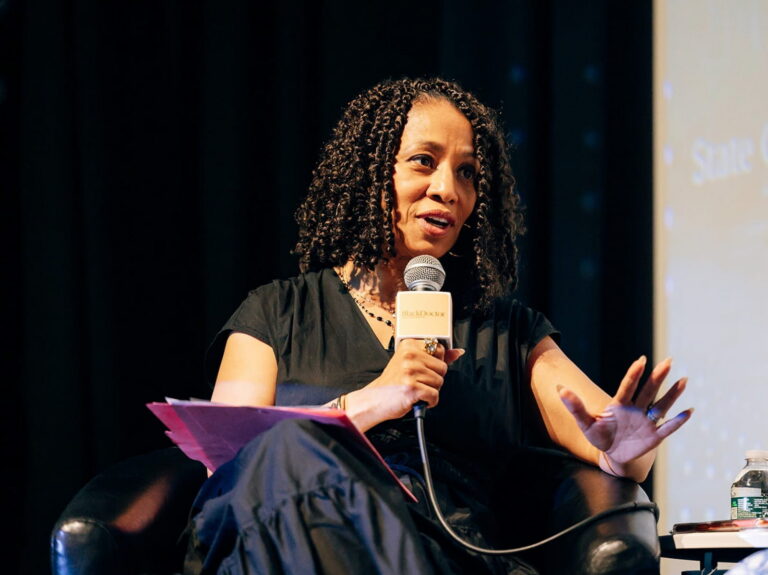
The conversation, moderated by Terri Lee, VP of State Government Affairs and Policy, Merck, brought together three voices of health and media: Michellene Davis, Esq, President & CEO, National Medical Fellowships (NMF), Inc.; Bertha Coombs, former CNBC senior health care reporter; and Lane, Chief Marketing Officer, BlackDoctor.
Lee opened the panel with a simple prompt: What does generational health mean to you personally and professionally? The answers turned quickly toward caregiving.
Coombs described becoming her mother’s caregiver in her final years, and a small, telling argument over a can of tomato soup her mother loved. “I know you love that Campbell’s tomato soup… but that has so much sodium,” Coombs recalled telling her. “She said, ‘but I don’t put salt in.’ I was like, no, that sodium is terrible.”
That unmanaged blood pressure, she said, ultimately contributed to bigger health problems. She traced her own health awareness back to a community health center doctor who, when Coombs was ten years old, gently taught her and her mother how to think about food and weight. “[They were] not shaming me… but giving me the tools.”
Davis spoke about caring for her mother at home for 13 years as Alzheimer’s progressed. “From March to June of this year, I have aged 75 years,” she said. She described what it was like witnessing the the disease’s toll on a woman whose “superpower was love and forgiveness.” She reframed the conversation around what she called an asset-based lens on Black health: “We have been the blue zone in the face of oppression. We can do it again.”
Lane, who had just moved his own mother in with him the previous year, put it simply: “Generational health to me is loving that next generation, wanting to see something better than what they have right now.”

Lee turned the conversation toward the conditions that shape health outcomes across generations — where people live, what food is available to them, and how much they trust the systems meant to care for them.
Coombs shared a personal account of advocating for herself after oral surgery, when a doctor repeatedly told her to “calm down” and “breathe” instead of addressing her pain.
“The research shows that white doctors seem to underestimate the pain of Black patients. I don’t know if this is unconscious with you right now, but I am in real pain and I don’t appreciate being told to just calm down,” she recalled telling him. At a follow-up visit, the doctor told her he had been thinking about what she said — a moment Coombs offered as a small example of holding providers accountable without hostility.
She also pointed to community-driven efforts like Harlem Grown, which redistributes surplus produce from the Hunts Point market to neighborhoods without reliable access to fresh food — work she called increasingly urgent as more families lose SNAP and Medicaid benefits.

Lee also connected Merck’s scientific mission to the morning’s purpose and how some of its initiatives are community focused too.
“Our company, Merck, uses the power of science to bring life-saving, health-improving medicines with leading-edge science and innovation to improve lives around the world. But that innovation means nothing if people can’t get access to it,” she said, pointing to Merck for Mothers as an example of community-led work the company has built to improve maternal health across generations.
Generational health also means being candid about generational mistrust of healthcare.
Davis described the work of National Medical Fellowships, which was founded in 1946 in response to segregation-era barriers that blocked Black physicians from specialty training. “We are the entity that has given this country its Black doctors,” she said. The organization funds income-eligible medical students, places them in community service-learning programs, and later trains practicing physicians to lead clinical trials with community trust built into the curriculum from the start.
That trust gap, she noted, is a major reason Black patients remain underrepresented in clinical research — not always by refusal, but because clinicians don’t ask.
“One of the primary reasons why more African Americans are not listed in clinical trials is actually the implicit bias of the clinician,” Davis said, describing NMF’s approach as bringing the trial to communities rather than expecting communities to find them.

Lane described how BlackDoctor built its platform — now reaching over 30 million annual users and many more across social media — by listening before publishing. For its first two years online, he said, the organization gathered audience questions rather than pushing out content, building the trust that now anchors its editorial approach 21 years later.
Coombs warned that distrust in institutions is pushing people toward unverified sources online.
“There are people who are out there just to be influencers on TikTok, who are not doctors, or don’t have a real health care background, and they just want to spread disinformation,” she said, cautioning the audience to be mindful of AI health tools that can “perpetuate implicit biases.”
However, she credited NMF scholar Dr. Joel Bervell, who is known online as the “Medical Mythbuster,” as a trusted counterexample.

Davis reinforced an important message of the discussion that spanned across all of the topics of the conversation: know that you’re allowed to push back.
“You are still the PhD of your lived experience… it is okay to be well informed and authoritative even when you’re in pain,” Davis said, urging attendees to arm themselves with questions before medical appointments.
Coombs and Lane also urged the audience to be vocal about their health needs — for themselves, their loved ones, and their community. Coombs encouraged guests to carry the day’s conversation home and to use whatever platform they have to advocate for their communities.
Lane pressed the audience to pay this knowledge forward so we can benefit as a people.
“If we love ourselves, if we love our community, then we would want to see that same measure of health for all of our family, no matter if they’re close or they’re far,” Lane said. “Let’s enjoy life, folks. Let’s enjoy it together.”

By subscribing, you consent to receive emails from BlackDoctor.com. You may unsubscribe at any time. Privacy Policy & Terms of Service.