The majority of America seems to be going through an awakening. From the murder of George Floyd by local police to today’s headlines of killings by federal ICE agents, widespread awareness of officer brutality on nonviolent citizens has sparked outrage and protests across the nation. While the majority are shocked by the violence, the Black community looks on knowingly, angrily, unmoved by stories we’ve seen and heard our entire lives. Police brutality is an epidemic that has long infected the United States. Let’s first understand the problem and define police brutality. Officers are granted the authority to use force to “protect and serve.” Their job is to stop dangerous people from inflicting pain on other humans, their fellow officers, or themselves. Unfortunately, as we have seen so many times over several decades, their use of force goes much further than danger prevention. Over the course of these several decades, most onlookers have argued in favor of the cop. “Criminals deserve to be punished,” they’d say. “I’m sure they did something to deserve it.” Updates to technology and social media allowed the truth to be widely revealed. More often than not, nonviolent criminals, those suffering from mental health issues, and even those just jogging in the wrong neighborhood have earned a beating at the hands of law enforcement. More often than not, that person is Black. Women in the Black community have long been regarded as resident aunties, chefs, nurses, neighborhood watch… the eternal and ever-present caretaker to all. As Black women worry themselves with the well-being of entire communities, their physical and mental health is often overlooked. They are quick to say, “Don’t you worry about me.” And the world listened. The strong Black woman doesn’t have space or time to care for her physical or mental health in most cases, and society is just fine with that. How must she feel when the police drive through her neighborhood of adopted children? How many are flinching when the headlines read, “Black Man Gunned Down by Police Officer,” and must rush to confirm it’s not one of hers? What is the true cost of women like Sandra Bland being manhandled during a traffic stop and found dead in a jail cell not three days later? In this article, we will examine the effects of police brutality on Black Women’s health, contemplate ways that we can heal, and acknowledge what structural change is necessary in society to end the health-deteriorating burden caused by an unregulated and racist force. RELATED: Ways to Heal Ourselves In Traumatic Times
While the conversation around police brutality often centers around men, more and more women are experiencing police contact. In 1980, women made up 16 percent of all arrests. By 2017, women made up 27 percent of all arrests. This drastic increase calls for more reporting and data that cover women’s experiences in the criminal justice system. These findings have yet to be documented in detail. Black women are 1.4 times more likely to experience police brutality than their white counterparts. This includes physical, mental, sexual, and emotional abuse. That means something as simple as a traffic stop could turn into a life-or-death situation. In addition to the direct physical threat, there are also connections to disease for Black women who live in highly policed neighborhoods. Diabetes, hypertension, and obesity are more likely in policed communities.
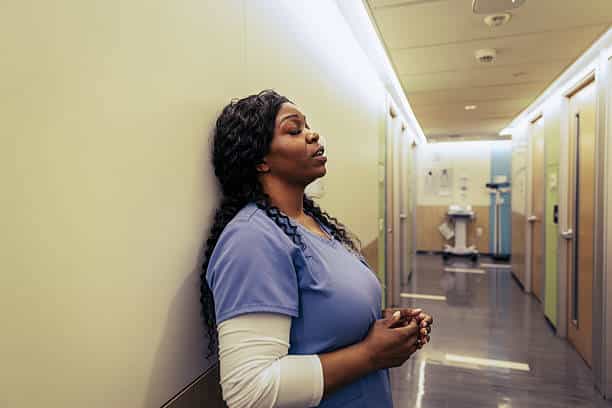
A couple of years ago, I went to an open mic poetry night in Washington, D.C. I’ll never forget the poem written by an artist whose name I can’t recall but whose words have haunted me since I heard them. The poem was called “Dead Upon Arrival,” and detailed her experience giving birth to a Black son, raising him, loving him, and watching his life end as he was gunned down by police. She ended the poem with the title, “Dead Upon Arrival.” Now, I have my own Black son to worry about. Her point was clear. Simply existing as a Black man in this nation puts a target on your back, and no matter what bright path you put that little boy on, his untimely violent death feels right around the corner. Quite obviously, mental health is a huge part of this conversation. Chronic stress leads to a wealth of health complications, from high blood pressure and hypertension to digestive issues and autoimmune diseases. Anxiety is linked to heart problems, digestive issues like IBS and ulcers, sleep disorders, a weakened immune system, chronic pain, and problems with concentration, often co-occurring with depression or substance misuse, and increasing overall mortality risk if untreated. A mother or caregiver who is doing everything in her power to provide for and protect her community can lead to cumulative stress and anxiety. She is in a constant state of work, and overworking can lead to cognitive failure, heart attack, stroke, and early death.
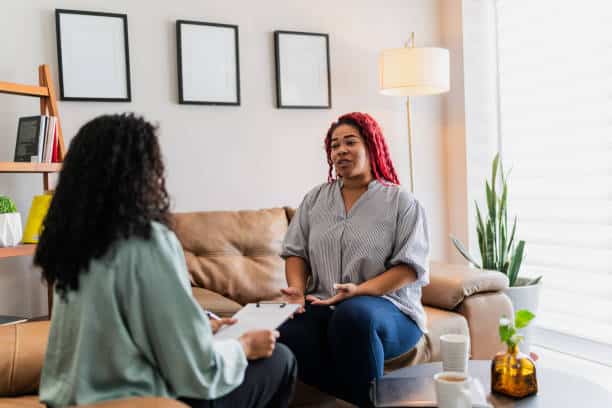
In many ways, writing this article has felt like preaching to the choir. The Black woman reading this likely knows these experiences and health challenges firsthand, and the Black man reading this can look to a woman he loves and see it represented. So let me rustle your feathers a little. Black woman, have you talked to a therapist? Aside from being physically harmed or killed by an officer, all physical components of police brutality’s effect on our health start mentally. So how are you managing your mental health? When was the last time you talked about your feelings? If you don’t have a therapist, the best thing you can do is connect with one. Therapy is now covered under most healthcare plans, and programs exist to make it accessible and affordable without insurance. Venting to your girlfriend does have its own benefits, but professional help allows us the opportunity to learn real coping and healing habits. A part of me is bummed that my solution for you is learning to cope, but as we know, real change in this country can take a lifetime.
As the nation’s awareness of police brutality evolves, I think we have already realized that they are just now discovering. Change is slow. It’s painful. In recent months, it’s even proving a lack of permanence. So what will real change look like? Unfortunately, one fact reigns true. As the white man becomes affected by problems that have long oppressed and marginalized people of color, change is pursued. With the recent drastic changes in the economy, ICE raids, and loud documentation of brutality against people from all backgrounds, America seems to be at the precipice of some form of collapse. What that collapse may be, I don’t know. It could be the collapse of a two-party political system. It could be the end of democracy as we know it. Whatever the collapse may be, we know it is imminent because most of the country is now feeling it. This isn’t “just another Black statistic.” It’s a nationwide pre-apocalyptic feeling. Collapse is scary, but it means an opportunity to rebuild a foundation. The foundation of this country was built on the backs of our mothers, who worried about us then and worry about us now. Perhaps it’s about time we rebuild from the start.

By subscribing, you consent to receive emails from BlackDoctor.com. You may unsubscribe at any time. Privacy Policy & Terms of Service.