Our appreciation for Black women goes deep. From their strength, resilience, beauty, and other unique qualities, Black women are leading. Black women earn more college degrees than any other race-gender group in the United States and take the lead in a number of key areas of business, politics, and community engagement. So when these disturbing health statistics for Black women came out, we had to dive in to see why and what could be done.
According to an analysis by the U.S. Centers for Disease Control and Prevention, Black women have the highest rate of genital herpes infection at 48 percent, and were nearly twice as likely as men to be infected.
About 21 percent of women were infected with genital herpes, compared to only 11.5 percent of men, while 39 percent of blacks were infected compared to about 12 percent for whites, the CDC said.
There is no cure for genital herpes, or herpes simplex virus type 2 (HSV-2), which can cause recurrent and painful genital sores and also increases the likelihood of acquiring and transmitting the AIDS virus. It is related to herpes simplex virus 1, or oral herpes, which causes cold sores.
Several drugs are available to treat herpes symptoms and outbreaks, including acyclovir, which is available generically or under the Zovirax brand name, and valacyclovir, known generically as Valtrex — both made by GlaxoSmithKline PLC . Ganciclovir, sold as Zirgan, is made by privately-held Sirion Therapeutics, Inc.
CDC authorities said the high rates of herpes among African-Americans is most likely contributing to the high rate of HIV in that community. In fact, statistics show that people with herpes are two to three times more likely to get HIV if exposed.
The CDC estimates that more than 80 percent of the people who have the herpes simplex 2 virus don’t know they are infected. Many people never have symptoms or outbreaks, or those symptoms are mild and mistaken for something else. But transmission can occur without symptoms or visible sores.
“Many individuals are transmitting herpes to others without even knowing it,” said Dr. John M. Douglas Jr., director of the CDC’s Division of STD Prevention. “We can’t afford to be complacent about this disease. It is important that persons with symptoms suggestive of herpes — especially recurrent sores in the genital area — seek clinical care to determine if these symptoms may be due to herpes and might benefit from treatment.”
“Additionally, racial disparities in HSV-2 infection are likely perpetuated because of the higher prevalence of infection within African-American communities, placing African-Americans at greater risk of being exposed to herpes with any given sexual encounter,” the CDC said in a statement.
The CDC estimates that there are 19 million new sexually transmitted disease infections every year in the United States, costing the health care system about $16 billion annually.
The herpes virus is spread by skin-to-skin contact with a person who has the herpes virus:
In addition to socioeconomic factors, women are at a greater risk simply because of anatomy. Genital tissue around the vagina is more susceptible to small tears during penetration making it easier to transmit STDs. The majority of infections might not occur just through women having sex with bisexual men but as likely via women transmitting it to heterosexual partners.
Women who have the herpes virus may have no outbreaks or signs of infection. Many do not know they have the virus. Once you are infected, the virus stays in your nerve cells for life. When the virus is not active, there is no sign of infection. When the virus becomes active, a herpes outbreak occurs. Some women may not have any outbreaks or may have only one outbreak, while others may have multiple outbreaks.
The first herpes outbreak often occurs within the 2 weeks after contracting the virus from an infected person. The first signs may include:
After a few days, painful sores, blisters, or ulcers may develop where the virus entered the body. These areas include:
After the first outbreak, you may have more outbreaks. For most, these outbreaks occur less often over time. The signs of herpes infection are usually milder than during the first outbreak, and they go away faster.
For people with a weak immune system, outbreaks can be severe and long-lasting.
See your health care provider to be tested if you have signs of herpes.
The only way to know if you have genital herpes is by a medical exam. Your health care provider can examine you and test for it. Lab samples are taken from a sore, blister, or blood. Your health care provider may ask to test you for other infections at the same time.
Clearly, the first line of defense is prevention. Herpes simplex is highly contagious while lesions are present, so the key to avoiding infection or to not spreading infection is to abstain from sexual activity if you or your partner is experiencing an outbreak. Also, always use a latex condom during each sexual contact. This decreases the risk of transmission, but it doesn’t prevent it. Sores can occur all over the genital area.
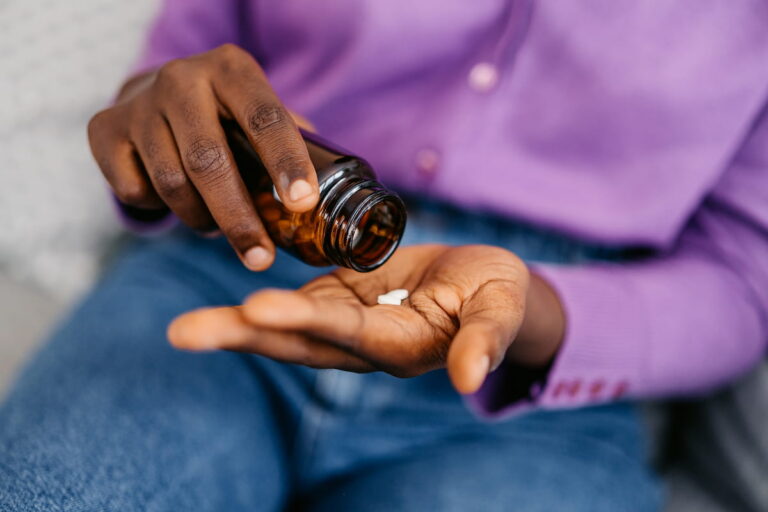
If you have herpes, medications like antiviral drugs can reduce the duration, severit,y and frequency of outbreaks, and help reduce the risk of transmission to a partner. Your doctor may recommend that you take the medicine only when you’re experiencing symptoms or may advise that you take it daily. Suppression medication therapy is not a cure, but it can make it easier to live with the condition.


By subscribing, you consent to receive emails from BlackDoctor.com. You may unsubscribe at any time. Privacy Policy & Terms of Service.