As summer arrives, so do longer days, beach trips, and outdoor adventures. But while the sun brings warmth and fun, it also comes with a serious health risk: skin cancer.
According to the American Cancer Society, skin cancer is the most common type of cancer in the U.S. It’s typically diagnosed around age 66, but melanoma, the deadliest form, is one of the most common cancers in young adults under 30.
And yet, a dangerous myth continues to put millions at risk: that people with darker skin don’t need sun protection.
“Darker skin does offer more melanin, which provides some protection, but it doesn’t eliminate the risk,” Dr. Karen L. Connolly, a Mohs surgeon and dermatologist at Memorial Sloan Kettering Cancer Center, tells BlackDoctor.org.
This false belief leads to later diagnoses and worse outcomes.
Skin cancer incidence among Black Americans is about two percent, but the five-year survival rate for melanoma is 94 percent in white patients and only 70 percent in Black patients.
This discrepancy highlights the critical need for awareness across all skin tones.
“Skin cancers in darker skin are often found in less obvious areas—between toes, under nails, or on the soles of the feet,” family physician Dr. Brintha Vasagar tells BlackDoctor.org.
She emphasizes that not only are these areas often overlooked, but the aggressive nature of melanoma increases the stakes.
“It’s important to catch it early in order to get the treatment you need,” she adds. “Squamous cell and basal cell cancers are much slower growing.”
“Skin cancer refers to the uncontrolled growth of skin cells,” Dr. Connolly explains. “It doesn’t go away on its own and can worsen over time if untreated.”
The three most common types:
About 4.5 million Americans are diagnosed each year with some form of skin cancer.
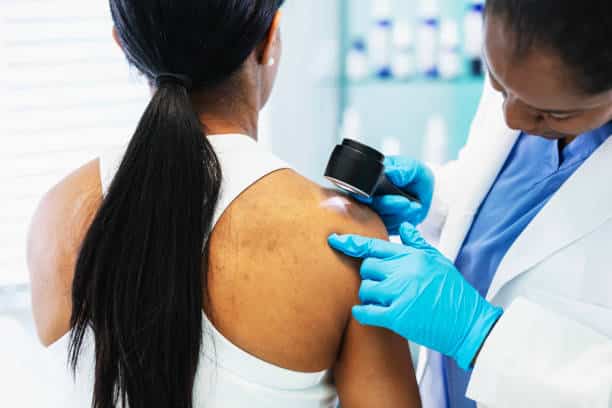
Staying alert to changes in your skin can lead to early detection and better outcomes. Watch for:
Misidentifying these signs as minor injuries is common and can delay diagnosis.
“If a mark persists, it can pose a real risk,” Dr. Vasagar notes.

Dispelling myths is essential to prevention.
“Some people who get skin cancer have never had a sunburn,” Dr. Vasagar notes. “That’s a really important myth to dispel. So it’s really important for everyone to take preventive measures—like wearing sunblock and reapplying it.”
When it comes to protection, the type of sunscreen matters too.
“SPF 15 is the baseline minimum. It blocks about 93% of the sun’s rays,” she adds.
Dr. Connolly highlights why mineral sunscreens stand out.
“Mineral sunscreens create a physical barrier that blocks 100% of the sun’s rays,” she explains. “Chemical sunscreens are absorbed into the skin.”
Both types are effective, but there are ongoing discussions about concerns regarding their ingredients.
“There’s concern about ingredients like oxybenzone potentially acting as hormone disruptors,” Dr. Connolly adds. “But current recommendations support using either type.”
Consistent use is key to effectiveness.
“If you’ve been swimming, reapplication is key,” Dr. Vasagar says. “Also use wide-brim hats, umbrellas, and protective clothing.”
Simple wardrobe choices can go a long way in reducing exposure.
“Long sleeves, long pants, and limiting sun exposure are all important,” Dr. Vasagar adds.
Being mindful of timing adds another layer of defense.
“Take breaks from the sun,” Dr. Vasagar advises. “It’s strongest midday, and overexposure can also lead to dehydration.”
Young children need special care.
“For babies under six months, we avoid sunscreen. Keep them covered and in the shade,” she adds. “Apply sunscreen to older children every two hours or after swimming.”
Trends in awareness have helped reduce one major risk factor.
“Most skin cancer is caused by sun or tanning bed exposure,” Dr. Vasagar notes.
She points out a positive shift in public behavior.
“We’re seeing fewer cases from tanning beds, which is a good trend,” she says. “Back in the day, people got ‘base tans’—but now we know that doesn’t prevent skin cancer.”

Skin cancer can hide in places you don’t expect. Be thorough with your checks:
“Some patients cover up nail cancer with polish without realizing it,” Dr. Connolly warns.
Dr. Vasagar and Dr. Connolly emphasize the importance of choosing sun protection that works for you.
“If someone doesn’t like how a sunscreen feels, they won’t use it,” Dr. Connolly says. “We need to recommend products they’ll actually apply.”
The ultimate message? Be vigilant and proactive.
“Just because your risk is lower doesn’t mean it’s zero,” Dr. Vasagar shares. “And when it does occur in people with darker skin, it can be more dangerous due to delayed detection.”
She urges people to pay attention to their own bodies.
“Know your body and notice when something has changed,” she emphasizes. “If a mole suddenly changes color, size, or shape—or if a new mark appears—it’s time to see your doctor.”
When in doubt, document changes and seek advice.
“If you’re unsure about a change, take a picture and compare after a few weeks. But it’s always best to consult your doctor,” Dr. Vasagar concludes.


By subscribing, you consent to receive emails from BlackDoctor.com. You may unsubscribe at any time. Privacy Policy & Terms of Service.