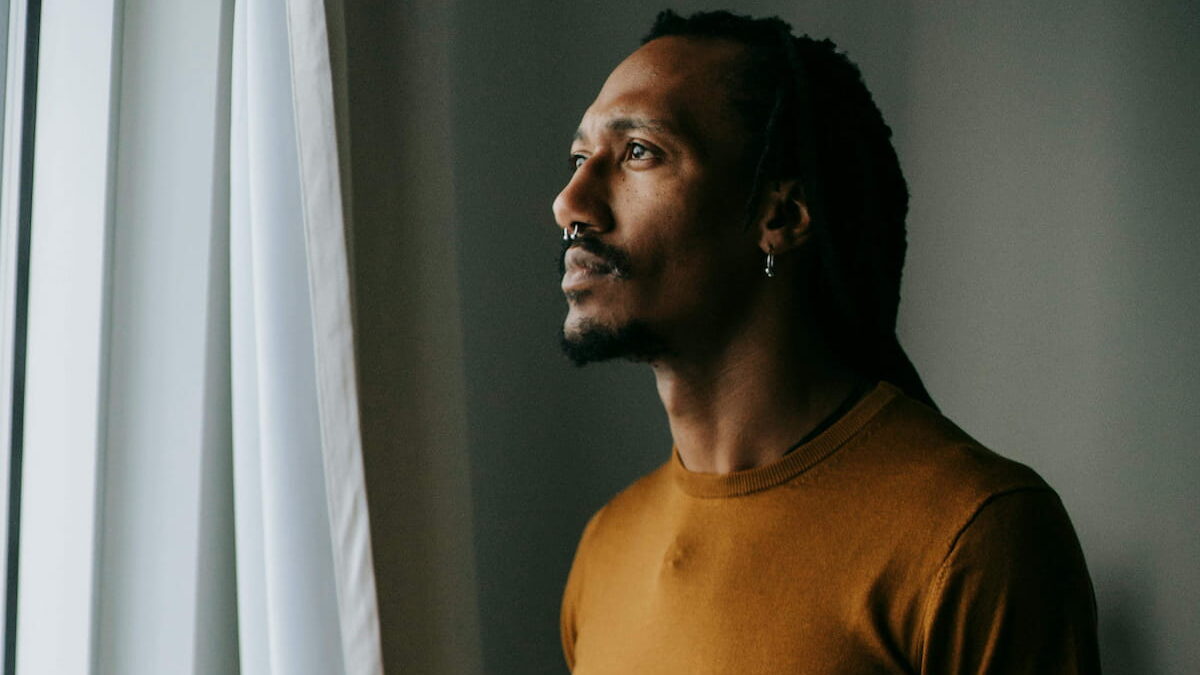
Black men are significantly less likely to receive mental health treatment, yet they face higher exposure to stress, trauma, and systemic pressures. That gap is not about weakness—it’s about access, stigma, and cultural expectations that have shaped how Black men are allowed to express emotion.
“I’m good.” It’s a phrase said quickly, casually, almost automatically. For many Black men, it’s a default response—whether they’re overwhelmed, exhausted, anxious, or struggling in ways they may not even have words for. But behind those two words is often something deeper: unspoken stress, emotional suppression, and the pressure to hold it all together.
Mental health doesn’t always look like breakdowns or visible distress. In fact, according to insights from the Counseling Center for Change, many people experiencing mental health challenges appear functional on the surface while struggling internally.
For Black men, that disconnect is often even greater.
Mental health struggles don’t always show up in obvious ways like crying, shutting down completely, or asking for help. In fact, for many—especially Black men—they often show up in ways that are socially acceptable, normalized, or even praised, which makes them harder to recognize. What looks like “being strong,” “handling business,” or “staying busy” can sometimes be a way to avoid, mask, or manage internal distress. Hidden distress can look like:
But it can also show up in more subtle ways, like:
According to the National Institute of Mental Health, men are more likely to externalize emotional distress, meaning it shows up through behavior rather than open expression. That means someone can look “fine” on the outside while struggling deeply on the inside. That means instead of saying “I’m overwhelmed” or “I’m hurting,” it may come out as:
This is where it gets complicated—because many of these behaviors are misinterpreted.
So someone can look productive, composed, even successful on the outside—while internally dealing with stress, anxiety, or depression that no one sees. And when those signs go unrecognized, support doesn’t come—because from the outside, everything looks “fine.” That’s why understanding what hidden mental health struggles look like is so important. Because sometimes the people who say the least are carrying the most.
RELATED: 4 Ways Black Men Show Signs of Anxiety
To understand this, we have to talk about culture, history, and survival.
From a young age, many Black men are taught—explicitly or implicitly—that vulnerability is dangerous.
Strength becomes synonymous with silence. But this expectation is amplified for Black men, who are often navigating a world that already perceives them through harmful stereotypes. Expressing vulnerability can feel risky—not just emotionally, but socially.
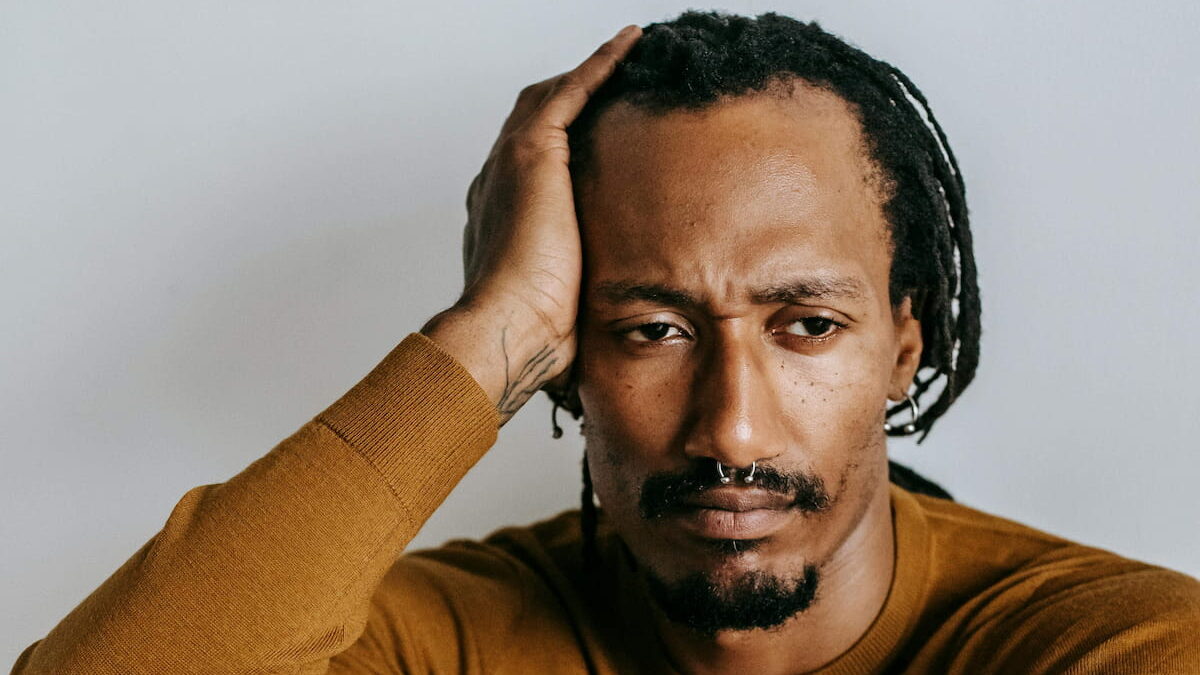
Black men carry a unique set of stressors shaped by systemic inequality, including:
Research from the American Psychological Association shows that chronic exposure to racism and stress contributes to mental health challenges, including anxiety and depression. But when those experiences are normalized, they often go unacknowledged.
Mental health stigma remains a significant barrier in many communities. According to the Substance Abuse and Mental Health Services Administration:
For Black men, this stigma is compounded by gender expectations that discourage emotional expression.
Suppressing emotions doesn’t make them disappear—it changes how they show up. Unaddressed mental health challenges can lead to:
The Centers for Disease Control and Prevention reports that suicide rates among Black men have been rising in recent years. That’s not just a statistic—it’s a signal that something deeper needs attention.
One of the most important shifts we can make is redefining what strength actually means. Strength is not silence. Strength is awareness. It’s honesty. It’s the ability to acknowledge what you’re carrying. Healthy emotional expression doesn’t have to look one way—it can be:
The key is not how you express—it’s that you don’t keep it locked inside.
Opening up doesn’t happen overnight. It’s a process—and it starts with small, intentional steps. Start With Self-Awareness. Before sharing with others, it helps to check in with yourself.
Naming your emotions is the first step toward understanding them.
Not every space feels safe for vulnerability—and that’s real. Look for environments where you feel respected and understood:
Safety matters. Without it, openness feels impossible.
The more we talk about mental health, the less power stigma has. This can look like:
Change doesn’t happen all at once—it happens through repeated, honest moments.
Therapy is not a last resort—it’s a resource. Working with a therapist, especially one who understands cultural context, can provide tools for:
And increasingly, directories connect Black men with culturally competent providers.
This isn’t just about individual mental health—it’s about community. When Black men feel unable to express emotion, it affects:
But when emotional expression is normalized, it creates space for:
This is how cycles begin to change.
“I’m good” doesn’t have to be the end of the conversation. It can be the beginning. Because behind those words, there is often more to say—and more to be heard. You don’t have to hold everything by yourself. Strength is not about carrying weight silently. It’s about knowing when to share it. Mental health is not a weakness. It’s part of being human. And every Black man deserves the space, support, and freedom to say more than “I’m good”—and to be heard when he does.


By subscribing, you consent to receive emails from BlackDoctor.com. You may unsubscribe at any time. Privacy Policy & Terms of Service.