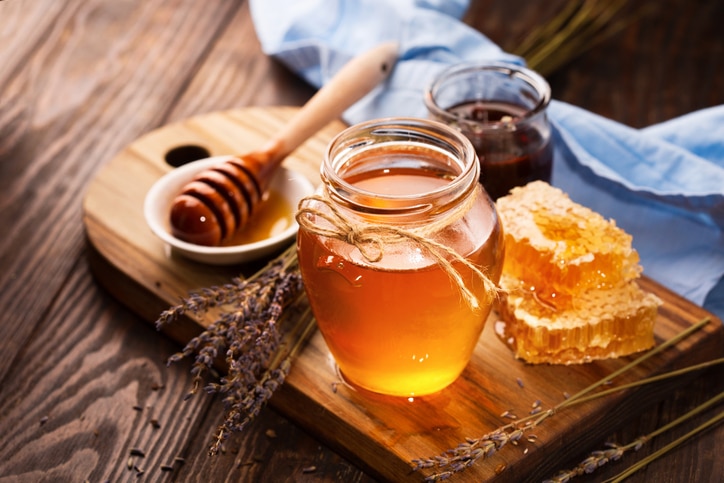
Honey has a long medicinal history dating back to the wound-dressing of ancient Egyptians. Today, many people swarm to honey for its antibacterial and anti-inflammatory properties. And holistic practitioners consider it one of nature’s best all-around remedies.
Here is what researchers are learning about honey’s health benefits:
Manuka honey is sometimes used to treat chronic leg ulcers and pressure sores. Manuka honey is made in New Zealand from the nectar of Leptospermum scoparium. It’s the basis of Medihoney, which the FDA approved in 2007 for use in treating wounds and skin ulcers. It works very well to stimulate healing. It is Manuka honey’s pH content, which leans toward acidic, that helps the healing process. Just put a teaspoon of the sweet goodness over the wound. Let it dry, clean up around the wound while letting the honey stay dry on the wound and see how it starts healing. It’s amazing! It is soothing and feels good to the wound.
Honey on your face? Yes! If you’ve got skin issues, honey’s a great go-to because it tackles many of the major ones: It has antibacterial properties, anti-inflammatory properties, and it nurtures the skin. Honey’s particularly suitable for sensitive skin.
You might not think of the thick, sweet stuff as a salve for breakouts, but honey’s antibacterial powers are so strong that it can help acne. Honey has a very low pH, so a lot of bacteria cannot survive in honey. It’s about a 3.5 on average on the pH scale, and a lot of bacteria need to thrive in closer to a 7 on the scale.
It has magical calming and moisturizing powers as well. Honey is moisture-grabbing because it’s a super-saturated solution, meaning the bees mix a lot of sugars into a little bit of water. So it’s always trying to grab water from the air to balance out the sugar. This is why people use it for baked goods—it keeps them moist for longer.” On your face the humectant is gentle enough to use on tender chapped noses from allergies to super red dry, flaky patches.
Try incorporating honey into your skin products or even letting it sit on your skin raw for a while before wiping it off. You’ll see the difference!
It can help reduce cholesterol and therefore decrease your risk for coronary artery disease. Just a tablespoon of it, raw, on a consistent basis, has been known to show signs of lowering cholesterol.
Raw honey hair mask can help boost shine, mix 1 tsp of raw honey with 5 cups of warm water, rinse thoroughly, air dry, and style as usual.
Buckwheat honey-based syrup can be used to ease the early symptoms of a cold. It calms inflamed membranes and eases a cough — the latter claim supported by a few studies. In a study that involved 139 children, honey beat out dextromethorphan (a cough suppressant) and diphenhydramine (an antihistamine) in easing nighttime cough in children and improving their sleep. Another study involving 105 children found that buckwheat honey trumped dextromethorphan in suppressing nighttime coughs.
If you’re suffering from a cold or something going on in the throat or upper airways, getting on board with honey syrup will help fight infection and soothe membranes. Buckwheat honey-based allergy medicine is also recommended for the same purpose.
In the laboratory, honey has been shown to hamper the growth of food-borne pathogens such as E. coli and salmonella, and to fight certain bacteria, including Staphylococcus aureus and Pseudomonas aeruginosa, both of which are…
…common in hospitals and doctors’ offices. But whether it does the same in people hasn’t been proven.
Shop for honey and you’ll see that some are lighter, others are darker. In general, the darker the honey, the better its antibacterial and antioxidant power. Honey comes in many varieties, depending on the floral source of pollen or nectar gathered and regurgitated by the honey bee upon arrival in the hive.
Honey producers may apply to the U.S. Department of Agriculture (USDA) for a grade on their product, but the score does not account for color. Rather, the honey is judged for clarity, aroma, and flavor, and the absence of sediments, such as honeycomb particles.
Never Give Honey to an Infant
Honey is natural and considered harmless for adults. But pediatricians strongly caution against feeding honey to children under 1 year old.
“Do not let babies eat honey,” states foodsafety.gov, a website of the U.S. Department of Health and Human Services.
That’s because of the risk of botulism. The spores of the botulism bacteria are found in dust and soil that may make their way into honey. Infants do not have a developed immune system to defend against infection.
It’s been shown very clearly that honey can give infants botulism, a paralytic disorder in which the infant must be given anti-toxins and often be placed on a respirator in an intensive care unit. But parents may feed their infants cereals that contain honey. If it’s cooked, so it’s OK—we’re talking about honey out of the bottle.
The National Honey Board, which the USDA oversees, also agrees that infants should not be given honey. “The concern for babies stems from the fact that infants lack the fully developed gastrointestinal tract of older humans,” the Board’s web site states.


By subscribing, you consent to receive emails from BlackDoctor.com. You may unsubscribe at any time. Privacy Policy & Terms of Service.