For years, wellness advice often centered on one thing: weight. Count your calories. Watch the scale. Eat less. Exercise more. But that approach doesn’t tell the whole story of what’s happening inside your body.
More women are paying attention to things that may affect how they actually feel from day to day: menstrual cycles, sleep, energy, mood, hot flashes, recovery after exercise, and other symptoms. For Black women, this broader view can be especially meaningful because research suggests that many traditional weight-loss programs haven’t been designed around their experiences or needs. A review discussed by UConn researchers found that Black women were frequently underrepresented in weight-loss research and that many programs failed to take factors into account, such as stress and the realities of their daily lives.
That doesn’t mean calories never matter or that every symptom comes down to hormones. Instead, some women are taking a wider view of wellness. Tracking how you feel can help you learn what’s normal for your body and give you useful information to bring to your doctor. The key is to use that information as a guide—not to replace one obsession with another. Here are five reasons this approach is getting more attention.
A scale tells you how much you weigh. It doesn’t tell you whether you’re sleeping well, feeling exhausted, having painful periods, recovering from exercise, or noticing major mood changes. That’s why symptom tracking can be useful.
You might keep track of:
Over time, you may start noticing patterns. Maybe you’re exhausted during certain parts of your cycle. Perhaps your sleep gets worse before your period. Maybe you’re having heavier periods than you did six months ago.
Those details can be useful during a doctor’s appointment. The American College of Obstetricians and Gynecologists (ACOG) recommends keeping a record of symptoms when evaluating conditions such as premenstrual syndrome because patterns over several months can help your doctor better understand what’s happening. Tracking isn’t about finding something wrong every day. It’s about getting to know your normal.
Some women reach their 40s and suddenly wonder why the wellness habits that worked for years no longer feel the same. Their periods change. Sleep becomes harder. Workouts feel different. They may experience hot flashes, night sweats, mood changes, or fatigue. Perimenopause could be part of the picture.
Perimenopause is the transition leading up to menopause. During this time, estrogen and progesterone levels change, and periods may become shorter, longer, heavier, lighter, or less predictable. ACOG explains that changing periods are often one of the first noticeable signs of perimenopause.
This is especially important to discuss for Black women. According to the National Institute on Aging, Black women are more likely than white women to experience menopause earlier, have more symptoms, and experience those symptoms for longer. Research from the long-running Study of Women’s Health Across the Nation has also found that Black women experience a greater burden of hot flashes and night sweats.
So if your sleep, energy, periods, or exercise recovery suddenly feel different, simply pushing yourself harder may not be the answer. Write down what you’re noticing and talk about it with your healthcare provider.
RELATED: What Black Women Should Know About Hormones, Aging, Midlife
Generic wellness advice often assumes everyone’s menstrual cycle works the same way. It doesn’t. Conditions such as uterine fibroids and polyendocrine metabolic ovarian syndrome (PMOS), formerly known as polycystic ovary syndrome (PCOS), can affect periods and other symptoms. This matters for Black women because fibroids are more common among Black American women, according to the Office on Women’s Health. Fibroids can cause heavy bleeding, pain, pressure, and other symptoms.
PMOS can also affect the menstrual cycle. Women with PMOS may have irregular periods, miss periods completely, or experience acne, unwanted hair growth, thinning scalp hair, weight changes, and other symptoms. The Office on Women’s Health estimates that PMOS affects about five to 10 percent of women ages 15 to 44. That’s why strict social-media rules about “cycle syncing” can be frustrating. Your cycle may not be 28 days. You may not ovulate at the same point every month. Your periods may be unpredictable because of PMOS, fibroids, perimenopause, medication, or another health issue. Your body isn’t doing wellness wrong because it doesn’t match an infographic.
If your periods suddenly become irregular, unusually painful, or much heavier than normal, don’t assume you simply need to balance your hormones yourself. ACOG recommends discussing changes in bleeding with an OB-GYN, since bleeding changes can sometimes have causes that need medical attention.
You don’t need fancy technology to become more aware of your body. A notebook works. So does the notes app on your phone. You might write something as simple as:
Monday: Slept 5 hours. Low energy. Headache.
Tuesday: Slept 7 hours. Walked 30 minutes. Felt better.
Wednesday: Period started. Heavy bleeding and cramps.
After several weeks or months, patterns may become easier to see.
ACOG even provides a menopause symptom tracker that encourages women to record changes in bleeding, hot flashes, night sweats, and other symptoms so they can discuss them with their OB-GYN.
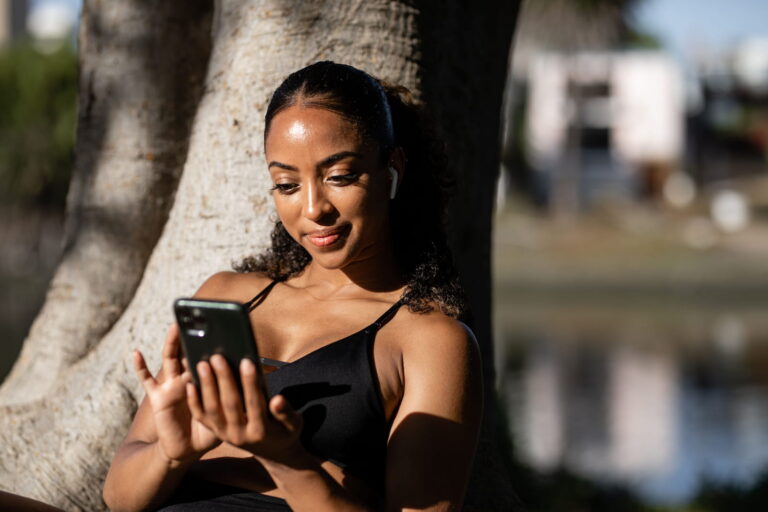
Wearable devices can add information about sleep, heart rate, activity, and recovery. But don’t treat every number as medical fact. Research comparing consumer sleep trackers with clinical sleep testing has found that wearables can be useful for noticing general patterns, but they’re not equally accurate for every measurement—especially sleep phases. Think of your wearable as a clue, not a diagnosis.
If your watch says you had a terrible night of sleep, but you wake up feeling refreshed, you don’t need to convince yourself you’re exhausted because your app gave you a low score. Pay attention to the technology, but pay attention to your body too.
Weight can be one part of a health conversation, but it shouldn’t automatically end the conversation. If you’re exhausted, having very heavy periods, struggling with sleep, experiencing hot flashes, or noticing other changes, you deserve to understand why. Tracking symptoms can help shift the conversation from “Why can’t I lose weight?” to “What has changed in my body?” That’s a much broader question.
Research highlighted by UConn suggests that more individualized wellness approaches may be particularly important for Black women because traditional lifestyle programs haven’t always included their lived experiences. The answer isn’t to ignore nutrition, physical activity, or weight when they’re medically relevant. It’s to make sure those aren’t the only things being discussed.
There’s an important difference between tracking symptoms and diagnosing yourself. Social media is full of posts promising to tell you whether your cortisol is too high, estrogen is too low, progesterone is “off,” or your hormones need to be “reset.” Be careful.
Hormones naturally change throughout the menstrual cycle and different stages of life. A single test doesn’t always give you the clear answer an influencer or wellness company may promise.
For example, ACOG says most women don’t need hormone testing to determine whether they’re in perimenopause. Doctors can often evaluate perimenopause using age, symptoms, and menstrual changes because hormone levels can change significantly through this period. ACOG also doesn’t recommend routine hormone testing before starting hormone therapy for menopausal symptoms, again because hormone levels can change so much during this stage.
So don’t spend hundreds of dollars on testing simply because someone online told you that every woman needs a “full hormone panel.” Ask your doctor whether testing would actually tell you something useful.
RELATED: Eat These 9 Foods to Balance Your Hormones
There’s another side to body awareness that’s worth talking about: tracking can become exhausting. You don’t need to record every bite, mood change, heartbeat, hour of sleep, workout, period symptom, and hormone-related thought. If tracking starts making you anxious, scale back. Maybe you only track three things: sleep, energy, and cycle. Or perhaps you track symptoms only when something feels different. The goal is to notice useful patterns, not monitor yourself every minute.
Period apps also deserve some thought. ACOG warns that menstrual-tracking apps may involve privacy risks and notes that information entered into these apps isn’t necessarily protected by HIPAA in the same way information shared directly with your doctor is. Before using an app, check what information it collects and how that information may be stored or shared.
Your symptom notes can make your next appointment more useful. Instead of saying, “Something seems wrong,” you can explain what’s been happening and for how long. Consider asking:
Bring your journal or app with you. You don’t need months of perfect data. Even a few clear examples can help start the conversation.
Moving beyond calorie counting can be freeing, but the answer isn’t replacing calorie obsession with hormone obsession. Body awareness is simpler than that: notice when you’re tired, pay attention when your period changes, take sleep seriously, and notice whether workouts leave you feeling energized or completely drained.
Tracking can help you understand your body better. It can’t tell you exactly why something is happening, and it shouldn’t replace an OB-GYN, endocrinologist, primary care provider, or other qualified professional. Use the information to become more curious about your body—not more critical of it. Because the goal isn’t to perfectly “balance” every hormone. It’s to understand what your body is telling you and know when it’s time to ask for help.


By subscribing, you consent to receive emails from BlackDoctor.com. You may unsubscribe at any time. Privacy Policy & Terms of Service.