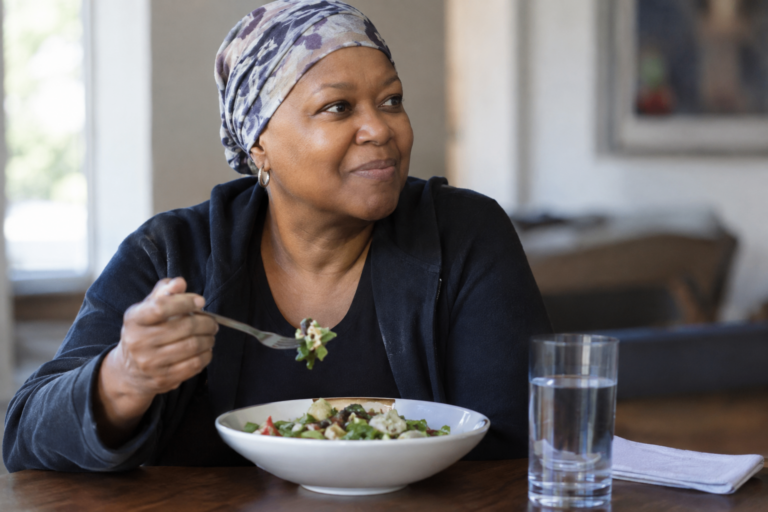
“The way to a loved one’s heart is through their stomach.” Many have heard this cliché. Many more believe and practice this by preparing delicious comfort food for their beloved. However, if the intended person is managing a digestive disorder (for example, IBS, celiac, etc.), this could complicate their use of food as a love language.
Here are some tips for expressing love without turning a food-centered act of care into moments of physical distress, food fears, or anxiety.
Digestive disorders can complicate love when food is your love language, and its expression is not used to limit or restrict, but tends toward excess. Common to the pairing of one partner without a digestive disorder and the other one with one, guilt and rejection can seep into the relationship, with both feeling “some kind of way.” There may also be a silent perception of feeling disrespected or unsupported when food is pushed on the partner with a digestive disorder. Anxiety and fear around food can also affect the joy of cooking (and eating), which each partner experiences differently.
Transforming the theoretical into the practical, when it comes to feelings of love and matters of the heart (especially when they involve lifestyle changes and health issues), can be difficult. Focusing on low-fat, low-fiber, and easily digestible food served in small, frequent meals is a good start. It is also a positive way to ensure your partner feels seen and heard regarding their dietary needs and restrictions. When cooking is your thing, you have options.
For an expression of food as a love language, success is better when the rich food is not the complete focus, but the experience of (preparing and sharing) is. Ensure clear communication from each person about adapting “safe” meals, then compromise in the kitchen. With recipe adaptation and accommodating one’s beloved’s dietary needs, an act of love is also a test of creativity, crafting meals that show care rather than cause distress or anxiety. This is a step in the right direction. Nourishing, low-fat, or anti-inflammatory meals are one way to achieve this.
Recipe adaptation is the ultimate gesture of love and a demonstration of respect for a loved one with a digestive disorder. Clear, open communication about recipe adaptation and dietary needs is the key to transforming the kitchen into a space of success rather than distress. By prioritizing this dialogue early on, couples can ensure that acts of love maximize nourishment while minimizing health risks, ultimately keeping the fires burning in both the kitchen and the bedroom.
If this foundation is not established early on, the partner’s digestive disorder can result in an uninvited series of symptoms that are not sexy in anyone’s book. Bloating, gas, cramps, and nausea put romance and intimacy on the back burner and put the brakes on social moments in general that involve food when a digestive disorder is involved. Add the restriction of shared activities like dining out as part of dating, and your partner’s limitations become shared challenges with limited choices.
All is not lost. No matter how much stress this could put on a relationship, love language can be tweaked to accommodate you as a unit, without placing the burden of adaptation on either partner. The shift from separate meals to sharing the cooking experience as a couple is a positive step. Taking food as a love language off the table and developing a new love language together as a couple that does not revolve around food are potentially even greater options if you both agree to start from scratch.
RELATED: 5 Diet Habits to Improve Your Digestive Health
The universal key is communication, which can make or break a relationship without a strong foundation. Discomfort and embarrassment can accompany your loved one’s explanation of their dietary needs, such as the need for frequent bathroom breaks. For these reasons, speaking up about food sensitivities and dietary needs should be openly discussed to explore ways to maximize acts of love and minimize health risks.

Here are four takeaways to achieve maximum love and minimal health risks:
This way, both partners can enjoy the meal, minus the distress that could follow. This keeps the meal “safe” and preserves the tradition of dating, conversing, and enjoying the simple pleasure of breaking bread together.
Comfort food should not cause anyone with a digestive disorder to experience physical or emotional discomfort while eating it. This requires a redefinition of what “nourishment” needs are and what they mean and look like for both individuals. Food can demonstrate care and effort without triggering digestive issues.
Discuss food sensitivities with your partner, who loves food as their love language, in advance. This is essential. It can help to avoid unwanted situations, such as embarrassing, unpredictable, or painful symptoms during intimate moments. It can also facilitate change.
Use other expressions of care, such as spending quality time together, thoughtful acts, or words of affirmation, to maintain intimacy. Recognize the other expressions of love that are already a big part of your relationship. Long after the meal is gone, the memories of the shared love will remain beyond the limited comfort that food can provide.
No one likes to have food forced upon them that they can’t have or don’t want, in the name of love or otherwise. Politeness expressed by eating it anyway might win the day, but wreck the relationship and/or damage one’s health. In this case, finding safe alternatives to recipes and redefining what food and its preparation as an act of care can look like when your partner has a digestive disorder are fundamental. The love languages shift from food to respect and support as acts of care. Keeping the fires burning in the kitchen (and the bedroom) requires building a workable compromise grounded in ongoing communication.


By subscribing, you consent to receive emails from BlackDoctor.com. You may unsubscribe at any time. Privacy Policy & Terms of Service.
Enter your name and email to receive the download link.