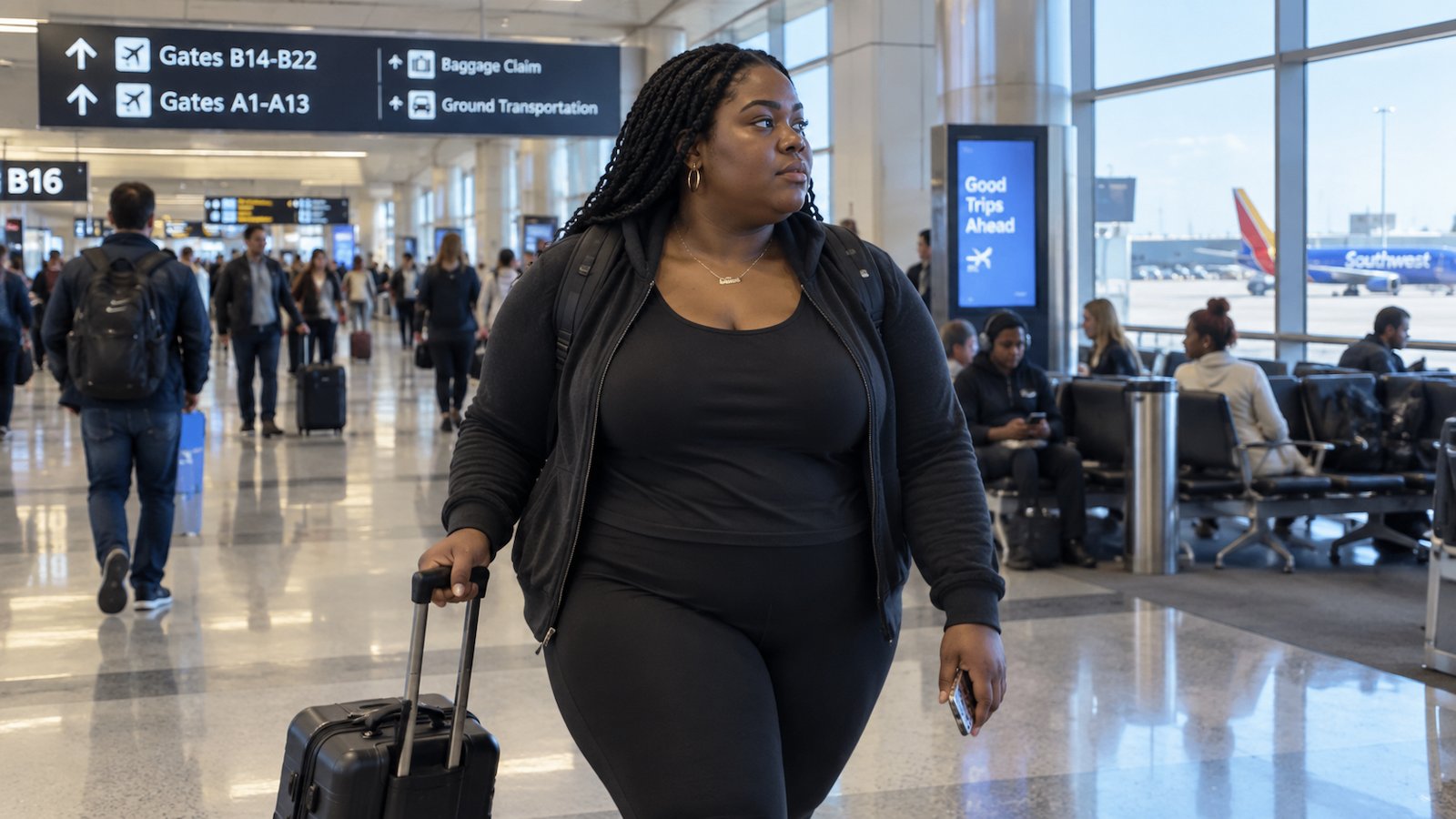
Flying is stressful enough.
From arriving at the airport on time, getting through TSA, finding your gate, ensuring your flight’s on time, and managing the flight itself (especially if you fear flying), the whole process can feel daunting.
But for plus-sized travelers, the challenges run even deeper.
Not only mentally taxing, dealing with the airport and airplane can also be extremely physically distressing. Tight seats, seat-belt extenders, long walks through crowded terminals, standing in security lines, and unwanted attention are common, but often ignored, concerns.
Many airlines simply don’t communicate their policies well enough to help.
The good news is that practical, dignity-preserving strategies do exist.
So, if you’re looking to make the whole travel day noticeably smoother, don’t worry. You can, and you will, if you apply the tactics detailed in this article.
Here are five concrete ways to reduce your stress and protect your comfort from the moment you book until the moment you step off the plane, safe and sound at your destination.
RELATED: Flying Plus-Sized: Tips Frequent Travelers Swear By
First and foremost, consider your seat selection. This is one of the highest-impact decisions you can make. Think about it. Aisle seats generally make it easier to get in and out of the row. They also give you one side free from those pesky fixed armrests.
The row also matters. Bulkhead seats, those in the first row of a cabin section, often provide extra legroom. But not always. Some have immovable armrests, so check the seat map carefully or call the airline to confirm details for your specific aircraft.
International and longer flights can also contribute to these issues, leading to unwanted embarrassment, persistent discomfort, and bias from flight staff.
So always, always, always, research the airline’s “customer of size” or extra-seat policy before completing your booking. Some carriers, such as Southwest, allow you to purchase a second seat and later request a refund. Other airlines differ and may require an extra seat if the armrests cannot be lowered – or if the seat belt doesn’t buckle.
If you’re looking to get a refund from Southwest, for example, the following conditions apply:
As a rule of thumb, book early, as this will increase your chances of getting the seat type and location you prefer. When early boarding is offered, take it! This gives you extra minutes to settle in without feeling like you’re rushed or being ‘watched.’
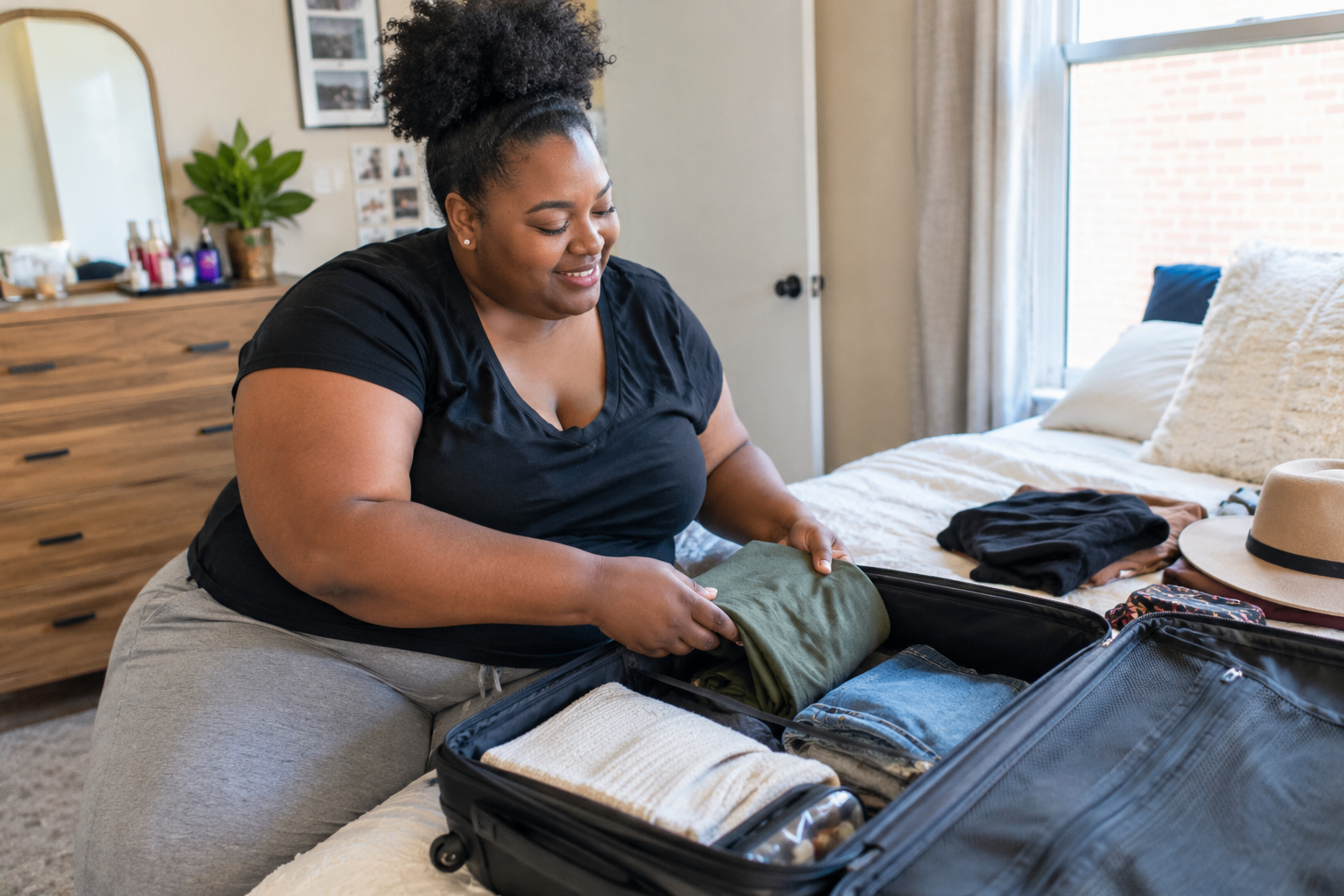
This may sound like a no-brainer, but it’s worth repeating.
Remember: what you wear and carry directly affects how easily you move through security. Not to mention how you feel during a flight. Whenever possible, choose stretchy, breathable fabrics that do not dig into your waist, hips, or shoulders. You definitely don’t want any tight clothing that restricts circulation.
If you’re worried about temperature changes in the airplane cabin, consider clothing you can adjust. Soft waistbands, knit fabrics, and layered pieces are all great options. Beyond those, shoes that slip on and off can also make things easier, speeding up the security process and reducing the need to bend or balance.
Keep a few handy items in your personal carry-on bag, too. Pack a lightweight scarf or soft layer, any necessary medications, a refillable water bottle, and even a small lumbar pillow or compact inflatable cushion.
All in all, the goal is to minimize physical effort at every single step of the journey.
RELATED: How to Date With Confidence at Any Size
Do you find that the standard airplane seat belts are too short?
If so, extenders are available. Airlines are required to carry them and can provide an extender if you ask. Just make sure you ask in terms of functionality or medical need. Many people hesitate or feel emotionally insecure about asking for an extender, so phrasing the question the right way makes a world of difference.
Don’t ask for an extender as if you want a favor or special treatment. Simply issue a calm request: “Hi, may I please have a seat-belt extender?” You can ask as you board, while standing in the aisle, or once you are seated. Most flight attendants will handle the request discreetly, so you don’t need to feel like the whole plane is watching.
You can also practice the sentence ahead of time to reduce the anticipatory stress. Reframe the moment in your mind, if needed. Again, requesting the extender is about safety and basic comfort; it’s not an inconvenience you are imposing on the crew or other passengers.
What matters is that you receive the equipment you need without apology.
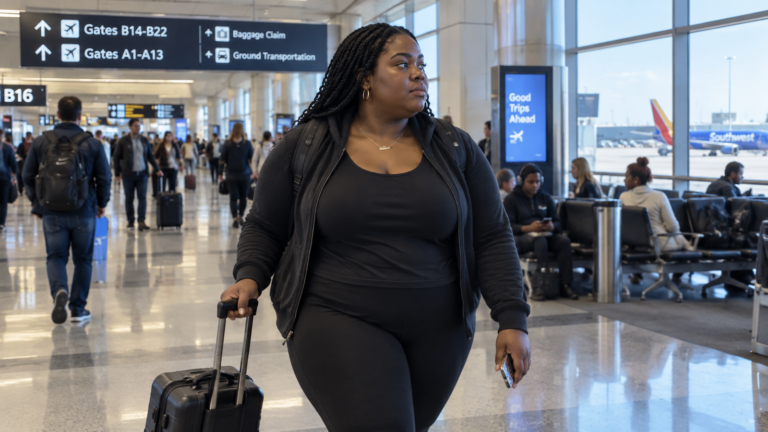
Some airports are small, some are medium-sized, and some are absolutely gargantuan.
Large terminals, long security lines, and distant gates can require time to navigate, making an efficient route and schedule especially useful.
Fortunately, airport maps and airline apps can help you find the most direct route to your gate. They also help you find restrooms and seating areas, which everyone knows can be a lifesaver when you really need to go or sit down.
You can also get wheelchair assistance or electric cart rides at no charge if you need them. Requesting this help is a practical, energy-saving choice, not a statement about your overall ability.
Need a wheelchair or cart? You can arrange to use one at check-in, at the ticket counter, or by calling the airline beforehand.
Whatever you choose to do, arrive with enough buffer so you are not forced to rush. Once you clear security, it may be a good idea to find a seat near your gate as soon as possible. If the boarding line is long and not moving, you can either wait until it shortens or use early boarding when offered.
It’s all about stacking the small pacing decisions. That means sitting instead of standing, taking the cart instead of walking, and mapping out your exact track. In the end, you may just notice far less fatigue!
Of all the physical burdens and challenges, sometimes the emotional and mental side is the toughest. In other words, the social interactions and reactions you have to endure as you move through the airport, board the plane, fly, and deboard.
Many plus-sized travelers routinely face these issues. Whether it’s stares, comments, behavior, or the simple fear of judgment, these factors can weigh as heavily as physical discomfort.
In fact, research has found that feelings of shame and humiliation are sometimes among the most distressing parts of air travel for larger passengers.
So, be proactive. Decide in advance how you’ll handle any unwanted attention. Some people prepare a short internal reminder: “My body isn’t the problem; the seating design is limited.”
Other people use distraction or immersion, like putting on headphones, opening a book, or starting a podcast as soon as they sit down. This way, their focus stays inward.
However you go about it, even a basic emotional plan can protect your peace, much like seat selection protects your physical comfort.
And if a comment occurs, you are not obligated to respond. You’re better off spending your energy on your own comfort and the purpose of your trip.
Because ultimately, that’s what matters. You’re getting on an airplane, and you’re flying somewhere. Is it to see a relative or friend? Is it for business matters? Are you going on a long-planned vacation? Are you simply trying to ‘get away’ on the spur of the moment?
Whatever your reason or purpose, that’s what matters. With that in mind, plan ahead and make the process as easy as possible. Start with one or two of the strategies detailed here, and see how they fare. From there, you can incorporate more strategies.
With time, it will become automatic, and you’ll be able to make every flight easier and less draining, one flight and right choice at a time.


By subscribing, you consent to receive emails from BlackDoctor.com. You may unsubscribe at any time. Privacy Policy & Terms of Service.
Enter your name and email to receive the download link.