Travel should be exciting. Whether you’re visiting family, heading to a work conference, taking a much-needed vacation, or crossing a destination off your bucket list, the journey itself should not be the most stressful part of the experience.
But for many people living with obesity, flying comes with challenges that are rarely discussed openly: questions about seat size, concerns about comfort, worries about fitting in the space provided, anxiety about judgment from other passengers, and uncertainty about what accommodations are available.
Unfortunately, these concerns can cause some people to avoid travel altogether. But experienced plus-size travelers consistently share the same message: you deserve to travel, you deserve to be comfortable, and you deserve to take up space without apology.
Organizations like the Obesity Action Coalition have emphasized that air travel should not be limited by body size and that travelers living with obesity deserve dignity, safety, and respect throughout their journey. The good news is that frequent travelers have developed strategies that make flying easier, more comfortable, and less stressful.
RELATED: Weightism: Is Weight Bias Just As Harmful as Obesity?
For many plus-size travelers, the stress begins long before arriving at the airport. Questions start running through your mind: Will I fit comfortably? Will I need a seat belt extender? Will someone complain about sitting next to me? Will I be embarrassed during boarding?
These worries are incredibly common. According to travelers interviewed by the Obesity Action Coalition, fear and anxiety surrounding air travel are often fueled by past experiences, social stigma, and uncertainty about airline policies.
Many travelers report spending more time worrying about other people’s reactions than the flight itself. That emotional burden can be exhausting, and it highlights an important truth: the challenge is not simply physical comfort; it’s also navigating the emotional impact of weight stigma.
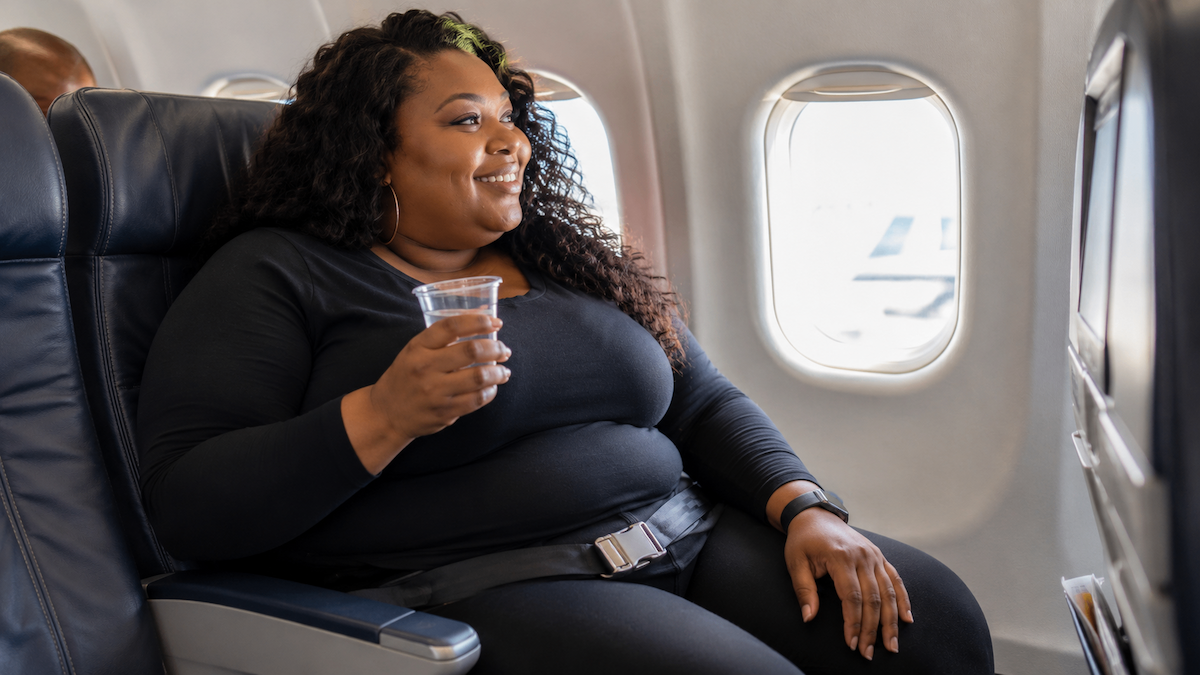
One of the most frequently recommended strategies from experienced travelers is to select seats carefully, because not all airplane seats are created equal. Seat width and legroom vary significantly depending on the airline, aircraft type, cabin section, and route.
Travel advocates frequently recommend resources such as SeatGuru because they allow passengers to compare seat dimensions before booking. Many plus-size travelers prefer aisle seats for additional movement, bulkhead seating for extra room, premium economy seating when available, and seats with movable armrests.
Some travelers choose to purchase an additional seat when possible, while others take advantage of airline “Customer of Size” policies. According to guidance from Obesity.net, airline policies vary widely, so contacting the airline before travel can help clarify options and avoid surprises. Planning often reduces anxiety significantly.
One of the most important travel tips is understanding airline policies before arriving at the airport. Some airlines offer accommodation for passengers who need additional seating space, others allow passengers to purchase a second seat, and certain airlines may even offer refunds for unused extra seats after travel under specific circumstances.
The Obesity Action Coalition recommends reviewing airline policies in advance because terminology varies. Policies may be labeled:
Knowing your options before traveling helps reduce uncertainty and allows you to advocate for your needs more confidently.
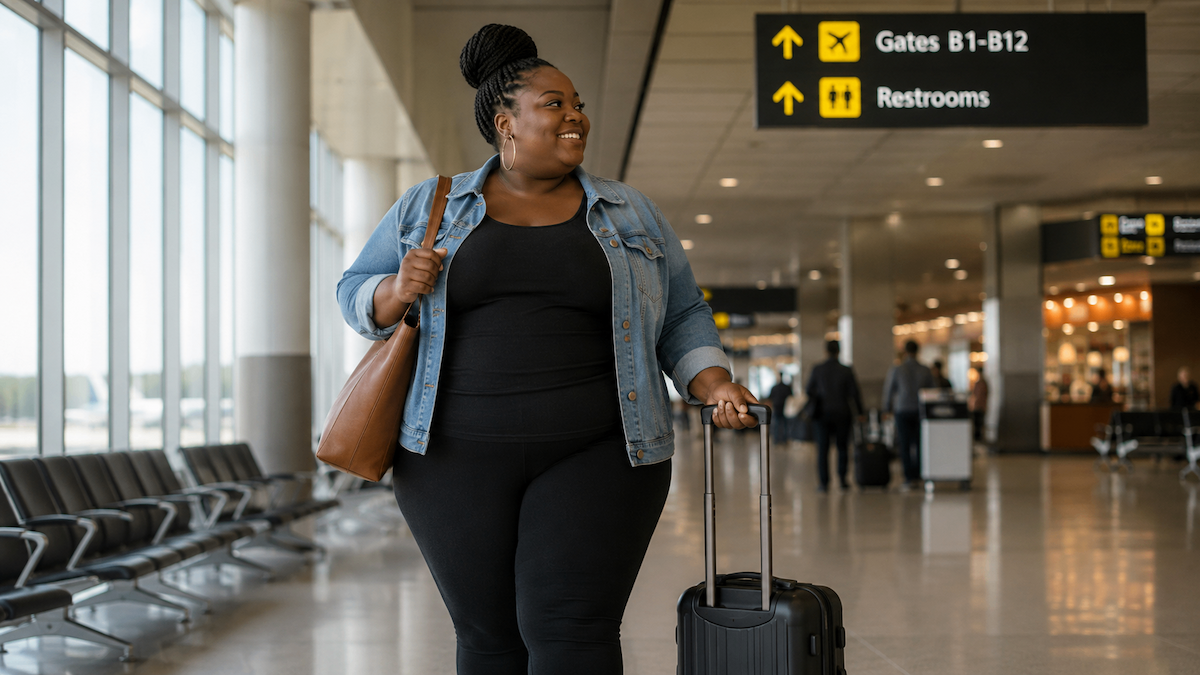
Airports can be physically demanding, with long security lines, crowded terminals, extended walks between gates, and unexpected delays. For travelers managing mobility limitations, joint pain, or fatigue, arriving early can make a significant difference.
Many travelers hesitate to request mobility assistance because they worry about judgment, but airport assistance exists for a reason. Wheelchair services, transportation carts, priority boarding, and accessibility support are available to help travelers conserve energy and reduce physical strain. According to travel accessibility guidance, arranging assistance at least 48 hours before departure can help ensure accommodations are available when needed. Using available resources is not a weakness; it is planning. And good travel planning often leads to a better experience.
One of the most commonly recommended comfort strategies among frequent travelers is wearing compression socks. Long periods of sitting can increase the risk of swelling and circulation problems. For some individuals, especially those on longer flights, prolonged sitting may also increase the risk of deep vein thrombosis (DVT).
Travel health experts recommend standing periodically, walking when possible, stretching during flights, and wearing compression socks if your healthcare provider recommends them. Small preventive measures can make a noticeable difference in comfort after landing.
Experienced travelers often focus less on packing light and more on packing smart because comfort items can make flights significantly easier. Frequent recommendations include neck pillows, lumbar support cushions, noise-canceling headphones, healthy snacks, reusable water bottles, and medication organizers.
Many travelers also recommend carrying favorite snacks rather than relying entirely on airline offerings. Having familiar foods available can reduce stress and improve comfort during long travel days. According to plus-size travelers interviewed by Obesity.net, having familiar foods available can reduce stress and improve comfort during long travel days. Comfort is not a luxury; it’s part of making travel sustainable.
This may be the hardest part of air travel for many people: not the seats, not the walking, and not the logistics, but the judgment. Many plus-size travelers describe feeling hyperaware of glances, comments, or assumptions from strangers. Some report anxiety before boarding, while others worry about inconveniencing seatmates. But frequent travelers often share a powerful reminder: other people’s opinions are not your responsibility.
The Obesity Action Coalition and travel advocates consistently emphasize that every person deserves to travel with dignity, regardless of body size. Traveling in a larger body does not require an apology. You have the same right to occupy public space as everyone else, and many travelers report that the anticipation of judgment is often worse than the experience.
Across travel forums, advocacy organizations, and personal stories, several themes appear repeatedly: plan, research your airline, know your rights, request accommodations when needed, prioritize comfort over pride, and, perhaps most importantly, don’t let fear stop you from traveling.
Many experienced plus-size travelers emphasize that the world is still worth exploring. In a travel essay published by Wondermind, writer Stephanie Yeboah encouraged plus-size travelers to remember that they deserve vacations, adventures, and meaningful experiences just as much as anyone else. Travel may look different for different bodies, but that does not make it less valuable.
Social media often promotes a narrow image of travel: minimal luggage, tiny airplane seats, and effortless movement through airports. But real travel is different. Some travelers need additional accommodations, mobility assistance, extra seating space, or longer layovers. None of these things make you a bad traveler; they make you a traveler who understands their needs. The goal is not to travel exactly like everyone else; the goal is to travel comfortably enough to enjoy the experience.
Flying while living with obesity can present challenges that many people never think about, including seat size, mobility concerns, comfort issues, weight stigma, and anxiety. These challenges are real, but they do not mean travel is out of reach. Choosing seats strategically, understanding airline policies, requesting accommodations, wearing compression socks, planning, and prioritizing comfort can make flying significantly less stressful.
Most importantly, remember this: your body is not a reason to stay home. You deserve family visits, vacations, adventures, and the chance to experience the world without feeling ashamed for taking up the space you need to get there.

By subscribing, you consent to receive emails from BlackDoctor.com. You may unsubscribe at any time. Privacy Policy & Terms of Service.

Enter your name and email to receive the download link.