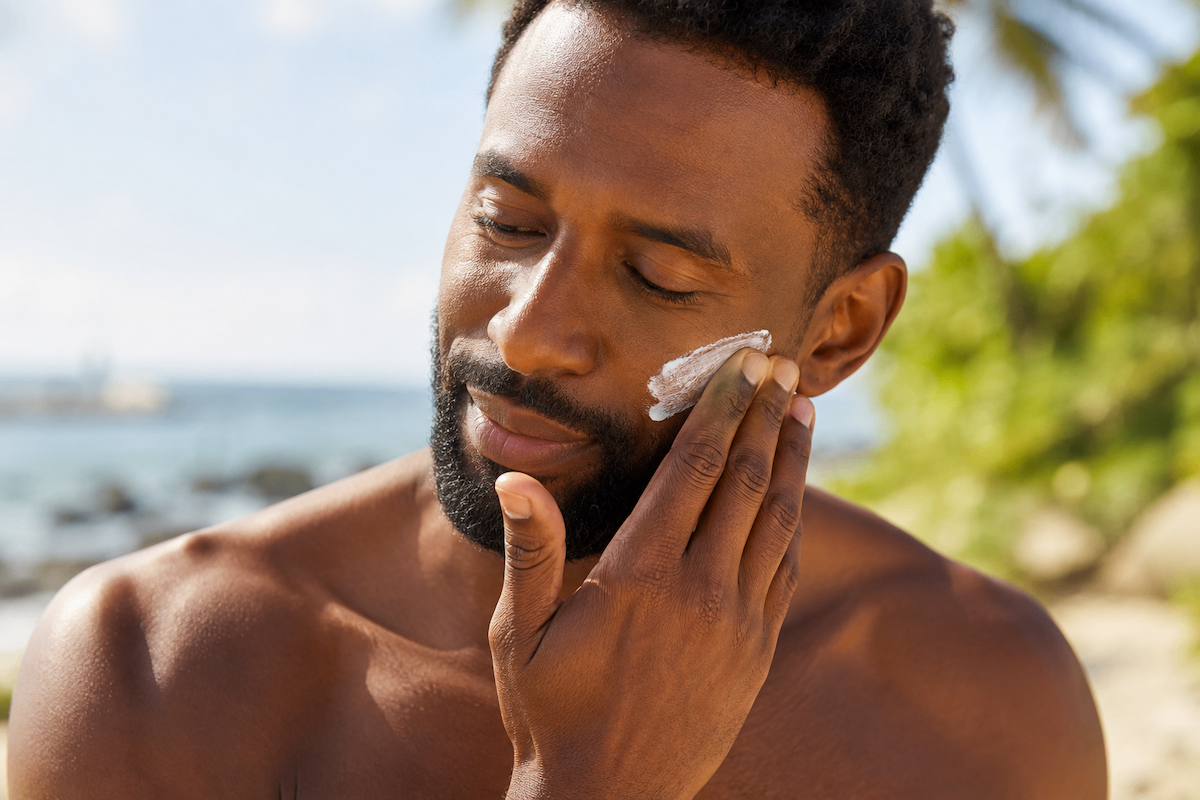
Dermatologists have long stressed that everyone — no matter the skin tone — needs sunscreen. Unfortunately, SPF continues to have a cast problem. New research suggests that a sunscreen’s white cast on dark skin may keep people from applying it and affect whether they apply enough for proper protection.
A study published in the Journal of Drugs in Dermatology examined how mineral sunscreens perform across a range of skin tones and found that products that left a white cast were significantly less popular with participants, particularly those with darker complexions. The inconvenience of casts does have real-world consequences: participants tended to apply less sunscreen when they disliked how it looked, reducing the product’s ability to protect against harmful UV radiation.
For Black people, white casts further impact an already complicated relationship between our community and SPF usage. With pervasive myths around whether or not melanated people even need sunscreen and a current onslaught of misinformation, finding products that discreetly protect are crucial.
Mineral sunscreens use zinc oxide and titanium dioxide to create a physical barrier that blocks both UVA and UVB rays. Dermatologists often recommend them for people with sensitive skin because they’re the only sunscreen filters that the FDA generally recognizes as safe and effective. However, those ingredients may have a downside: they can leave a noticeable white or chalky cast, especially on darker skin tones. Researchers wanted to find out whether that cosmetic drawback affects whether people actually will consistently use mineral sunscreen.
RELATED: Can Black People Get Skin Cancer? What the Research Says About UV Damage and Skin Cancer
Researchers recruited people with a wide range of skin tones to test five different mineral sunscreens that left varying amounts of white cast, along with one chemical sunscreen for comparison. While the study does not identify the brands used, it does say the main ingredients were physical UV barriers titanium dioxide and zinc oxide
First, each sunscreen was applied to participants’ forearms at the recommended amount. Then, participants applied the sunscreens to their own lower legs as they normally would. Finally, they chose the sunscreen they liked best for their face. Researchers used specialized tools to measure how well each sunscreen protected against UV rays, allowing them to compare how the products performed in the lab versus how people actually used them.
Every mineral sunscreen tested formed a film when applied in adequate amounts. However, the effect was significantly more noticeable in participants with darker skin tones than in those with lighter complexions.
That finding matters because appearance strongly influenced product preference. Participants consistently favored sunscreens that left less visible residue and were more likely to reject products with heavier whitening.
Perhaps the study’s most important finding came when participants were allowed to apply sunscreen themselves.
Compared with controlled application, participants used significantly less sunscreen during normal use. While using less product reduced the visible white cast, it also lowered both SPF and UVA protection.
In other words, participants unknowingly traded cosmetic appearance for reduced sun protection.
This highlights a common problem dermatologists have long suspected: if people dislike the way sunscreen looks or feels, they may compensate by applying too little to achieve the labeled SPF.

The results are especially important for people with medium to deep skin tones, who have long struggled to find mineral sunscreens that don’t leave behind a noticeable white cast. In fact, previous research has found that many people with skin of color skip mineral sunscreen because they don’t like the way it looks on their skin.
While darker skin contains more melanin, that doesn’t mean it’s protected from sun damage. People with deeper skin tones can still get sunburned, develop skin cancer, experience hyperpigmentation, and show signs of premature aging. That’s why dermatologists recommend wearing a broad-spectrum sunscreen every day.
RELATED: 5 Best Sunscreens for Black People by Skin Type
The study reinforces that sunscreen effectiveness depends on more than its ingredients or SPF number. Consumer experience, including how a product looks on the skin, can directly influence whether people apply enough to achieve adequate protection.
As more brands develop mineral sunscreens with improved formulations, tinted options, and transparent finishes, researchers suggest that cosmetic elegance should be viewed as an important part of sunscreen efficacy rather than simply a marketing feature. If a sunscreen blends seamlessly into the skin and encourages consistent, generous application, it is ultimately more likely to provide the protection it promises.



By subscribing, you consent to receive emails from BlackDoctor.com. You may unsubscribe at any time. Privacy Policy & Terms of Service.