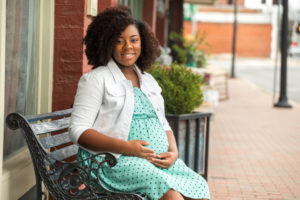
Did you know? On average, black women are about 60% more likely to have a premature baby compared to white women? Those numbers undoubtedly way heavy on black women, so what can you do? Luckily, researchers have developed a blood test that can predict a pregnant woman’s risk of preterm delivery with up to 80 percent accuracy.
The test is not ready for prime time, stressed senior researcher Stephen Quake, a professor at Stanford University in California. It still has to be validated in larger studies of more diverse groups of women, he said.
“In this study, we’ve demonstrated proof-of-principle,” Quake explained. “Now we need a clinical trial.”
The hope, according to Quake, is that the test can one day be used routinely to identify women who are likely to go into labor prematurely. “Right now, there’s really no way to do that,” he said.
In the United States, over 9 percent of births are premature, before the 37th week of pregnancy. In most of those cases, Quake said, women spontaneously go into labor and it’s not clear why.
The new blood test, described in an
issue of Science, detects levels of “cell-free RNA” from seven specific genes. RNA is the messenger molecule that carries genetic information to your cells’ protein-making machinery. Bits of “cell-free” RNA can be measured in the blood.
Quake’s team found that in women at increased risk of preterm delivery, the blood test predicted premature labor with 75 to 80 percent accuracy. According to Quake, that level of accuracy is good enough to be used in routine practice, but more work is needed to see whether that performance holds up in larger studies.
“Studies will need to include women of different races and ethnicities,” Quake said. “As well as women who are not known to be at increased risk of preterm delivery.”
Dr. Kelle Moley is senior vice president of the March of Dimes, which partially funded the study.
Moley said there are about 15 million preterm births worldwide each year, and the rate in the United States has recently been inching up. So, there is a great need for tests that can help predict early deliveries.
She added that the new results are “exciting,” in part because it’s a simple blood test that could potentially become widely available. But Moley agreed that a clinical trial, including a more diverse group of women, is necessary.
For the study, Quake’s team first followed 31 Danish women who gave
blood samples weekly throughout pregnancy. The investigators were able to identify cell-free RNA from nine genes that were predictive of a mother’s due date: A blood test that measured those RNA levels was accurate about 45 percent of the time which, the researchers noted, is comparable to first-trimester ultrasound.
Next, the researchers studied 38 American women who were at increased risk of preterm delivery, either because they delivered prematurely before, or had developed early contractions. Each woman gave a blood sample during the second or third trimester; 13 ultimately delivered prematurely.
Quake’s team found that RNA levels from seven genes could predict preterm labor with an even higher level of accuracy.
Most of the implicated genes are from the mother, the researchers reported. By studying those genes, Quake said, researchers could learn more about the causes of preterm labor and possibly develop medications to stop it.
That highlights the “big question,” Moley said: If this blood test, or any other test, becomes available, what can be done to prevent a woman from going into preterm labor?
Right now, she said, some women at risk of preterm delivery can be
given shots of hydroxyprogesterone, which is a synthetic version of the hormone progesterone that can help prevent early labor. But not all at-risk women can get the treatment, it’s only for those pregnant with one baby, for example, and it does not always work.
Moley agreed that the new findings might aid in understanding the biology of preterm labor, which could lead to new ways to prevent it.
Preterm birth is a serious threat to all women, however, black women face an even higher risk for giving birth prematurely. If you’re a woman of colored and planning to conceive, take extra precautions and know your options for ensuring a healthy pregnancy and birth. For more information on preterm birth, please visit our Health Conditions tab on BlackDoctor.org.
SOURCES: Stephen Quake, Ph.D., professor, bioengineering and applied physics, Stanford University, Stanford, Calif.; Kelle Moley, M.D., senior vice president, chief scientific officer, March of Dimes, White Plains, N.Y.; June 8, 2018, Science



By subscribing, you consent to receive emails from BlackDoctor.com. You may unsubscribe at any time. Privacy Policy & Terms of Service.