Menu

Psoriatic Arthritis or Fibromyalgia? How to Tell the Difference

Table of Contents
Psoriatic Arthritis or Fibromyalgia

Living with chronic pain and fatigue can be challenging, especially when it’s caused by multiple conditions. If you have psoriatic arthritis (PsA) and experience persistent pain and fatigue, it may also signal the need to be evaluated for fibromyalgia, another chronic disorder. While the two conditions share some symptoms, they require different treatments, making an accurate diagnosis crucial for effective management.

Research suggests that Black individuals may be disproportionately affected by both psoriatic arthritis and fibromyalgia. Studies have shown that Black patients often experience more severe symptoms and have poorer outcomes compared to other racial groups. However, due to underrepresentation in clinical trials and healthcare disparities, the exact impact of these conditions on Black patients is not well understood.

RELATED: Psoriatic Arthritis: Types, Causes, Symptoms & Treatments

Featured on BlackDoctor

Understanding Your Psoriatic Arthritis

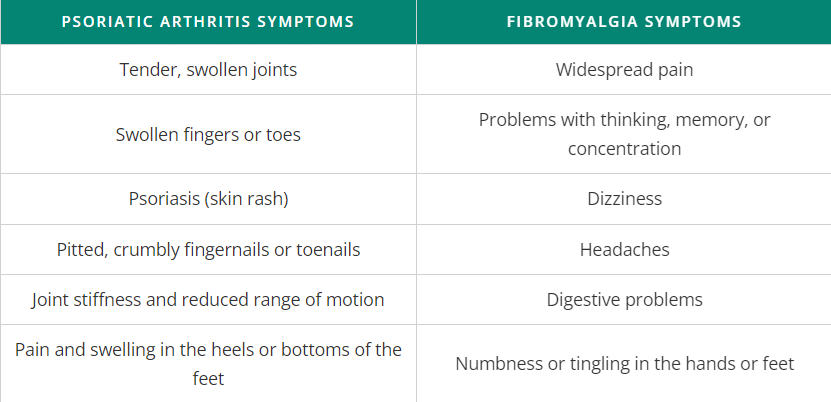
Psoriatic arthritis is a condition where your immune system attacks healthy cells and tissues, leading to joint inflammation and the overproduction of skin cells. It affects an estimated 30 percent of the eight million people with psoriasis in the United States, according to the National Psoriasis Foundation. You may experience tender, swollen joints, dactylitis (swelling of a whole toe or finger), and skin or nail symptoms such as dark brown or purple scaly skin psoriasis plaques, or nail changes.

Getting a Diagnosis for Psoriatic Arthritis

There isn’t a specific test for psoriatic arthritis, so doctors rely on a combination of tests to rule out other causes of joint pain and stiffness. These tests may include blood tests, imaging scans (such as MRI or ultrasound), and X-rays. Early diagnosis is crucial to prevent or slow joint damage.

Understanding Your Fibromyalgia

Fibromyalgia is not an autoimmune or inflammatory disease but is believed to involve changes in your nervous system, particularly the brain and spinal cord. It affects about four million adults in the United States, with women being twice as likely to have the condition as men, according to the Centers for Disease Control and Prevention. Symptoms of fibromyalgia include widespread pain, problems with thinking and memory, sleep disturbances, and various other symptoms affecting different parts of your body.

RELATED: Fibromyalgia: What You Need To Know

Getting a Diagnosis of Fibromyalgia

Like psoriatic arthritis, there isn’t a specific test for fibromyalgia. It is mostly diagnosed through a physical exam, lab tests, and X-rays to rule out other conditions. One challenge for rheumatologists is distinguishing between diffuse, widespread pain caused by fibromyalgia and enthesitis from psoriatic arthritis.

Graphic provided by Everyday Health

The exact cause of both conditions is unclear, but genetics and environmental factors are believed to play a role. People with inflammatory arthritis like PsA may be at an increased risk for fibromyalgia due to the hypersensitization of your brain to symptoms like pain and fatigue.

The Treatment Approach

Correctly diagnosing both conditions is essential for prescribing the right medications and therapies. While there is no cure for fibromyalgia, medications such as nonaddictive sleep aids, gabapentin, pregabalin, and SNRIs can help manage symptoms. Aerobic and resistance exercises are also important for reducing pain and improving your quality of life with PsA or fibromyalgia.

If you have PsA and experience persistent pain and fatigue, it’s important to be evaluated for fibromyalgia. Both conditions require

different treatments, so an accurate diagnosis is crucial for effective management and improving your quality of life.

Managing Both Conditions

Living with both PsA and fibromyalgia can be challenging, but there are strategies to help you cope. It’s important to work closely with your healthcare team to develop a comprehensive treatment plan that addresses both conditions. This may include a combination of medications, physical therapy, and lifestyle changes.

Medications

Your doctor may prescribe different medications to manage your PsA and fibromyalgia symptoms. For PsA, medications such as nonsteroidal anti-inflammatory drugs (NSAIDs), disease-modifying antirheumatic drugs (DMARDs), and biologics may be used to reduce inflammation and slow joint damage. For fibromyalgia, medications such as antidepressants, anticonvulsants, and muscle relaxants may be used to manage pain and improve sleep.

Physical Therapy

Physical therapy can be beneficial for both PsA and fibromyalgia. A physical therapist can work with you to develop an exercise program that helps improve your joint mobility, strength, and flexibility. They can also teach you techniques to manage pain and improve your overall quality of life.

Lifestyle Changes

Making lifestyle changes can also help manage both conditions. Eating a healthy diet, getting regular exercise, and managing stress can all help improve your symptoms. It’s also important to get plenty of rest and practice good sleep hygiene to help improve your sleep quality.

Support

Living with chronic conditions like PsA and fibromyalgia can be isolating, but you’re not alone. Joining a support group or connecting with others who have similar experiences can provide you with valuable support and encouragement. You can also talk to a mental health professional if you’re struggling to cope with your conditions.

Managing both PsA and fibromyalgia requires a comprehensive approach that addresses both conditions. By working closely with your healthcare team and making lifestyle changes, you can improve your symptoms and quality of life.


 

SHARE
Related Stories
Answer the question below
What actions have you taken regarding your leaky heart valve?

Get our Weekly Newsletter

Stay informed on the latest breakthroughs in family health and wellness. Sign up today!

By subscribing, you consent to receive emails from BlackDoctor.com. You may unsubscribe at any time. Privacy Policy & Terms of Service.

More from BlackDoctor

Where Culture Meets Care

BlackDoctor is the world’s largest and most comprehensive online health resource specifically for the Black community. BlackDoctor understands that the uniqueness of Black culture - our heritage and our traditions - plays a role in our health. BlackDoctor gives you access to innovative new approaches to the health information you need in everyday language so you can break through the disparities, gain control and live your life to its fullest.
✦ AI Search Disclaimer
This AI-powered search tool helps you find relevant health articles from the BlackDoctor.org archive. Please keep the following in mind:
✦ For Informational Purposes Only
The information provided through this AI search is for general educational and informational purposes only. It is not intended as a substitute for professional medical advice, diagnosis, or treatment.
✦ Always Consult a Healthcare Provider
Never disregard professional medical advice or delay seeking it because of something you have read through this search tool. If you have a medical emergency, call your doctor or 911 immediately.
✦ AI Limitations
This search tool uses artificial intelligence to help match your queries with articles in our archive. While we strive for accuracy, AI-generated results may occasionally be incomplete, outdated, or not fully relevant to your specific situation.
✦ No Doctor-Patient Relationship
Using this search tool does not create a doctor-patient relationship between you and BlackDoctor.org or any healthcare provider.
Explore over 35,000 articles and videos across black health, wellness, lifestyle and culture
Full AI Search Experience >
×

Download PDF

Enter your name and email to receive the download link.

BlackDoctor AI Search