Menu

How Does Your Donated Blood Get to a Patient in Need?

Table of Contents
blood donation

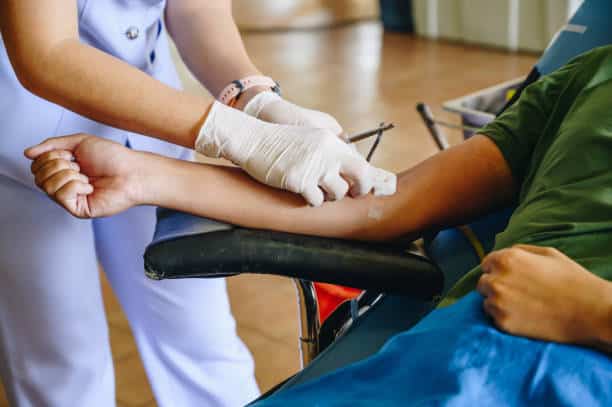
We all know donating blood saves lives, but do you know what happens to your blood after you’ve donated? While donating blood is a fairly simple process, once it’s collected, your donation will go through many steps before it reaches a patient in need.

Where does your blood go once it’s donated?

Wondering where your blood goes after you’ve donated and how it lands in the hands of those that need it the most? Cedars-Sinai breaks down how their Blood Donor Services team tests and processes donations.

First, the whole blood (what’s taken out of your arm) is spun to separate out its components—red blood cells and plasma.

Featured on BlackDoctor

Cedars-Sinai’s blood donation center collects platelets for transfusion through a different method called apheresis, a process of simultaneously removing platelets from a donor’s blood and returning the blood to the donor.

After the blood is separated, more than a dozen tests are performed to ensure it’s safe to use.

Once all the testing is complete, the components are stored until patients need them. Your blood is now considered 100% safe and will go on to make a difference in someone else’s life and for that, you should be proud.

“Community blood donors serve as a lifeline for our patients.”

RELATED: BIPOC Blood Donors Are Critical For Those Living with Sickle Cell

Ready to make a blood donation?

We recognize that you’ve put yourself on the line to donate blood, so we want to make sure it doesn’t take a toll on your body. For most people, the reduction in iron levels caused by donating blood will have no effect on their health.

However, for young women and frequent donors of both genders, donating blood may worsen iron deficiency and/or anemia (low red blood cells). Luckily, you can combat this by eating a well-balanced diet with iron-rich foods.

Although iron-rich foods are a necessity, we highly recommend that you consult with your doctor before taking extra iron in the form of vitamins or supplements.

Too much iron can be harmful to your health. Your doctor can point you in the right direction of how much iron you need based on your age, gender, and how often you donate blood.

Thinking about making a blood donation, but don’t know where to begin? We’ve got covered with a few things you can do before your appointment to ensure you receive the best outcome possible.

Here are some tips on how to prepare:

  • Maintain healthy iron levels by eating iron-rich foods [PDF] such as red meat, fish, poultry, beans, spinach, iron-fortified cereals, and raisins.
  • Get a good night’s sleep.
  • Avoid excessive alcohol consumption before your donation.
  • Eat normally and drink extra fluids before and after your donation.
  • If you are donating platelets, remember that you cannot take aspirin for 2 days prior to the donation.
  • Bring your driver’s license or another form of photo ID.


To find a blood drive location near you, visit American Red Cross.

For more information on donating blood, visit Cedars-Sinai Blood Donor Services.

SHARE
Related Stories
Answer the question below
What actions have you taken regarding your leaky heart valve?

Get our Weekly Newsletter

Stay informed on the latest breakthroughs in family health and wellness. Sign up today!

By subscribing, you consent to receive emails from BlackDoctor.com. You may unsubscribe at any time. Privacy Policy & Terms of Service.

More from BlackDoctor

Where Culture Meets Care

BlackDoctor is the world’s largest and most comprehensive online health resource specifically for the Black community. BlackDoctor understands that the uniqueness of Black culture - our heritage and our traditions - plays a role in our health. BlackDoctor gives you access to innovative new approaches to the health information you need in everyday language so you can break through the disparities, gain control and live your life to its fullest.
✦ AI Search Disclaimer
This AI-powered search tool helps you find relevant health articles from the BlackDoctor.org archive. Please keep the following in mind:
✦ For Informational Purposes Only
The information provided through this AI search is for general educational and informational purposes only. It is not intended as a substitute for professional medical advice, diagnosis, or treatment.
✦ Always Consult a Healthcare Provider
Never disregard professional medical advice or delay seeking it because of something you have read through this search tool. If you have a medical emergency, call your doctor or 911 immediately.
✦ AI Limitations
This search tool uses artificial intelligence to help match your queries with articles in our archive. While we strive for accuracy, AI-generated results may occasionally be incomplete, outdated, or not fully relevant to your specific situation.
✦ No Doctor-Patient Relationship
Using this search tool does not create a doctor-patient relationship between you and BlackDoctor.org or any healthcare provider.
Explore over 35,000 articles and videos across black health, wellness, lifestyle and culture
Full AI Search Experience >
×

Download PDF

Enter your name and email to receive the download link.

BlackDoctor AI Search