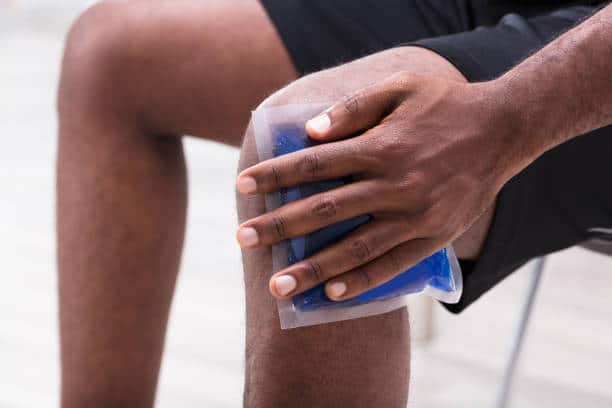
If you’ve ever dealt with swollen joints, you might have heard differing advice about alleviating pain and inflammation. Some people will recommend using cold therapy while others will tell you to go with something hot. So how do you know which one will help you? Let’s find out.
Cold therapy is great for acute or sudden pain and inflammation. You might see this because of an injury or overdoing it during your exercise routine. Using cold at this point is helpful because it makes blood vessels smaller, which in turn reduces inflammation. Cold therapy is also useful if you have a chronic condition that results in flares where your joint pain is worse than usual.
RELATED: 9 Foods That Reduce Joint Pain & Make You Feel Better
For cold therapy, you can buy cold or gel packs. You can also make your own at home by placing a small, wet towel in the freezer or using a package of frozen peas.
Regardless of your choice, it’s essential to use it correctly. It’s best to apply cold therapy within 48 hours of feeling sudden pain and you should never place a cold pack directly on your skin unless it has a built-in barrier.
It’s recommended that you wrap cold packs in a towel or rag before placing them on the affected area. Even when it’s protected, you should only leave the cold pack on your swollen joints for 10 minutes or as long as it’s comfortable.
As you might expect, heat therapy has the opposite effect on your blood vessels. The heat results in enlarged blood vessels, which carry more nutrients and oxygen to the affected joints.
Typically, using heat can alleviate pain and swelling while encouraging healing so doctors usually recommend heat therapy for chronic conditions that can result in stiff, painful joints regularly.
When it comes to heat therapy, you can choose between dry heat and moist heat. Dry heat usually entails using a heating pad while moist heat comes from using a heated towel.
Typically, the towel would be heated by getting it damp and warming it up in a microwave for 20-60 seconds. You may get better heat transfer from the towel than from the heating pad.
As with cold therapy, you shouldn’t place the heated item directly on your skin as you may burn yourself. It’s best to wrap it up in a towel or rag. Once it’s prepared, you can apply heat therapy for 20 minutes or less. As a rule, if it starts to feel too warm, then you should remove it.
RELATED: Should You Be Concerned About Your Kids’ Joint Pain?
Interestingly, doctors recommend alternating between hot and cold therapy. While you can’t move from one to the other during the same session, it can be helpful to use heat therapy to manage daily joint pain and cold therapy for painful flares.
With certain conditions like arthritis and fibromyalgia, you might get the most out of using heat therapy in the morning to free up your aching, stiff joints and cold therapy when you’re having more painful episodes.
If you’ve been injured, it can help to apply cold therapy at the beginning to alleviate the pain and swelling then switch to heat therapy in an hour or two to encourage healing if the swelling has gone down.
When you have joint pain, the last thing you want is to use the wrong thing to ease the discomfort. Fortunately, you can use heat or cold to help depending on what your symptoms are. If nothing alleviates the pain or swelling in your joints, however, it could be time to talk to your doctor.


By subscribing, you consent to receive emails from BlackDoctor.com. You may unsubscribe at any time. Privacy Policy & Terms of Service.