The holiday season is often a time when we are able to spend quality time together with loved ones and family members—some of whom we haven’t seen in years. If your family is like mine, spending an extensive amount of time together often lends itself to hours and hours of family stories, many of which start with, “Remember when…”
In fact, many of us will hear a plethora of stories—some funny, some serious, and some a combination of both, yet all tend to have a greater context embedded within them and that is they capture and archive our family’s history. As Black people, in particular, the preservation of our family history is paramount and it doesn’t have to be as complicated as one may think.
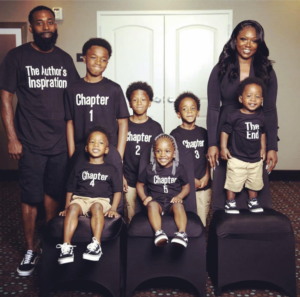
Just like the family photo below, that went viral, it’s important to know your family’s history. It’s like your story; if you don’t know the story, you’re susceptible to someone else writing it.
Whether you are the decedent of slaves, a first-generation American, or an immigrant, there is a strong possibility that oral history has played a key role in your culture. From the neighborhood sage on the front porch to the West African griot, the ability to tell stories and to share them with others is often seen as an important and respected role.
For Blacks, in particular, laws once prevented us from learning how to read and write, thus the ability to memorize, recall, and retell stories allowed family histories to be passed down from one generation to the next.
In this sense, oral history can be just as, if not more, important than written history in some communities. For this reason, it is important that we serve as witness bearers for those who are no longer with us.
RELATED: Make Collecting Family Health History Part Of Your Thanksgiving Plans
Some diseases like Alzheimer’s disease are not only a personal health crisis, but a family concern. That is because when a family member is diagnosed with a disease, it increases the risk of other family members developing that disease as well.
For example, if a family member is diagnosed with Alzheimer’s, your risk increases by 30%. In short, family history raises the
2% annual risk of developing Alzheimer’s by about 30%, to 2.6% per year, according to Harvard Health Publishing.
When you get together with your family during the holidays, try discussing your family health history. Even if you aren’t able to get to the root of every health crisis in your family, find out what you can. Whatever information you are able to find will be important because you can take it back to your doctors and make sure that you are a part of screenings and early prevention methods that will further decrease your risk and allow doctors to catch a disease in its early stages.
RELATED: 4 Tips To Get Your Family Health History This Holiday
Cultures that tend not to record their own stories often have to rely upon someone else’s interpretation of their cultures, beliefs, and values. As we have seen, historically, this can lead to misunderstandings, misinterpretations and a one-sided view of a culture and its people. To offset or further prevent this, we must curate our own stories.
Some people may opt to do this via writing books or others may simply decide to interview older family members and capture their responses on camera. Either way, the information that is gathered must be preserved for posterity’s sake. A perfect example of this is the WPA project.
Many of the first-hand accounts that we now have of former enslaved Africans’ lives are derived from the stories that they shared with others. Without these recordings, we would have to rely on, almost exclusively, second and third-hand accounts of their lived experiences.
Hiring a professional filmmaker or documentarian to capture your stories can be expensive. So too is hiring a professional writer or ghostwriter. The good news is that with today’s technology, you can historicize and document your family’s history yourself.
To record an interview, start by coming up with a list of questions. Although extemporaneous interviews are interesting, capturing someone’s oral history should be pre-planned.
Once you have your questions, schedule a time frame that is realistic—remember, older family members may need to talk in small chunks and they will probably want everything to happen in a convenient space, so factor in time, weather, and access before scheduling.
Once you have worked through the logistics, get acclimated with your preferred device. Your smartphone, tablet, and laptop should have a recording or dictating function that operates the same way that a tape recorder does. From there, you will just need to transcribe the interviews or hire someone to transcribe them for you.
Before you know it, you will have an archivable document that can be shared with generations to come!

Tyra Seldon, Ph.D. is a former English professor turned writer, editor and small business owner. Passionate about the English language and the craft of storytelling, she launched Seldon Writing Group, LLC in 2011. Dr. Seldon has worked with education tech companies, celebrities, aspiring writers, entrepreneurs, media outlets, Fortune 500 companies, and government agencies to develop their written content. When she’s not writing, she’s traveling the world, one continent at a time. She can be reached at [email protected]
FB: @seldonwriting
IG: @tyraseldon


By subscribing, you consent to receive emails from BlackDoctor.com. You may unsubscribe at any time. Privacy Policy & Terms of Service.