Menu

Telemedicine Was Supposed to Expand Mental Health Care—But Black Patients Are Still Left Out

Table of Contents
telemedicine
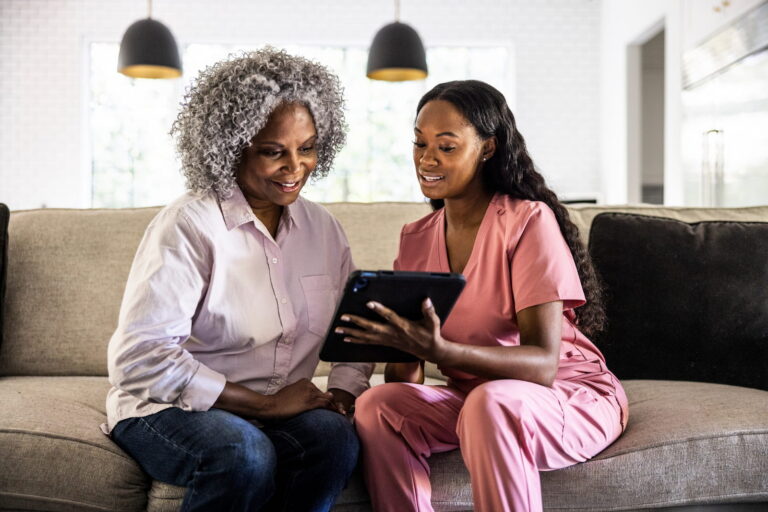
Photo by Hanna Pad

During the height of the COVID-19 pandemic, many health experts envisioned telemedicine as a “magic wand” that would bring mental health care to the most remote corners of the country. 

But a new study suggests that while the technology is now common, it’s still tough for those living in rural America when it comes to getting online access.

We also see clear structural issues in who gets digital healthcare, with Black patients using telehealth visits less often. Compared to white patients, more Black participants said they lacked both internet access and a way to get to a patient portal. 

Featured on BlackDoctor

If we want to truly shrink racial gaps in cancer care, we need to make sure everyone has equal internet access and knows how to use digital tools.

RELATED: Tips to Get the Most Out of Your Telemedicine Appointment

What is Telehealth?

Telehealth, as defined by the Health Resources and Services Administration, involves using electronic information and communication technology. 

It’s a pretty broad term, covering things like giving clinical care remotely and teaching patients and health professionals. 

What kinds of technologies make up telehealth?

  • Internet
  • Video conferencing
  • Store-and-forward imaging
  • Streaming media
  • Land and wireless communications

Why telemedicine lacks in rural areas

Researchers analyzed Medicare billing records for more than 17,000 mental health specialists between 2018 and 2023 in all regions of the United States.

They looked at the share of their visits to patients living in rural, low-access-to-care or distant communities.

Their findings, published March 5 in JAMA Network Open, show that the massive shift to virtual care during the pandemic may have done little to help psychiatrists and therapists reach new patients in underserved areas.

The study found that specialists who used telemedicine the most saw only a tiny increase — less than one percentage point — in patients from rural regions compared to specialists who rarely used video calls. 

Interestingly, most of these long-distance visits weren’t with new rural residents; instead, they were existing patients originally from the city who had moved away and kept their old doctors via the screen.

“We had thought the dramatic shift from in-person care to telemedicine among mental health specialists would lead to them caring for substantially more patients in rural communities,” study author Drew Wilcock said in a news release. He’s a lead research scientist at Brown University School of Public Health in Providence, Rhode Island.

“Unfortunately,” he added, “We just don’t see it.”

Perhaps the most surprising finding was that telemedicine might actually be making it harder for some people to find a doctor. 

Specialists who relied heavily on virtual visits saw their patient panel shrink, seeing 3.6 percent fewer new patients overall. 

This suggests that while video calls make it easier to maintain long-term relationships with current patients, it’s not opening up slots for anyone new.

The researchers argue that the problem isn’t the technology, but the legal paperwork. Currently, a doctor in one state often cannot treat a patient in another without a separate, expensive license.

“Currently, it is too administratively burdensome for a mental health physician to get a license in many states,” explained lead author Dr. Jacob Jorem, a fellow at Harvard Medical School in Boston. 

Making it easier for clinicians to practice across state lines is a critical first step toward reaching rural patients, he suggested.

“The potential of telemedicine can’t be ignored,” said study author Dr. Ateev Mehrotra, a professor of health services, policy and practice at Brown. 

“But simply offering telemedicine will not address the barriers that many rural patients face in obtaining mental health care,” Mehrotra said. “For telemedicine’s potential to be reached, we need policy interventions to address those barriers. Improving how we license physicians is a critical first step.”

telemedicine
Photo by nappy

How to access telehealth resources?

If you are struggling to find a mental health specialist or are currently living in a rural area, these strategies may help you bypass some of the common hurdles mentioned in the study:


  • Look for “Compact” States: While licensing is a barrier, many states participate in the Psychology Interjurisdictional Compact (PSYPACT) or the Interstate Medical Licensure Compact (IMLC). If your state is a member, you can see specialists located in any other member state without them needing a separate local license.
  • Utilize Community Health Centers: Federally Qualified Health Centers (FQHCs) often have established telemedicine networks and sliding-scale fees. They are specifically designed to serve high-need, rural areas and may have shorter wait times for new patients.
  • Check with Your Insurance Provider: Rather than searching for a doctor manually, use your insurance’s dedicated telehealth portal. These platforms often employ specialists specifically licensed to cover your region, ensuring you aren’t trying to book with a “city doctor” whose panel is already full.
  • Verify Your Tech Infrastructure: Before your appointment, use a tool like Speedtest to ensure your connection can handle video. If your home internet is spotty, check if your local library or community center offers private “telehealth booths” or high-speed Wi-Fi.
  • Advocate for Audio-Only Visits: If video is a barrier due to bandwidth or comfort, ask if your provider offers audio-only sessions. Some Medicare and private insurance plans expanded coverage for phone-based therapy during the pandemic, which can be a lifesaver in “dead zones.”
  • Ask About “Bridge Care”: If a specialist’s panel is full, ask if they can provide a one-time consultation or “bridge” care to stabilize your situation while you remain on a waiting list for a permanent provider.

SHARE
Related Stories
Answer the question below
What actions have you taken regarding your leaky heart valve?

Get our Weekly Newsletter

Stay informed on the latest breakthroughs in family health and wellness. Sign up today!

By subscribing, you consent to receive emails from BlackDoctor.com. You may unsubscribe at any time. Privacy Policy & Terms of Service.

More from BlackDoctor

Where Culture Meets Care

BlackDoctor is the world’s largest and most comprehensive online health resource specifically for the Black community. BlackDoctor understands that the uniqueness of Black culture - our heritage and our traditions - plays a role in our health. BlackDoctor gives you access to innovative new approaches to the health information you need in everyday language so you can break through the disparities, gain control and live your life to its fullest.
✦ AI Search Disclaimer
This AI-powered search tool helps you find relevant health articles from the BlackDoctor.org archive. Please keep the following in mind:
✦ For Informational Purposes Only
The information provided through this AI search is for general educational and informational purposes only. It is not intended as a substitute for professional medical advice, diagnosis, or treatment.
✦ Always Consult a Healthcare Provider
Never disregard professional medical advice or delay seeking it because of something you have read through this search tool. If you have a medical emergency, call your doctor or 911 immediately.
✦ AI Limitations
This search tool uses artificial intelligence to help match your queries with articles in our archive. While we strive for accuracy, AI-generated results may occasionally be incomplete, outdated, or not fully relevant to your specific situation.
✦ No Doctor-Patient Relationship
Using this search tool does not create a doctor-patient relationship between you and BlackDoctor.org or any healthcare provider.
Explore over 35,000 articles and videos across black health, wellness, lifestyle and culture
Full AI Search Experience >
×

Download PDF

Enter your name and email to receive the download link.

BlackDoctor AI Search