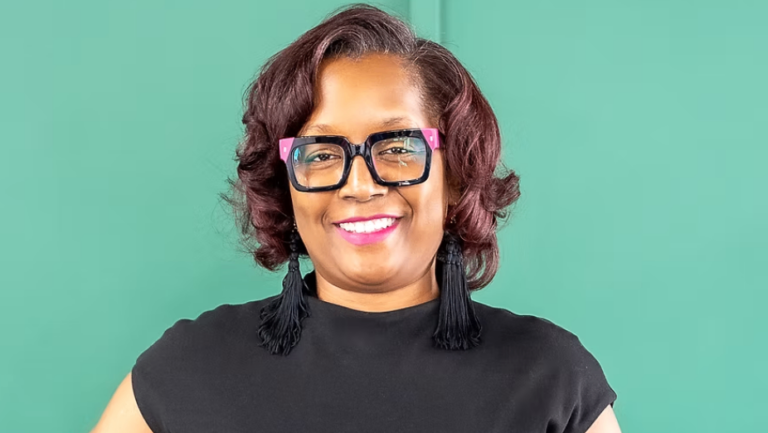
In a groundbreaking interview with Dr. Mitzi Joi Williams, one of the clinical leads and heads of the steering committee for, CHIMES (the first-ever multiple sclerosis (MS) clinical trial developed by Genentech exclusively focused on the Black and Hispanic community in the United States) we delve into the significance of the trial, the existing gaps in MS research, and the innovative strategies employed to make clinical trials more inclusive.
Recent data has debunked historical misconceptions about MS not affecting Black individuals. Over the past decade, research has shown that the incidence of MS is highest among Black people in the U.S., with some studies suggesting up to a 47% higher risk in Black women.
The trial seeks to address the lack of research in this area, aiming to unravel the baseline characteristics and factors contributing to the disproportionate impact of MS on Black and Hispanic populations.
“This is a really important trial because, over the past decade or so, we’ve been learning more about MS in the Black community,” Dr, Williams shares.
According to studies, Black and brown communities with MS have worse outcomes, such as faster disability progression, more brain damage on MRI, and earlier walking difficulties.
Clinical trials, with their controlled settings and equal access to interventions, provide the best platform to understand disease courses and ensure equitable access to cutting-edge treatments.
“Clinical trials really give us the best information because everybody has the same access to care, everybody has the same types of treatments,” Dr. Williams adds.
RELATED: Dr. Mitzi Joi Williams’ Steps To Finding The Perfect Neurologist (Video)
Although Black and Hispanic / Latinx make up 20% of the MS population, they are vastly underrepresented in clinical research.
Unfortunately, for the Black community, social determinants of health, such as mistrust, costs, transportation, and strict inclusion criteri,a often hinder participation in clinical trials, making data on how MS impacts these communities inaccurate.
These same social determinants of health are the very reason the CHIMES trial has been successful. In fact, the trial enrolled participants 25% ahead of schedule during the COVID-19 pandemi,c proving that intentional efforts, involving patients in protocol creation, and addressing practical barriers like childcare and translation services works.
“With the prep that we did on the front end, we were able to recruit these populations successfully more than we imagined. I thought that was a really big win for the study,” Williams adds.
While still early in the trial, Dr. Williams shares some intriguing findings. Contrary to expectations, there wasn’t a delay in MS diagnosis for Black and Hispanic participants. However, the severity of the disease at diagnosis was notably higher in Black individuals.
Response to therapy mirrored broader clinical trials, suggesting that early diagnosis and appropriate treatment may mitigate outcomes influenced by social determinants of health.
According to a press release, “Additional results from the CHIMES trial showed more than 90% of trial participants had no 24-week confirmed disability progression (94.7% of Black participants; 94.2% of Hispanic / Latinx participants) and no T1-Gd+ lesions (95% of Black participants; 97% of Hispanic / Latinx participants). During the trial period, no new or enlarging T2 lesions were observed in about half of Black participants (46%) and more than half of Hispanic / Latinx participants (64%). No new safety signals were reported.”
The CHIMES trial, which has been extended to three years to gather long-term data on MS progression among Black and Hispanic / Latinx populations, anticipates further results to be available in 2024.”
Looking ahead, Dr. Williams envisions a future where clinical trials are more inclusive from the start, eliminating the need for specialized trials for different demographic groups.
“My hope is that, again, we don’t have to go back and do these additional trials, that we do it well the first time,” she notes.
The lessons learned from this trial can be applied to ongoing and future studies, fostering diversity and reflecting real-world populations.
Dr. Williams concludes with advice for those considering clinical trials:


By subscribing, you consent to receive emails from BlackDoctor.com. You may unsubscribe at any time. Privacy Policy & Terms of Service.