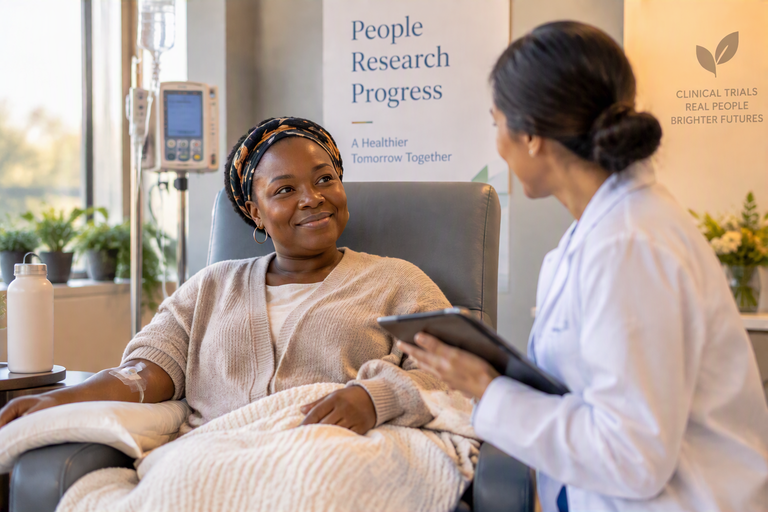
When you think of a clinical trial, a few scenarios may come to mind. Maybe you picture agreeing to take a medication that could help your specific condition. You think of signing a consent form that commits you fully until the study has ended, with no way to leave.
There are many common misconceptions about clinical trials, but potential participants should know that informed consent is the backbone of these studies.
In reality, clinical trials are founded on the idea of participant safety and consent. During the initial stages of a trial, potential participants are allowed to review informed consent, which helps them make an informed decision — not in any way take away their choices. Informed consent is an ongoing communication process designed to protect participants — not simply a form they must sign.
Here’s what you need to know about informed consent in clinical trials.
Informed consent is the process by which the research team explains the study so you can decide whether participation is right for you. As a potential volunteer, you will receive a full explanation of all aspects of the study.
Edward S. Kim, MD, MBA, serves as physician-in-chief at the City of Hope National Medical Center and system director for clinical trials. He spoke on a trial’s priorities from a researcher’s perspective.
“As both a physician and clinical researcher, my goal is to make sure every patient understands what a clinical trial involves and has the information they need to decide whether it’s right for them,” Dr. Kim told BlackDoctor.
“Participating in a clinical trial is a personal decision, and patients should receive clear, complete information before making that choice,” Dr. Kim explained. “Informed consent helps ensure they understand what researchers know – and don’t yet know – about the treatment, as well as their rights throughout the study. The process isn’t designed to convince someone to join a trial. It’s designed to help them decide whether participation is right for them.”
RELATED: Are Clinical Trials Safe?
According to the U.S. Department of Health and Human Services (HHS), the process of informed consent must include these three features:
Within these three features, participants should be able to understand:
A consent form doesn’t just ensure you understand the potential benefits and risks of the clinical trial. This form serves as a written record that ensures your personal autonomy and verifies that your participation is completely voluntary. You are always encouraged to take the consent form home to review every section and have the opportunity to discuss it with your family and primary care provider.
Yes, participants are always encouraged to ask as many questions as they need to feel comfortable about the process.
Here are some examples of questions you can ask:
You can absolutely leave a clinical trial. This is one of the key features of participation in a clinical trial. Signing a consent form does not oblige you to waive your rights or finish the study. In fact, participants may withdraw from the trial at any point in time. While some studies may require you to request a final visit for safety reasons, depending on your assigned medication or treatment, participation in the study remains voluntary.
No. Informed consent is a process that continues throughout the entire trial. This means an ongoing back-and-forth between a participant and the researchers, also known as ongoing consent.
“One of the biggest misconceptions is that informed consent ends after the paperwork is signed,” Dr. Kim said. “It doesn’t. It’s an ongoing conversation throughout the study, especially if new safety information or changes to the trial might affect a patient’s decision to continue participating. Patients should continue receiving the information they need to make informed decisions every step of the way.”
Researchers should inform participants if:

For every clinical trial, informed consent is not just a requirement, but a foundational element. The priority is patient respect and protection, and a clinical trial values transparency. If you wish to participate in a clinical trial, this form confirms that your participation is voluntary, and that you deserve privacy protections throughout the study. You deserve the right to know any potential benefits or risks of the treatment, as well as to have your personal information protected.
Institutional review boards (IRBs) review research to help protect participants’ rights and welfare. Clinical trials are submitted to IRBs and are reviewed to ensure they comply with any relevant regulations and meet ethical standards. Not only does this process ensure safety for participants, but it helps to build trust with the public.
RELATED: Why You Should Join a Clinical Trial?
Before you sign an informed consent form, read it in its entirety and take notes on its content. You can even take it home to discuss with your family or healthcare provider. Take your time while reading the form and reach out to the study’s researchers if you are confused by any medical jargon. A participant should never feel rushed while looking over a study’s informed consent.
“Ask how the trial compares with standard treatment, what side effects are possible, how participation could affect your daily life, and any other questions that matter to you,” Dr. Kim said. “The best decision is an informed one, whether that’s joining a trial or choosing another path.”
Informed consent isn’t just about skimming and signing a contract. It’s about fully understanding every aspect of a clinical trial and how it can affect your life, ensuring that you have control of what happens to your body. It’s about empowering participants with information and supporting voluntary, informed decision-making — not simply obtaining a signature.


By subscribing, you consent to receive emails from BlackDoctor.com. You may unsubscribe at any time. Privacy Policy & Terms of Service.