Play Video

Poetry of Healing: A truth about marriage
What does marriage really require?


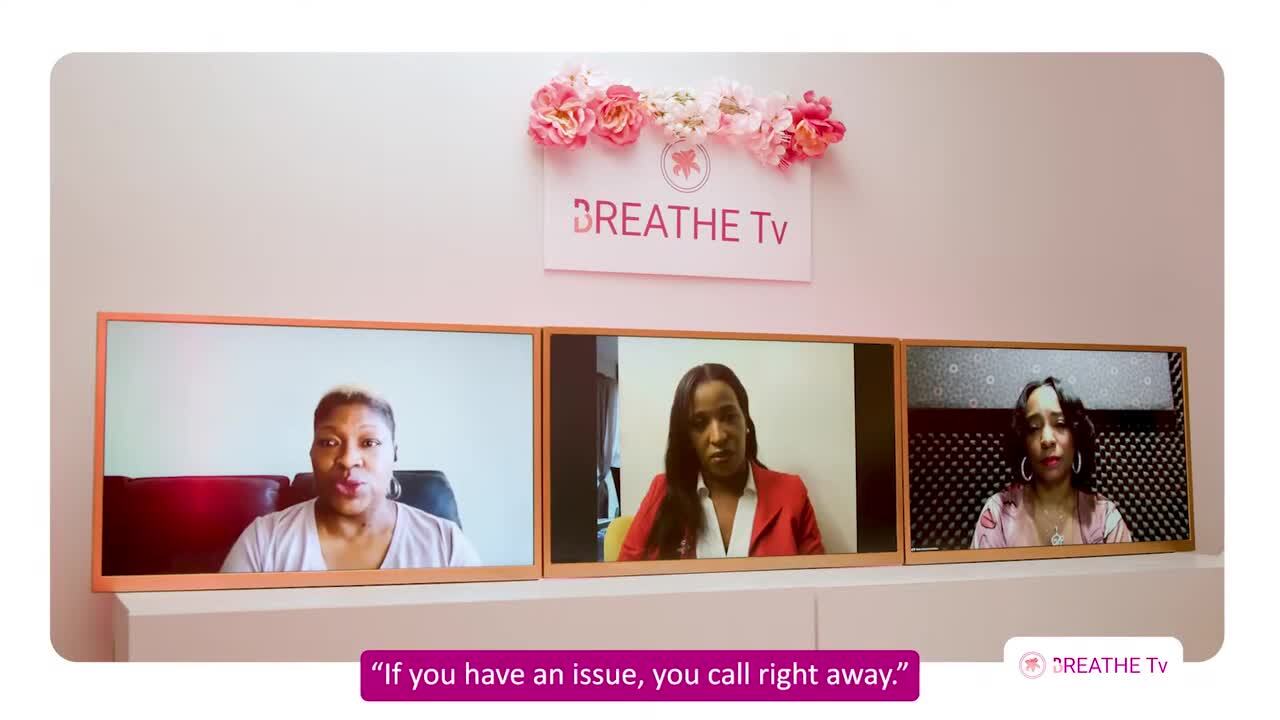



Good afternoon, everyone. I was just, talking about the fact that we have a, difficult act to follow. Yes. especially when talking about, such a program that sounds technical in nature. but I think it means a lot, to a lot of people in this country who care about, their access, to prescription drugs. so, I wanna introduce, the three panelists. Pamela Barnes, Director of, Federal Strategic Alliances with Bristol Myers Squibb; Jeanette Contreras, who's the founder and Executive Director of the Organization for Latino Health Advocacy; and Samantha Sears, Senior Manager of Health Policy, with the National Consumers League.
So before I get to the questions, I want to just spend a couple of minutes talking about what is a 340B program, because there are a lot of people out here that do not know what this program is. They've never heard of this program. So I wanna drop a little knowledge this Sunday to start us off. First off, this is the second-largest discount prescription drug program in the country, to the tune of providing sixty-six billion dollars in discounted drug purchases. Sixty-six billion dollars. These purchases are made by what's known as covered entities. Covered entities are providers defined under the statute as those that can receive this discount directly from a manufacturer.
And a manufacturer, in order to participate with public programs like Medicaid, they have to be a part of this program. So hospitals, clinics, and other types of entities receive this discount that they've purchased from the manufacturer, and then they are able to provide that drug that they purchased at a discount to the patient that they serve.
On average, the past year, the discount was fifty-nine percent of the original price, so that is a significant discount. In addition, the covered entity is able to keep, when they bill Medicaid, Medicare, or a private carrier, they're able to bill at that price and keep the difference. So they're able actually to make forty-one percent on what they purchased the drug for. That is the basic nature of the program that we're talking about. And the reason why we've come together is that after this program has been in effect for thirty years, as you can imagine, there are some practices that are starting to take place that we think go against the nature of this program, which is supposed to serve the underserved, and those who go to covered entities serving the underserved.
So I'm gonna start off my, questions, with, Pamela. I'm sorry. Let me start off with Samantha. Okay. the 340B program has expanded massively. Yep. it's now the second-largest federal drug program after Medicare Part D. What specific impacts on stakeholders or recent financial developments are driving your concern and engagement today? Yeah, so for anybody who doesn't know, the National Consumers League, we are a consumer organization that focuses in a lot of different areas, essentially all of them, including healthcare. and we look at the 340B program as something that was created in order to help covered entities, specifically hospitals, to, better serve and treat their patients, specifically low income, under-insured or uninsured patients.
And so we It has come out that, sometimes the hospitals and other covered entities aren't doing so great about that. like Thomas said, those savings that the, covered entities can pocket go into, they often go into a general fund, so they get mixed in with all of the rest of the revenue of a hospital. and NCL did, an analysis of 340B entities, and their medical debt, collection policies, and found that about sixty percent of 340B hospitals will defer or deny care to patients that have medical debt, and about eighty, maybe eighty-five percent will take legal actions against patients.
So, take them to court, put liens on their houses, things like that, and- Samantha, are some of those patients include employees of hospitals? It can. It can. And so we feel that the 340B program was there to help avoid the medical debt problem, and with about fifty percent of Americans having, currently having medical debt or having had medical debt, and the upcoming increase in premiums that majority of Americans are going to face, it's a, a pressing concern of ours.... Okay, Pam, I'm going to, come to you with this question. which challenges do you believe pose the greatest long-term threat to patient access, affordability, and the integrity of the safety net, and how can these incentives be corrected legislatively?
And Samantha, I'm so glad you brought up medical debt. so in terms of challenges, I think that when there's no transparency, there's no accountability. and so unfortunately, the practices of some hospitals with the 340B program is going unchecked.
And like Samantha brought up so brilliantly, patients are paying the full price, and sometimes more, employers are paying more, when in fact, they should not be, because they are buying these medications, at a reduced and discounted rate. and sometimes we see that the patients, employers, and taxpayers are, being charged seven times the amount that they receive their medicines for. and so when you think about challenges, you know, there's the lack of transparency, there's the benefit not going directly to patients. but then you also see that patients, are really getting hit with this problem.
They're bearing the brunt of the, 340B problem, not just in the not getting direct benefits, but in medical debt, in hospital consolidation, and their emergency rooms being closed down because of the way that large health, care centers are buying out smaller hospital centers in low-income areas to get that 340B designation, but denying access to those hospital systems. So, those are just some of the challenges. I think the good thing is that we are starting to see some more momentum, at least federally, with 340B, legislation. So just October twenty-third, there was a Senate help hearing on 340B and the impact in patients.
and if anyone is following state activity, just Friday in Illinois, a 340B expansion bill, was stalled because of just what we, we, we talked about, because of the lack of transparency, because, you know, in Illinois, they could not figure out the direct impact, the direct benefit to patients.
and then also, they did their analysis and the burden to taxpayers, and so that's why the state of Illinois, just decided to, not proceed with expanding 340B in that state. so there is some things that we can do legislatively, and I'm happy to see this momentum that is happening at both the federal and the state level. Okay, great. Thank you. Jeanette, I wanna go a little bit into this issue about, where do these savings go? studies have shown that 340B discounts often don't translate into direct patient cost savings at the pharmacy counter. And of course, since there's no required transparency, it's hard to find out if those savings are directly going to the patient.
Considering that covered entities are not required to pass discounts to patients, what m- mechanisms are necessary to ensure that the intended vulnerable populations are actually receiving financial assistance? Yeah, well, there's a, a real short answer, and it's that we need to redefine or provide a more detailed definition of who the patient is and who eligible covered entities should be. I will, will explain sort of why Organization for Latino Health Advocacy is really involved in this sitch- this issue, and it's because the 340B program was really started by the Health Resource Services Administration.
Okay, so we call it HRSA, H-R-S-A. HRSA grantees, like HIV/AIDS clinics, other community health centers, are the ones that this program really was intended to, to serve. So this program was, you know, for our underserved communities, our uninsured communities, our Medicaid and Medicare patients, and community health centers continue to be the rock stars of, of this program.
They are showing how they can actually document and track each patient, what they s- you know, so provided the patient with what kind of care, and the discount get passed on to the patient. Now, I, I think that it's unfair that other covered entities don't follow the same rules. They don't have the same requirements as HRSA grantees, simply because they're not HRSA grantees. So one of the things that we'd like to see legislatively happen is for HRSA, the federal agency, to get more, authority to actually, you know, create those guardrails around the program, and so they need Congress to do that to give them more authority.
Okay. Samantha, if Congress were to call for transparency in the 340B program, and at the recent hearing that, Pam talked about, there were actually Democrats and Republicans, calling for transparency reporting. What should, all covered entities be required to report publicly? And how would this information directly enable policymakers to restore the program's focus on safety net populations? Yeah, I think most importantly, we need to know what they're doing with those savings. it's Like Jeanette said, there are some covered entities where we have no idea. and at that hearing that we keep mentioning, which you can go rewatch, thankfully, it was brought up multiple times that, some of these covered entities, uh- the, witnesses would be asked about what certain entities are doing with the, the savings, and they're like: "We don't know.
We don't have access to that information." And like I said earlier, for some of the entities, the savings goes into a general- goes in with their general funds, and kinda just it all gets thrown in together.
And so we- that transparency really needs to show us what they're doing with that savings. Is it going to big, CEOs and administrative staff to pay giant salaries? Or is it being used to buy up other, what are called child sites, and so expanding the, clinics within, like, a certain hospital or just a whole, service area? Or is it being used so that patients can, for what is called charity care, and, for patients that don't have insurance or are under-insured, and don't have to rack up all of these medical bills and get stuck with hundreds of dollars in medical debt. and so with that transparency, we will be able to, like Jeanette said, and like we've said a couple times, see what is happening with these funds and be able to see, if any additional legislative changes need to be made.
Okay, thank you. Pam, we've heard concerns about, how savings in the 340B program, they don't always reach patients directly. and there have been studies have shown that recently, PBMs, in particular, draw a lot of money from this program. I think the last reports were that it drew about two point five billion dollars, from this program. they're also involved in setting up the pricing for drugs under this program, going over and above what they're supposed to set the price for in many cases. Can you speak to how PBM and utilization management practices might also be shaping patient access and affordability, especially in underserved communities?
Yeah, so PBMs, utilize, these utilization management practices, such as step therapy, where you have to step through, several different types of medications before you get the one Perhaps you don't ever get it.
but before, you know, you, in theory, get the medication that your doctor prescribed, or prior authorization, where your doctor prescribes y- a medication, and then you have to, work with your, doctor, prescribing physician, to then go to the, insurance company, and there's a lot of paperwork back and forth sometimes in order to get your medication. so these, result in timely, detours to health. if you think about, mental health patients, right? And so a lot of times you have patients who perhaps, you know You, you finally- We talked earlier about the, the pre-phase, the actual phase, and the, the after phase.
So you finally have a patient who is willing to get on their medication. So, think about schizophrenia, right? So you finally have a patient who is willing to take their medication, but then they're caught at this, prior authorization, or they're caught at taking this medication that they have to step through several different, therapies to get the one that their doctor prescribed. And what we've seen, through different, surveys and, and analysis, is that this leads to poor adherence. and it, you know, it's hard to get patients, particularly those who are facing a mental health crisis, to take their medicine, medicine in the first place.
or if someone is having, cancer or cardiovascular disease, and they need timely access to their medication, these detours can be, costly to your health. so you think about here in DC, we have something called the Metro, and you think about every time you get on the Metro, and you say: "Okay, I'm getting on this Metro, and I want to go to the Smithsonian," right?
"I want to see the museums." And it's not a government shutdown, so the museums are open, actually. but every time you get on the Metro, you know, you're taken to the Navy Yard, or you're taken to the airport, everywhere but where you want to go. Eventually, you're gonna what? Stop getting on the Metro. unfortunately, what, various surveys have shown is that Black and Hispanic, populations face utilization management practices at higher rates than white populations, which means that they are faced with these, different burdens that re- result in poor medication adherence.
and this just exacerbate problems that are already existing as well. Jeanette, let's talk about, advocacy a little bit. so, Jeanette, your organization, is a member of our coalition, ASAP 340B. Samantha, your organization is a member as well. blackdoctor.org is a member as well. I know Sherry wanted me to say that. So what advocacy actions is your organization currently pursuing to achieve reform or ensure program stability? And what other non-negotiable elements your organization believes must be included in any final 340B reform package that focuses on the program on its original safety net intent?
Yeah, thank you for that question. So the reason why we, we got involved with this was because Latinos really do rely on community health centers, and we just know that that is where this- 340B program was meant to serve, not all of these, you know, other covered entities that, that come in, and there, there clearly are, issues with.
So one of the, the issues that we're advocating for is the passage of the ACCESS Act. Now, it's a bill that was introduced in, in Congress this year, and it does a number of things to rein in the definition of covered patient, to rein in the Or, to allow HRSA to, to provide more guardrails around the definition of covered entities. And so we really do need that legislation to give HRSA these authorities, so that it can, can do that. So that's part of it. The other part is actually ensuring that 340B entities are passing that discount to the patient. Now, this seems almost like a pipe dream because it really is, is, you know, we're- from what we've seen, everyone's saying, "Well, we can't do that." But again, community health centers are doing it, so why can't the covered entities also do that?
All of the contract pharmacies should be able to do that. If you're a determined to be a 340B patient, maybe you're uninsured, maybe you have, Medicaid or Medicare, or you're, you just qualify as a 340B patient otherwise, they should be able to provide you the discount at the pharmacy counter. And that's, it seems like common sense, but operationalizing it is, is where we need t- the Con- Congress to act, and so that's really what we're advocating for. So, so in particular, we've, we've talked a little bit about HRSA grantees versus non-HRSA grantees. Just so that the audience understands, eighty-seven percent of the dollars purchased under this program are from hospitals- Yeah ...
who are not HRSA grantees.
Yeah. And- Yet, the next category, clinics, community health centers, which is five percent of the spend in the purchasing in the program, are HRSA grantees. So if you want to get at the vast majority of data that's spent in this program, by definition, you have to have consistent reporting from all entities in the 340B program. Would you say that's true? Yes, absolutely. And, and the other, like, heartburn issue with us is that, is that our population, Hispanic, Medicaid, Medicare, uninsured patients, go to 340B covered entity hospitals, so 340 hospitals, and they're charged almost five times more than if they were to be seen for the same equivalent services, for the same prescription drug at a non-340B hospital.
So where is that disconnect? That's why, you know, this gives us such heartburn, that our patients are the ones that, you know, then once they're being charged the five times more, are then being sought after by, you know, being sued by the hospital for non-payment for these exorbitant amounts, where they're charged, you know, five times what they should be for a certain therapy or treatment. And so we, we think that there really is a need to rein in the 340B, the, the non-HRSA grantee, entities. Let's, let's, let's be clear there. And Jeanette, a lot of time, these are charity care hospitals as well, and so they're suing patients, and then they're selling the debt to debt collectors, and then getting their debt wiped off.
They're sending it to the government to wipe their debt off as well.
Another, interesting fact is that if you group 340B hospitals, non-340B hospitals, and for-profit hospitals, the group that on average provides the least amount of charity care are 340B hospitals, even though they're receiving this pricing advantage. Again, that seems to go against the nature of the program. S- so, as stakeholders and advocates for reform, what do we need to do to educate patients and consumers about the need for federal action? Samantha, I'll start with you. yeah. That is a great question, and I think with 340B and PBM reform, it's really important because, as stakeholders and as advocates that work in this space, we get At least I get caught up in the jargon, and the, the acronyms, and, just how we all know what we're talking about, but the patients and the consumers don't.
so I think what's really important is, kind of pulling from what some of the panelists said in the Unity and Immunity panel, meeting patients where they're at and really breaking it down so that it is understandable. NCL did a survey of patients across the country and consumers across the country, and found that once we explained what the program is, once we gave them, an understanding of what was intended and how it's being run at the moment, majority of Americans are supportive of reforms. Majority of Americans, almost eighty percent, want to see, the benefit be applied directly to the patients.
They want to see, the covered entities, and specifically the hospitals, not use these funds to go after medical debt.
so I think simplifying the program into digestible and understandable language, and- helping consumers and patients connect the dots, because they know all of this. They experience this on the daily. but just helping them bridge all of those gaps together is really important when we then go to Congress to be like: "Here's what your constituents care about. Here's what Jane Smith in your district says about this, and what they're actually experiencing at this covered entity that is a 340B clinic or hospital, in your, state." Yeah, and I wanna piggyback off that, because patients don't know that they're going to a 340B hospital, right?
They don't know that, but if they did, I'm sure they would be like: "Where's my discount?" Right? So I think that what's important is for us to let the communities know, "Hey, you know what we've done in other states, like in Illinois, where, you know, we can have our state, you know, legislature put- bring up a bill to hold the covered entities, the non-HRSA grantee covered entities, you know, accountable for this transparency?" Let there be transparency. We need to have them report how much charity care they're giving, how much, how what they're- how many discounts they're receiving, or we'd see their revenue on their discount, right?
And where that, that funding is going, because it could be going to funding a new community clinic in their area instead of putting a new sign on a stadium. So there, there are so many ways that, the, the consumers can be empowered if we let them know, "Hey," everybody knows prescription drugs are, like, going sky-high, right?
Everybody feels that pain. But if you tell them, "Hey, if we can get this bill passed, we can see a discount, and we can lower prices," they'll be like: "Sure. Let's do it. Let's go to Congress. Let's go to our state legislator. Let's go to the governor." And so we've got to do that grassroots outreach to get this happening. so I would say keep the momentum going, right? So don't let your policymakers off the hook. so we talked about the Senate HELP hearing. We talked about what happened in, Illinois on Friday, early in the morning. Safe Step Act was recently, reintroduced in the House.
so keep the momentum going. I know there's a lot happening or, or not happening or happening, depending on how you look at it, on the Hill, right? But we need to keep the pressure up. keep You know, bring a friend, call, dial a friend, go on the Hill, go to your state legislator, and, and keep asking questions, right? "So why am I not getting these discounts, 340B discounts? You know, why do I have to step through several different therapies to get the one that my doctor prescribed? Or why can't my doctor directly prescribe something, and I automatically get it," right?
"Why is there so many prior authorizations?" And a lot of, physicians are actually leaving the practice because n- they feel now they're just doing paperwork, right? They're, they're not-- They can't actra- accurately practice medicine because the insurance companies are practicing medicine, right? So I, I would say keep the pressure up.
You know, contact your state and federal, policymakers, and ask them the hard questions, and hold them accountable. Okay, well, I want to, thank our three panelists, for this discussion, this afternoon. for more information about, ASAP 340B's, policy principles as it relates to 340B reform, you can go to our website at www.asap340b.org, and learn a lot more. this has been an ongoing, battle for decades to try and get more clarity, transparency, and accountability in this program, and the momentum is growing. We're getting more and more public support, and we hope you all will get involved.
Thank you very much.

By subscribing, you consent to receive emails from BlackDoctor.com. You may unsubscribe at any time. Privacy Policy & Terms of Service.