
Advances in imaging and modeling technology are opening promising new frontiers in prenatal care. Could 3D body scanning provide earlier, more accurate detection of pregnancy complications? This article explores the science behind emerging 3D pregnancy scans, the conditions they may help detect, their benefits and limitations, and what the future holds for tech-driven maternal care.
Recent research is using optical 3D body scans combined with machine learning to detect complications. One noteworthy study captured 3D body shape data between gestational weeks 18–24 and trained a model to accurately predict conditions like preterm labor, gestational diabetes (GDM), gestational hypertension, and fetal weight. The results were impressive — prediction accuracies exceeded 88 percent, and fetal weight estimation was accurate to within 10 in 76.7 percent of cases, outperforming traditional anthropometric methods by over 20 percent.
In addition, the NICHD Fetal 3D Study uses 3D ultrasound to track fetal growth, including soft tissue and organ volumes. This cohort research aims to establish normative data and investigate how maternal factors and pregnancy complications—like hypertensive disorders and GDM—affect fetal composition over time.
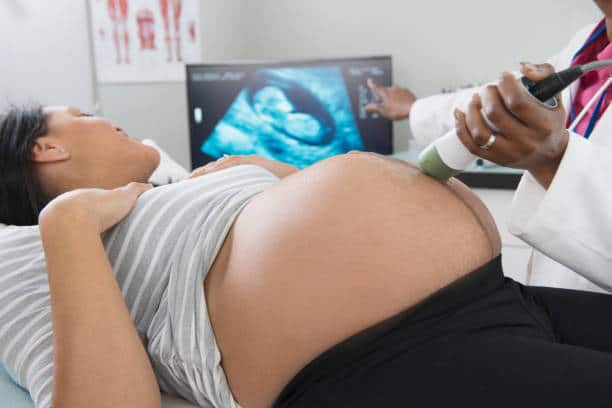
Other innovative imaging techniques include 3D/VR-enhanced first-trimester ultrasound, which enhances diagnostic precision for fetal anomalies by giving clinicians depth perception and immersive interaction with the fetus. Meanwhile, automated deep learning models using 3D ultrasound data can segment fetal anatomy, estimate biometric measurements, and aid faster, reproducible assessments.
For assessing the cervix, a 3D motion-corrected MRI pipeline has been developed for automated segmentation and biometry during the second and third trimesters, potentially reducing manual measurement errors.
3D modeling also extends to maternal pelvic anatomy — a study used a 3D body scanner to measure external pelvic dimensions and predict vaginal breech delivery outcomes. A key metric, waist girth-to-height ratio, showed an AUC of 0.71 for predicting successful vaginal delivery.
RELATED: Pregnancy Complications Rising in Black Women, 5 Ways to Lower Your Odds
Preterm labor, GDM, gestational hypertension, fetal weight deviations
The optical 3D body scan model achieved very high prediction rates for preterm labor, gestational hypertension, large-for-gestational-age infants, placenta previa, premature birth, and GDM.
Abnormal fetal growth and organ development
Longitudinal 3D ultrasound tracking can detect variations in fetal soft tissue, fat, lean mass, and organ volumes—key for identifying growth restrictions or overgrowth conditions often linked to GDM or preeclampsia.
Structural anomalies and early development risks
3D/VR first-trimester scans and volumetric MRI imaging of early fetal structures hold promise for detecting anomalies sooner, potentially improving outcomes for issues that later pose cardiovascular or developmental risks.
Cervical dysfunction contributing to preterm birth
Advanced MRI-based 3D measurement tools for the cervix could support early detection of risk for miscarriage or preterm labor by offering precise, automated assessments.
Delivery planning in breech presentations
A portable 3D scanner assessing external pelvic anatomy showed potential to predict better whether vaginal breech birth would be successful, based on maternal shape metrics.

RELATED: How To Deal With 4 Common Pregnancy Complications
The convergence of 3D imaging, AI, and consumer devices is steering maternal healthcare toward personalized, predictive, and preventative prenatal care:
3D body and fetal scanning technology—especially when paired with machine learning—demonstrates tremendous potential for predicting common pregnancy complications such as preterm labor, GDM, hypertension, fetal growth issues, and delivery risks.
The science behind optical 3D scanning, AI-based prediction, and high-resolution volumetric imaging is advancing rapidly, offering early detection and richer data than traditional methods. While promising, these tools are still emerging — broader validation, clinical integration, training, and regulatory approval are essential steps ahead.
Looking forward, as 3D imaging becomes more accessible and AI-powered tools gain trust and standardization, we may see a shift toward preventative, personalized prenatal care—equipping expectant mothers and healthcare providers with actionable insights earlier and more reliably than ever before.


By subscribing, you consent to receive emails from BlackDoctor.com. You may unsubscribe at any time. Privacy Policy & Terms of Service.