 (Photo by Frederick M. Brown/Getty Images)
You might know him from the G-funk classic “Regulate” or from the lustful Ludacris single “Area Codes.” Or maybe from his role in Fabolous “Can’t Deny It” or from the infamous “hey yayayay, smoke weed every day” on Dr. Dre’s Chronic 2001. Singer Nate Dogg helped to make those tunes, and more, popular hits of their time. Nate Dogg’s death in 2011 was blamed on complications of multiple strokes. That information, coupled with his young age of 41 (yes, only 41), seems shocking. But it’s not unheard of.
Nearly three-quarters of all strokes occur in people over the age of 65. But that means over a quarter occur in people younger.
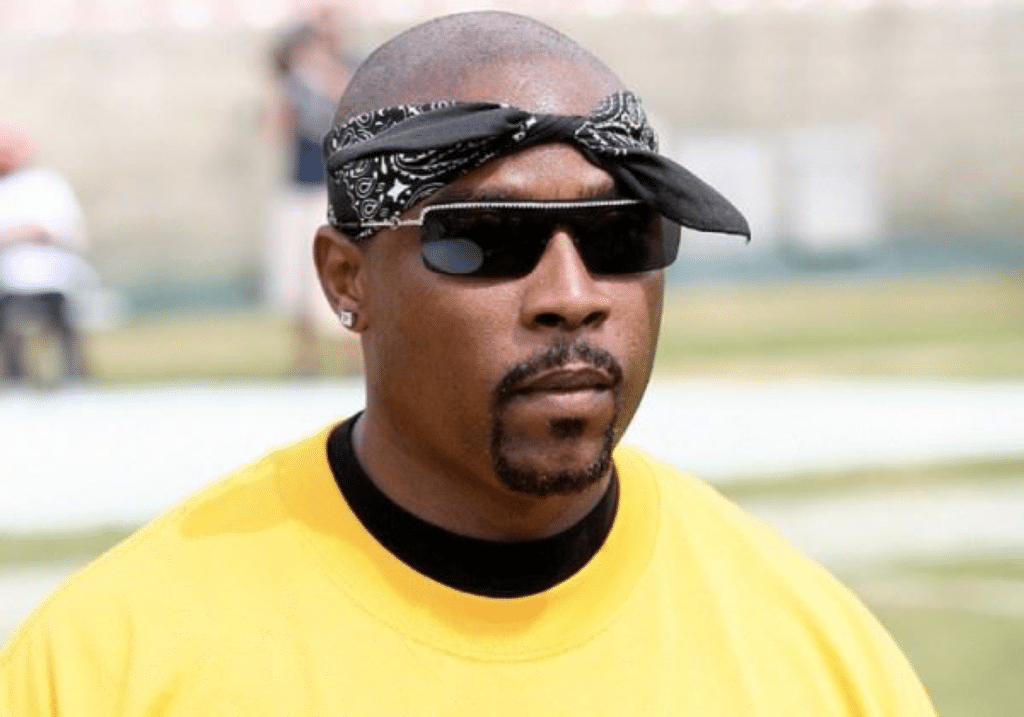 (Photo credit: Twitter)
In December of 2007, Nate Dogg suffered a stroke. Initial media reports had said Nate had suffered a heart attack. Nate was admitted to Pomona Valley Hospital Medical Center on December 17th and released a week later. However, a few weeks later, it was reported that Nate’s left side of his body was paralyzed (due to the stroke, as strokes can render a person paralyzed) and Nate was undergoing rehab so as to make a full recovery, which just wasn’t to be evidently, because in September 2008 Nate suffered another stroke. Each stroke a person suffers does more damage to the body.
The American Heart Association offers a wealth of statistics on heart disease and stroke, including this grim look at the percentages who will die one year after a first stroke:
Nate Dogg, whose real name was Nathaniel Hale, had suffered other strokes in recent years and had reportedly been working toward recovery, but his health took a turn for the worse. But how?
• Two out of five African-American men have high blood pressure—a main risk factor for stroke. High blood pressure often starts at a younger age and is more severe in African American men than in white men. African-American men with high blood pressure are also less likely to have it under control.
• People with diabetes are at higher risk of stroke. One out of seven African-American men has been diagnosed with diabetes; and many more have the disease but do not know it.
• Sickle cell anemia is the most common genetic disorder in African Americans and can lead to a stroke. Strokes can occur when sickle-shaped cells block blood vessels to the brain.
• Smoking doubles your risk of stroke. About one out of five African-American men smokes cigarettes.
• Being overweight or obese increases your risk of stroke. Seventy percent of African-American men are overweight.
• Eating too much salt, or sodium, can raise your blood pressure, putting you at higher risk of stroke. Researchers think there may be a gene that makes African Americans more sensitive to the effects of salt, which in turn increases the risk of developing high blood pressure. African Americans should limit their sodium intake to 1,500 milligrams per day.
Not coincidentally, the risk factors for stroke and heart disease are the same; the relative importance of each risk factor varies for each disease. And, the same lifestyle modifications that could reduce your risk of both heart disease and stroke also reduce your risk of diabetes and being obese, which further reduces your risk of having a vascular event. It all boils down to modifying your lifestyle to avoid these debilitating chronic diseases, improve your quality of life and reduce your chance of dying prematurely.
Nate Dogg was born on August 19, 1969, in Long Beach, California. Hale met Warren G at Long Beach Polytechnic High School.[citation needed] As a youth, he sang at the New Hope Baptist Church in Long Beach, where his father was a pastor. He also sang at Life Line Baptist Church in Clarksdale, Mississippi.
At age 17, Hale dropped out of high school, left home, and 30 days later enlisted in the US Marines. He was stationed at Camp Schwab in Okinawa Prefecture, Japan, in the Matériel Readiness Battalion of the 3rd Force Service Support Group, which supplied ammunition to most of the Pacific. After three years as an ammunition specialist, he was discharged in 1989. Hale would recall that he joined the military because he “wanted to see if he was a man”.
Nate Dogg debuted on Dr. Dre’s first solo album, The Chronic, in 1992. Nate’s trademark singing, complementing the new gangsta rap sound G-funk, was well received by critics. He signed to Dr. Dre’s label, Death Row Records, in 1993. Nate Dogg also featured on Snoop Dogg’s debut solo album, Doggystyle, in 1993, his singing prominent on the track “Ain’t No Fun (If the Homies Can’t Have None)”.
In 1994, Nate Dogg co-wrote his duet with Warren G, the single “Regulate”. That same year, Nate also featured on “How Long Will They Mourn Me?” from Thug Life’s album Thug Life, Volume I. In July 1998, amid his departure from Death Row, the label released his double album, delayed about two years, G-Funk Classics, Vol. 1 & 2. In 2001, his Elektra Records follow-up, Music & Me, peaked at No. 3 on the Billboard Top R&B/Hip-Hop Albums chart. He also had an eponymous album that saw an unauthorized release in 2003.
Nate Dogg was often sought to sing on other artists’ tracks, usually to sing the hook. As a featured artist, he charted 16 times on the Billboard Hot 100, and in 2003 reached No. 1 via 50 Cent’s “21 Questions”.
Otherwise, his successful collaborations are numerous, including 2Pac’s “All Bout U”, Dr. Dre’s “The Next Episode”, Westside Connection’s “Gangsta Nation”, Mos Def’s “Oh No”, Fabolous’ “Can’t Deny It”, Ludacris’ “Area Codes”, Kurupt’s “Behind the Walls”, Mark Ronson’s “Ooh Wee”, Houston’s “I Like That”, Eminem’s “‘Till I Collapse”, “Never Enough”, and “Shake That”, and Mobb Deep’s “Have a Party”.
After his death, Dogg collected his seventh hit single in the U.K with Snoop Dogg’s song, “6 in the Morning”. He first reached the tally in 1994 alongside Warren G, as the two sent “Regulate” to No. 5. Throughout his career, Dogg never appeared on the ranking on his own, as he earned all of his placements thanks to collaborations with the likes of Mos Def, Ludacris, and Snoop Dogg, among others.


By subscribing, you consent to receive emails from BlackDoctor.com. You may unsubscribe at any time. Privacy Policy & Terms of Service.