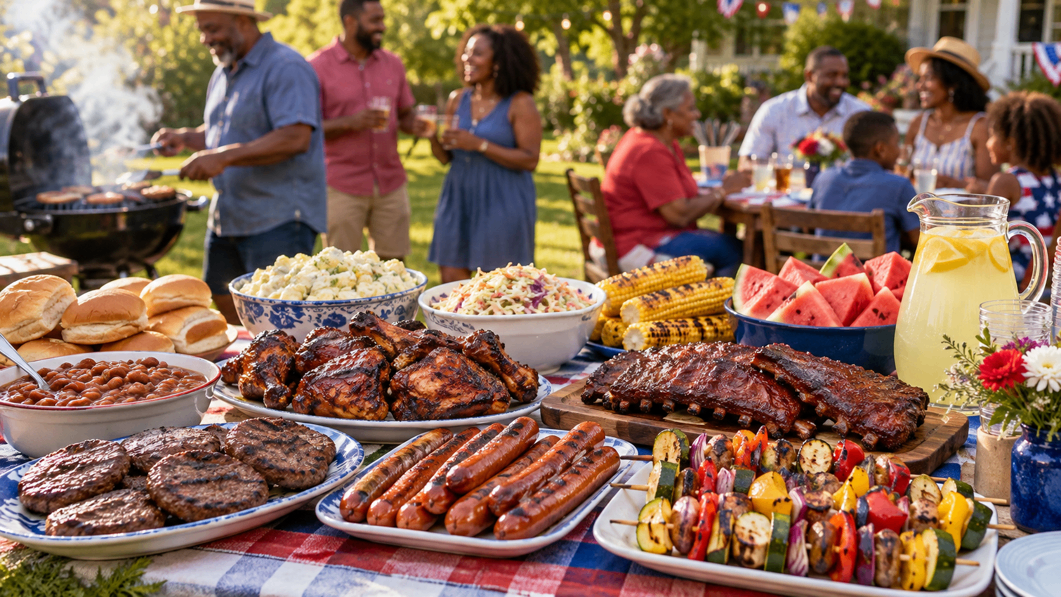
Labor Day cookouts are filled with grilled favorites, delicious side dishes and decadent desserts. Unfortunately, warm weather, outdoor serving tables and undercooked meat can also create ideal conditions for foodborne illness. Next thing you know, you could be sick from eating good-tasting barbecue.
Bacteria grow quickly between 40°F and 140°F—a range food-safety experts call the “danger zone.” Perishable food should generally be refrigerated within two hours, or within one hour when the outdoor temperature exceeds 90°F. Food can look, smell and taste normal while still containing dangerous germs.
Before you fill your plate, pay special attention to these 9 Labor Day favorites.
A burger may appear brown on the outside while remaining undercooked in the center. Ground beef is particularly concerning because grinding can distribute bacteria throughout the meat.
Eating an undercooked hamburger may expose you to disease-causing strains of E. coli and other germs. The safest way to check a burger is with a food thermometer—not by examining its color. This is especially true even if it looks burnt on the outside.
Stay safe: Cook ground beef to an internal temperature of 160°F. Place the thermometer into the thickest part of the burger. Never put cooked burgers back onto a plate that previously held raw meat.
Chicken is commonly associated with bacteria such as Salmonella, Campylobacter and Clostridium perfringens. Grilling can make chicken especially tricky because the outside may become dark or charred before the inside is fully cooked.
I specifically remember this time biting into a great-looking chicken leg, only to find out that inside was nearly raw. Don’t let the outside fool you!
Cross-contamination is another danger. Tongs, brushes, marinades or cutting boards that touched raw chicken can spread germs to cooked food.
Stay safe: Cook all poultry—including breasts, thighs, wings and ground chicken—to 165°F. If you want to use marinade as a sauce, reserve a clean portion before adding the raw chicken or boil the used marinade first.
Do not wash raw chicken. Splashing water can spread bacteria around the sink, countertops and nearby food.
Mayonnaise usually receives the blame when potato salad causes illness, but commercially prepared mayonnaise is acidic and is not necessarily the main problem. Cooked potatoes, chopped eggs, inadequate refrigeration and repeated handling can all contribute to bacterial growth.
The risk rises when a large bowl remains on a sunny picnic table for several hours.
Stay safe: Keep potato salad at 40°F or colder. Place the serving bowl over a larger container of ice, serve smaller portions and replenish them from the refrigerator or cooler. Discard salad that has been outside for more than two hours—or one hour in temperatures above 90°F.
Eggs may carry Salmonella, and the preparation of deviled eggs involves several opportunities for contamination. After the eggs are cooked, they are peeled, sliced, mixed with other ingredients and frequently handled.
Leaving them outside on a decorative tray allows bacteria to multiply quickly.
Stay safe: Cook eggs until both the whites and yolks are firm. Refrigerate deviled eggs promptly and serve them on ice. Avoid recipes containing raw or undercooked eggs unless pasteurized eggs are used.
Macaroni salad and coleslaw contain chopped, cooked or moisture-rich ingredients that can support bacterial growth. The risk increases when people use the same utensils for several dishes or when the salads are repeatedly moved between the kitchen and outdoor table.
Vinegar-based coleslaw is not automatically safe to leave outside. Once vegetables are cut and combined with other ingredients, the dish should still be treated as perishable.
Stay safe: Keep these salads cold and covered. Use clean serving utensils and avoid combining a fresh batch with leftovers from a bowl that has already been sitting outside.
Shrimp, crab, oysters and grilled fish require careful temperature control. Raw or undercooked shellfish may contain harmful bacteria or viruses, while cooked seafood can become unsafe when left in the heat.
People with liver disease, diabetes, cancer, HIV or weakened immune systems face a greater risk of severe illness from certain bacteria found in raw oysters.
Stay safe: Cook fish to 145°F or until it is opaque and separates easily with a fork. Cook shrimp, lobster and crab until the flesh is firm and pearly. Keep cold seafood at 40°F or below and avoid raw shellfish if you are in a high-risk group.
A whole melon may seem harmless, but bacteria on its rind can be transferred to the flesh when the melon is sliced. Once cut, its moist interior can support bacterial growth—especially in hot weather.
Fruit salad can also become contaminated by unwashed hands, knives, cutting boards or other ingredients.
Stay safe: Wash the outside of melons under running water before cutting them. Use a clean knife and cutting board, and refrigerate cut fruit promptly. Do not wash produce with soap, bleach or household cleaners.
If you look at the CDC safer-food guidance, it lists cut melon and unwashed produce among foods more likely to carry harmful germs.
Spinach dip, queso, cream cheese spreads, cheesecake, banana pudding and other dairy-rich dishes can become unsafe when they remain at room temperature.
The problem is easy to overlook because guests may snack on these foods throughout the day. Every dip of a chip or spoon can also introduce new germs.
Stay safe: Put out small portions and keep the rest refrigerated. Use ice beneath cold dishes and a slow cooker or warming tray for hot dips. Do not assume that reheating food will always make it safe; some bacteria can produce toxins that may remain after reheating.
The food may have survived the cookout, but that does not necessarily mean it is safe to eat tomorrow. Leftovers can become dangerous if they sat outside too long, were packed into a warm cooler or remained in a hot car during the drive home.
Putting questionable food into the refrigerator does not reset the clock or reverse bacterial growth.
Stay safe: Refrigerate safe leftovers within two hours—or one hour when it is hotter than 90°F. Divide large portions into shallow containers so they cool faster. When reheating leftovers, bring them to 165°F. If you do not know how long a dish sat outside, throw it away.
Keep this simple rule in mind throughout your celebration:
The CDC also recommends four basic food-safety habits: clean, separate, cook and chill. Wash your hands and work surfaces, separate raw foods from ready-to-eat foods, cook meat to a safe temperature and refrigerate food promptly.
Anyone can develop food poisoning, but some people have a greater chance of becoming seriously ill:
These guests should avoid raw or undercooked meat, seafood and eggs, unpasteurized products and food that has been sitting outside. CDC guidance for higher-risk groups
Symptoms depend on the germ involved, but common warning signs include:
Symptoms may begin within hours, although some infections take several days or longer to appear.
Contact a healthcare professional if you experience bloody diarrhea, a fever above 102°F, vomiting that prevents you from keeping liquids down, symptoms lasting more than three days or signs of dehydration such as dizziness, dry mouth or very little urination. Pregnant women, older adults, young children and immunocompromised people should seek medical advice sooner if food poisoning is suspected.
A Labor Day cookout should end with good memories—not a trip to the emergency room. A food thermometer, plenty of ice and careful attention to how long food has been sitting outside can make all the difference.


By subscribing, you consent to receive emails from BlackDoctor.com. You may unsubscribe at any time. Privacy Policy & Terms of Service.