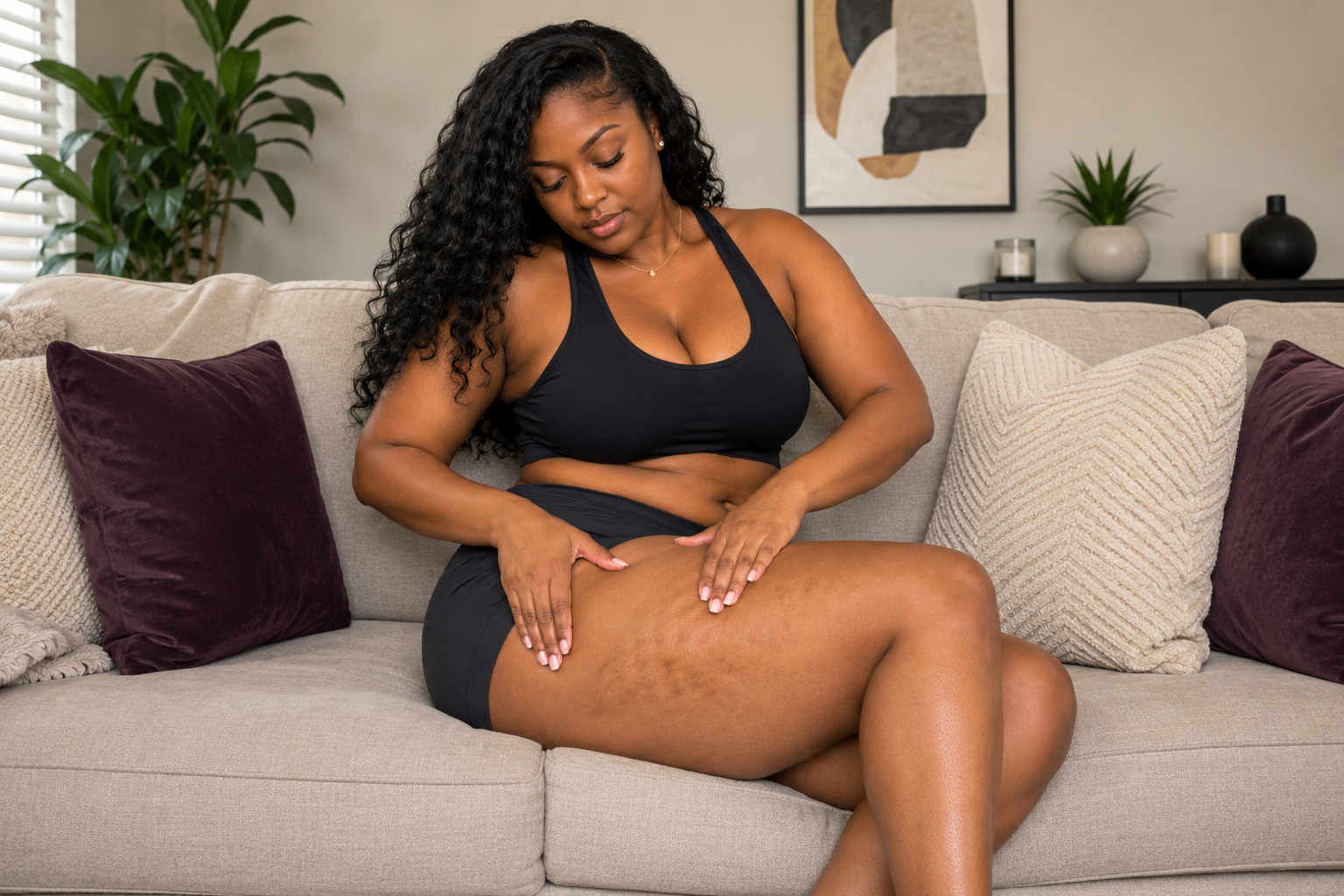
Cellulite is one of the most common—and misunderstood—changes in the appearance of the skin. It creates a dimpled, rippled or “orange-peel” texture, most commonly on the thighs, buttocks, hips and abdomen. It is especially common in women and can affect people who are thin, athletic, overweight or anywhere in between.
Cellulite develops because of the way fat, connective tissue and skin interact beneath the surface. Fibrous connective bands attach the skin to deeper tissues. As fat cells push upward against the skin while these bands pull downward, the surface can develop characteristic depressions and bumps.
Several factors can influence how noticeable cellulite becomes:
False. This is probably the biggest cellulite misconception.
Weight gain can make cellulite more noticeable for some people, but cellulite isn’t simply excess fat. A woman can have a low body-fat percentage, exercise regularly and still have visible cellulite because connective-tissue structure plays such an important role.
Fake news. There’s little evidence that cellulite represents toxins trapped beneath your skin. Your liver, kidneys, lungs and digestive system handle the body’s waste products.
That’s why products promising to “detox” cellulite should be viewed skeptically.
Here are a few tips on how you can fight the cellulite on your thighs, abdomen and bum!
To further detoxify the body and reduce the appearance of cellulite you can use the method of stimulating and brushing the skin to smoothe out the skin and breaking up those fat cells.
Here are the types of massages most likely to help:
Lymphatic drainage massage uses very light, rhythmic strokes designed to encourage lymphatic fluid movement. If fluid retention is making cellulite look more pronounced, this technique can temporarily make the legs, thighs, and buttocks appear less swollen and smoother. It is particularly useful for puffiness, but it doesn’t remove the underlying fat responsible for cellulite.
Stimulating the lymphatic system (the lymph sits just underneath the surface of your skin) through dry bristle skin brushing and massage helps toxins to be circulated into the elimination channels for release.
Deep-tissue or vigorous manual massage uses stronger pressure, kneading, and rolling of the skin and underlying tissues. This can temporarily increase local blood flow and alter how fluid is distributed through the tissue, potentially making dimples less noticeable immediately after treatment. The effect generally isn’t permanent, so repeated treatments would be necessary to maintain the cosmetic improvement.
Myofascial massage focuses on the fascia—the connective tissue surrounding muscles and other structures. Practitioners use sustained pressure, stretching, and manipulation. While it may improve mobility and tissue flexibility, there isn’t strong evidence that myofascial release actually breaks the fibrous bands responsible for cellulite, so any improvement may be temporary.
Manual cellulite massage typically combines kneading, rolling, pinching and circular movements, especially around the thighs, hips and buttocks. It can make the area look smoother immediately afterward because of increased circulation and changes in fluid distribution. Be cautious with extremely aggressive techniques: cellulite does not need to be “broken up,” and a massage that leaves significant bruising isn’t necessarily more effective.
Massage rollers and foam rollers offer an inexpensive at-home version. Slowly rolling the thighs and buttocks for several minutes can massage the tissues and increase local circulation. A textured handheld roller may provide more targeted pressure. Again, expect a temporary cosmetic effect rather than permanent cellulite removal.
Using a skin brush in small circular movements over your thighs, butt and other areas with cellulite for a few minutes a few times per week will help to break down the fatty deposits that cause the dimpled appearance. It is best to start with just a minute of skin brushing and then work your way up to a few minutes at a time. This will help your skin adjust and prevent sensitivity.
Mechanical or vacuum-assisted massage is a more intensive option offered by some spas and dermatology practices. Devices use rollers, suction or both to manipulate the skin and underlying tissue. Some people experience a measurable—but usually modest and temporary—improvement in cellulite after a series of treatments. Maintenance sessions may be needed.
Seriously, it can’t get any easier than this: swap your refined salt (table salt) for Celtic sea salt or Himalayan crystal salt.
Refined salt is extremely acidic and leaches minerals from your body. It is also highly dehydrating (hello cellulite!) and so refined that your body will need to use its vital life force to try to assimilate this dead salt. Refined salt only adds to the accumulation of toxicity in your body.
Crystal and sea salt however are alkaline, packed full of beneficial minerals, give to the body rather than take from it and have a fuller flavour…if you can notice the difference at all!
Drinking water won’t magically erase cellulite, but staying well hydrated can make cellulite less noticeable and support healthier-looking skin.
Cellulite develops when fat beneath the skin pushes against connective tissue, creating the familiar dimpled or “orange peel” appearance. It’s extremely common, particularly on the thighs, hips, buttocks, and abdomen. Hydration can influence how prominent those dimples appear.
How water may help cellulite
Antioxidants like berries, leafy greens, citrus, tomatoes, and other colorful produce provide antioxidants and plant compounds that support overall skin health.
Instead of worrying about whether a food is technically “alkaline,” focus on watermelon, cucumber, spinach, kale, berries, oranges, grapefruit, avocado, tomatoes, bell peppers, broccoli, almonds, pumpkin seeds, beans and lentils.
Pair those with adequate protein, because your body needs amino acids to maintain collagen and other structural proteins. Fish, chicken, eggs, Greek yogurt, tofu, beans, and lentils are useful options.
So, water + a produce-rich diet + adequate protein + strength training is a much more evidence-based cellulite strategy than trying to “alkalize” your body.
READ: Benefits of Alkaline Water
If you are currently using any chemicals or pharmaceuticals on your cellulite areas which thin your skin (such as steroids), your cellulite is going to be more obvious.
The answer isn’t to just stop using the creams cold turkey– this is something you need to discuss with your doctor. However you may want to look at putting all these other tips in place as they will start to really improve your health overall, and then you may find that you can decrease the usage of these creams.
Visit the BlackDoctor.org Skin and Beauty center for more helpful articles and tips.


By subscribing, you consent to receive emails from BlackDoctor.com. You may unsubscribe at any time. Privacy Policy & Terms of Service.