If your stomach looks flatter when you wake up but seems to expand as the day goes on, body fat may not be the only thing involved. Bloating, constipation, tight hip muscles, poor posture and even the way you hold your body can change the appearance of your midsection.
That’s where a few morning stretches may help.
To be clear, stretching cannot specifically burn belly fat or “spot reduce” your waist. Losing abdominal fat generally requires an overall reduction in body fat. But stretching can improve posture, activate your core, loosen tight muscles and encourage movement through the digestive system—all of which may help your stomach look and feel less bloated or protruding.
Try these seven stretches before breakfast or after a few minutes of walking around the house.
How to do it:
Start on your hands and knees with your wrists underneath your shoulders and knees underneath your hips.
Inhale as you gently drop your stomach toward the floor, lift your chest and tilt your tailbone upward. This is the “cow” position.
As you exhale, pull your belly button toward your spine, round your back and gently tuck your chin toward your chest. This is the “cat” position.
Slowly alternate between the two.
Duration: 45–60 seconds, or about 8–10 slow repetitions.
Why it works:
Cat-Cow mobilizes the spine while repeatedly lengthening and contracting the abdominal area. The movement can also relieve stiffness after sleeping and encourage you to engage the deep abdominal muscles that support better posture.
This is an especially good morning move if your stomach feels bloated or gassy.
How to do it:
Lie flat on your back. Bring both knees toward your chest and wrap your hands around your shins or behind your thighs.
Gently pull your knees closer while keeping your head and shoulders relaxed against the floor.
For a little extra movement, slowly rock from side to side.
Duration: Hold for 30–45 seconds. Relax and repeat once.
Why it works:
Bringing the thighs toward the abdomen gently compresses the abdominal area. For some people, this position can help move trapped gas through the gastrointestinal tract and relieve the uncomfortable fullness associated with bloating.
How to do it:
Lie facedown with your legs extended behind you. Place your palms underneath or slightly in front of your shoulders.
Keeping your hips and pelvis on the floor, gently press through your hands and lift your chest.
Don’t worry about getting high off the floor. Stop when you feel a comfortable stretch through your abdomen and the front of your torso. Avoid forcing your lower back into an uncomfortable arch.
Duration: Hold for 15–30 seconds. Repeat 2–3 times.
Why it works:
Cobra lengthens the muscles across the front of your abdomen and opens your chest. If you spend much of the day sitting or leaning forward, improving this upright posture can immediately change how your midsection looks.
How to do it:
Stand with your feet approximately hip-width apart. Raise both arms overhead and clasp your hands.
Keeping your hips relatively centered, slowly lean your upper body toward the right until you feel a stretch along your left side.
Return to the center and repeat on the opposite side.
Duration: Hold each side for 20–30 seconds. Complete 2 rounds.
Why it works:
This move stretches the obliques, lats and muscles surrounding the rib cage. Improving mobility through the sides of your torso can help you stand taller instead of collapsing forward through the waist.
How to do it:
Lie on your back with your arms extended out to the sides.
Bring your knees toward your chest. Keeping your shoulders against the floor, slowly lower both knees toward your right side.
Turn your head toward the left if that feels comfortable. Return to the center and switch sides.
Duration: Hold for 30 seconds on each side.
Why it works:
The twisting motion stretches the muscles surrounding your abdomen, hips and lower back. Gentle movement and abdominal compression may also be helpful when bloating or constipation contributes to that heavy, full feeling in the morning.
Tight hips can have a surprisingly noticeable effect on the appearance of your stomach.
How to do it:
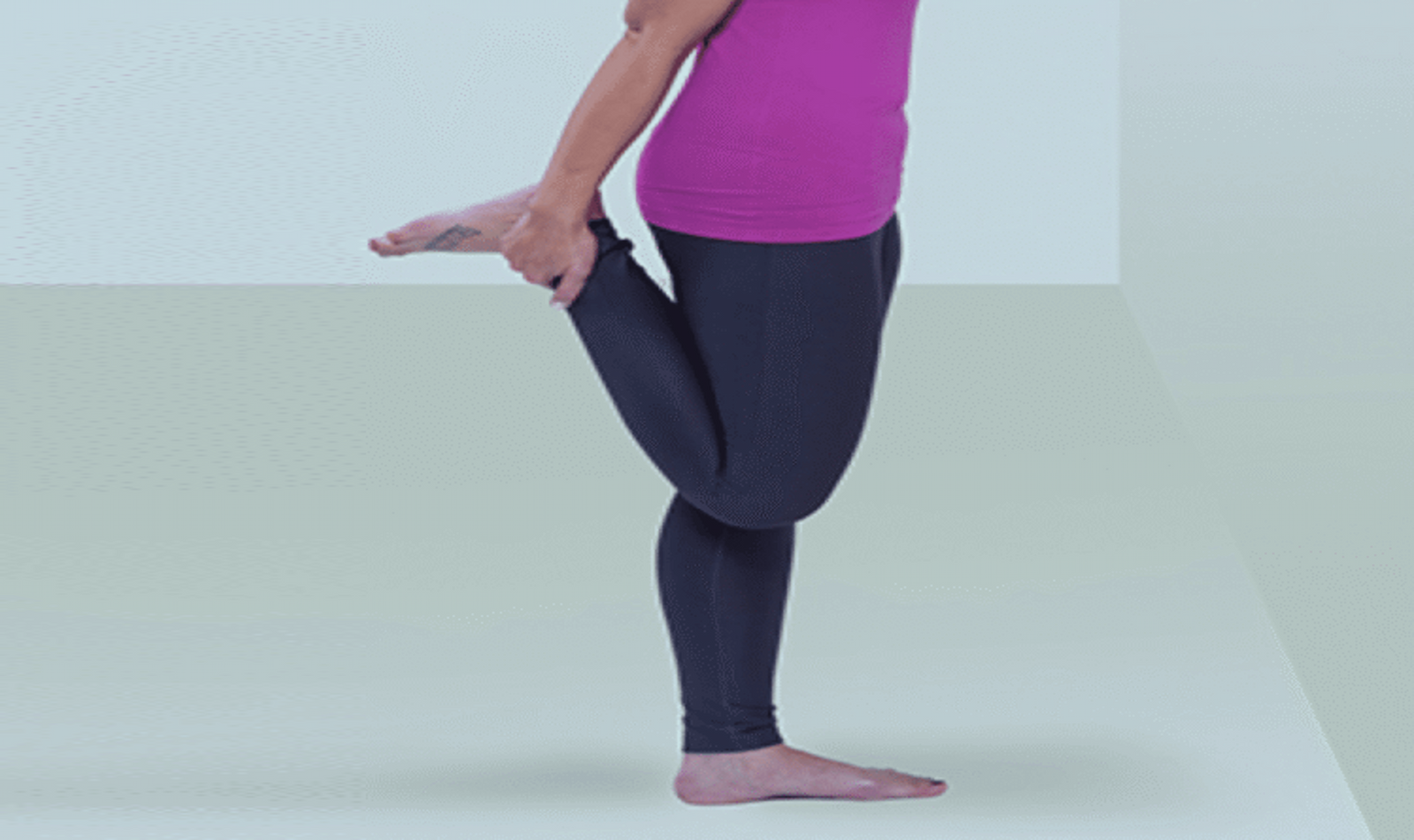
Start in a kneeling position and step your right foot forward so your knee is bent at roughly 90 degrees.
Keeping your torso upright, gently move your hips forward until you feel a stretch across the front of your left hip.
For an additional stretch, raise your left arm overhead and gently reach toward the right.
Switch legs.
Duration: Hold for 30 seconds per side. Repeat twice.
Why it works:
Long periods of sitting can contribute to tight hip flexors. Tightness around the hips can affect pelvic positioning and posture, potentially making the abdomen appear to stick out farther. Improving hip flexibility may make it easier to maintain a more neutral pelvis and upright posture.
Finish your routine with a full-body stretch.
How to do it:
Stand tall with your feet about hip-width apart.
Inhale and slowly reach both arms overhead, making your body as long as possible.
Exhale and hinge forward from your hips, allowing your upper body to move toward your legs. Bend your knees slightly if necessary.
Let your head and neck relax. Then slowly roll or hinge yourself back into a standing position.
Duration: Hold the forward fold for 20–30 seconds. Repeat 2–3 times.
Why it works:
The stretch lengthens the back of the body while helping loosen the hips and lower back. When you return to standing, concentrate on keeping your chest lifted, shoulders relaxed and abdominal muscles gently engaged.
You don’t need a 30-minute workout to get started. Try:
Move slowly and breathe normally throughout each stretch. Stretching should create mild tension—not sharp pain.
There’s an important distinction between losing belly fat and temporarily having a flatter-looking stomach.
A morning stretching routine isn’t melting abdominal fat in five minutes. Instead, several things may be happening.
Your posture improves. Standing taller and positioning your pelvis more naturally can make your abdomen appear less pronounced.
Your core wakes up. Several of these movements require gentle engagement of the deep abdominal muscles that stabilize your trunk.
You get your body moving. After spending hours relatively motionless during sleep, movement can help relieve stiffness and get your gastrointestinal system moving as well.
Bloating may decrease. Gentle movement and certain positions may help some people experiencing gas or constipation.
And there’s another benefit: starting your morning with movement often makes it easier to continue moving throughout the day.
If reducing abdominal fat is the goal, think beyond stretching. Regular aerobic activity and strength training, adequate sleep, stress management and an eating pattern rich in vegetables, fruit, whole grains, lean proteins and fiber are much more important for long-term changes in body composition.
A short stretch routine can still play a valuable role—it simply shouldn’t be mistaken for a fat-burning shortcut.
Also pay attention to a stomach that is persistently or suddenly swollen. Abdominal swelling accompanied by severe pain, vomiting, blood in the stool, fever, unexplained weight loss, difficulty breathing or other significant symptoms deserves medical attention.
The best reason to stretch every morning isn’t to chase an instantly smaller waist. It’s to get your body moving, improve how you stand and feel, and start the day with a healthy habit you can actually maintain.


By subscribing, you consent to receive emails from BlackDoctor.com. You may unsubscribe at any time. Privacy Policy & Terms of Service.