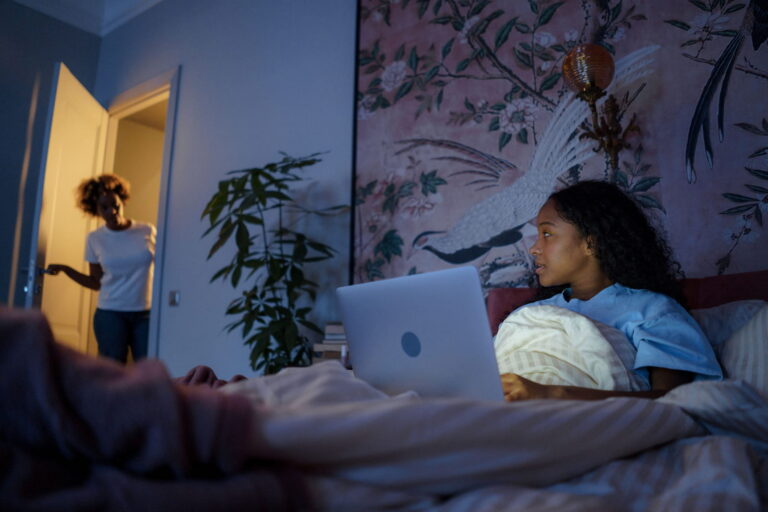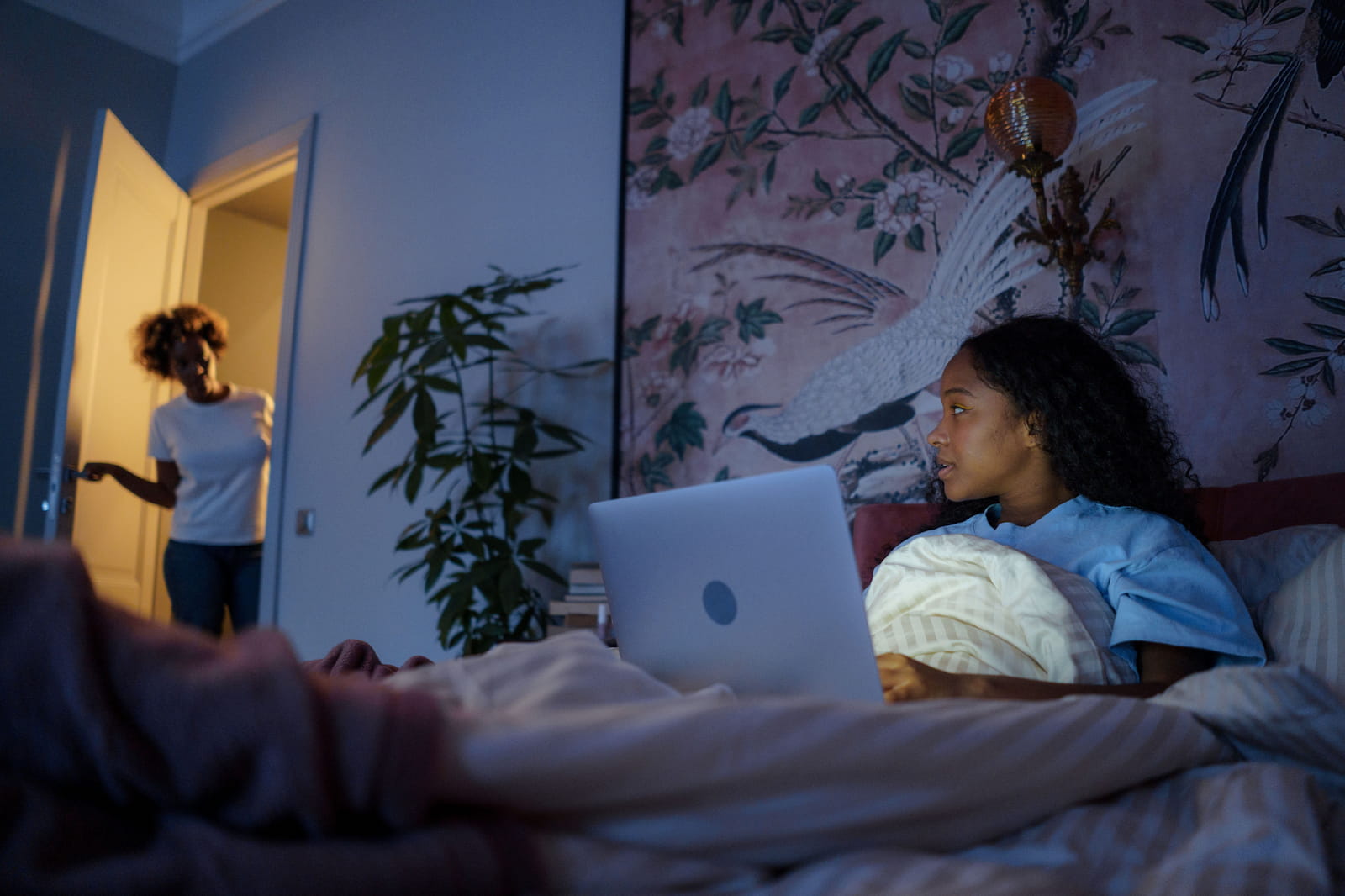
When was the last time you slept in complete darkness? No TV glow, no phone lighting up the nightstand, no streetlight slipping past the blinds. If you can’t remember, your heart may be noticing.
A new study published in the European Heart Journal suggests the light around you while you sleep could be connected to real, measurable changes in your heart. Researchers followed 11,071 adults who wore wrist light sensors for seven days, then imaged their hearts with cardiac MRI about three years later. People exposed to roughly half an hour or more of light at night showed early signs of cardiac remodeling, including thicker walls in the heart’s main pumping chamber and weaker contraction.
The amount of light it took was small. Researchers flagged anything above 3 lux, which is about as bright as moonlight or the light seeping under a closed door. They observed that over time, the more light people were exposed to, the more pronounced the changes.
This deserves real attention for Black families. Black adults have about a 32 percent higher cardiovascular death rate than white adults, and Black women under 65 face more than double the risk of their white peers. Light at night is one of the few heart risks you can change tonight, and most of the fixes cost little or nothing.
RELATED: Why Doomscrolling Feels Heavier for Black Users
The left ventricle is your heart’s main pumping chamber, pushing oxygen-rich blood to the rest of your body. Cardiac remodeling happens when the heart changes its shape and function in response to ongoing stress or injury. Study leader Lu Qi of Tulane University describes it as the body’s way of adapting to that stress, one that ultimately weakens the heart and can lead to heart failure.
When the walls of the left ventricle thicken, the chamber shrinks, leaving less room to fill with blood before each beat. At the same time, the heart muscle loses some of its ability to flex and squeeze. Compared with people who slept in near darkness, those with the most light at night had 2.4 percent more left ventricle mass, 1.5 percent thicker walls, and 1.9 percent weaker myocardial contraction, with similar changes showing up in other chambers of the heart.
Those numbers sound small, and on their own, they are. These changes are considered subclinical, meaning they don’t cause symptoms yet. That’s exactly why they matter; this is the stage when you have the longest runway to protect your heart.
In a larger group of more than 73,000 people followed for eight to ten years, those with the most light at night had a 29 percent higher risk of heart failure, a 24 percent higher risk of heart attack, a 33 percent higher risk of stroke, and a 26 percent higher risk of dying from cardiovascular disease.
Heart failure is where this hits closest to home. Black adults carry the highest burden of heart failure in the country, and young Black men and women die from heart failure at 2.6 and nearly three times the rate of their white peers.
Every cell in your body runs on an approximate 24-hour clock, and light is the main operational signal. When darkness falls, your brain releases melatonin, the hormone that tells your body it’s time to rest. Overnight, your heart rate and blood pressure are designed to ease down, giving your cardiovascular system its daily recovery window.
Light at night scrambles that message. Experiments show light as dim as about 3 lux can suppress melatonin, disrupting your natural rhythm. When your brain reads “daytime” at 2 a.m., the systems that should be resting stay partly switched on. Over months and years, circadian disruption can affect hormones, metabolism, and blood pressure, all of which put extra strain on the heart.
Sleep appears to play a big role. Researchers found that less sleep may account for much of the link between light at night and heart changes.
The two feed each other. Light delays melatonin, so it takes longer to fall asleep. It keeps sleep lighter, so you wake more easily. And a phone that buzzes and glows through the night can pull you out of deep sleep again and again. The result is fewer hours of the restorative sleep your heart depends on. The good news is that the connection works in reverse too: darkening your room is one of the simplest ways to protect your sleep, and protecting your sleep protects your heart.
Light at night isn’t spread evenly. A national study found that Black, Hispanic, and Asian Americans live in neighborhoods with about twice the light pollution of white Americans. Part of that gap comes from bright lighting installed for policing and surveillance in communities of color. In a large study using wrist sensors, Black participants had the most exposure to light at night, which was linked to shorter sleep.
Work schedules matter too. An estimated 35 percent of Black workers do shift work, compared with 28 percent of white workers. Nurses, security officers, transit operators, warehouse staff, and caregivers keep our cities running overnight, often at the cost of their own dark hours. Add homes near busy roads, parking lots, and businesses that stay lit all night, and many families are sleeping in more light than they realize.
Fortunately, modern tools can reduce or eliminate the light infiltration that disrupts sleep rhythms. Start with the window, since it’s often the biggest source of light. Blackout curtains are the gold standard, and a blackout liner clipped behind the curtains you already own works nearly as well for less. If you rent or can’t drill into the walls, a tension rod does the job.
Next, hunt down the little lights. Chargers, TVs, cable boxes, power strips, and speakers all glow through the night. A strip of electrical tape or a small sticker over each one makes a real difference. Leave safety devices like smoke detectors uncovered.
Screens deserve their own plan. If you fall asleep to the TV, set the sleep timer so it shuts off on its own. Put your phone face down, or better yet, charge it across the room or in another room entirely. In the hour before bed, turn on night mode and drop your screen brightness to its lowest setting.
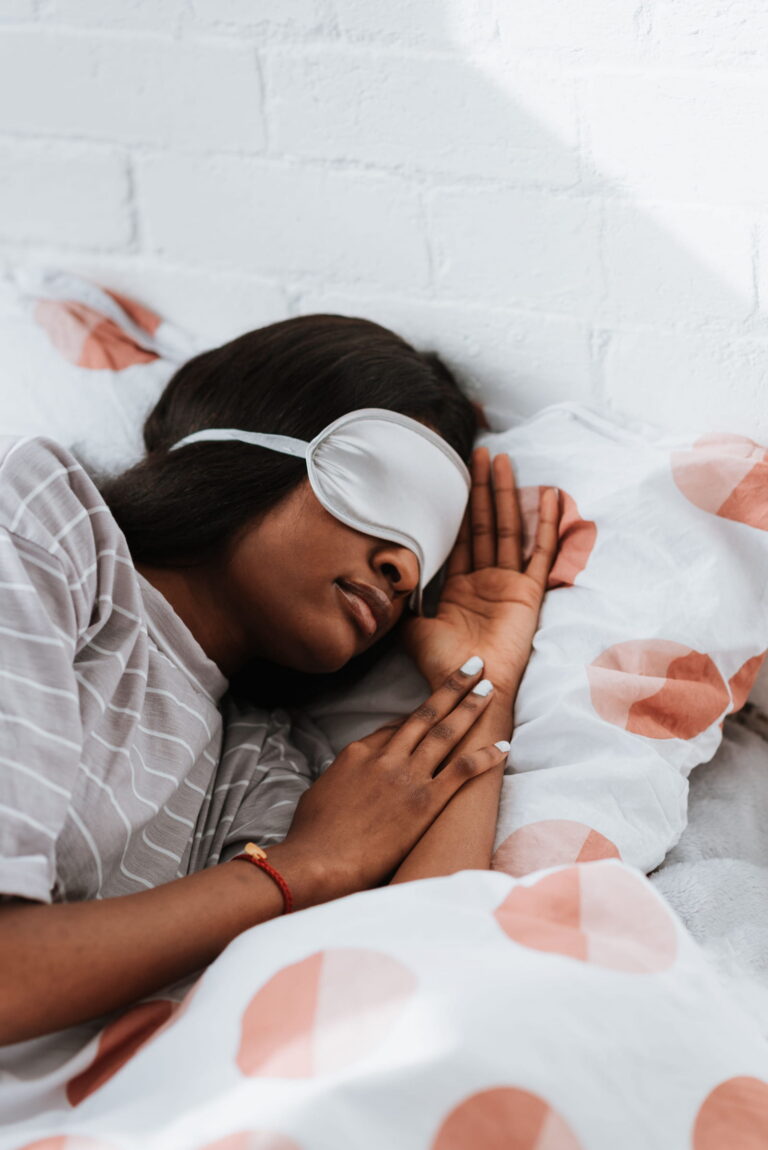
An eye mask is one of the cheapest tools you can buy, and it works when you can’t control every light around you, whether that’s a partner reading late, a child who needs a hallway light, or a streetlight you can’t fully block.
If you get up at night to use the bathroom or check on the kids, swap the overhead light for a dim, warm nightlight placed low to the floor. The cardiologists who reviewed the study recommend exactly these kinds of fixes: blackout curtains, warm bedside lighting, and covering standby LEDs. Their goal is simple: aim for zero light reaching your eyes while you sleep. When it comes to your heart, darker is better.
If you work nights, you’re sleeping while the sun is up, so your room needs even more help. Pair blackout curtains with an eye mask, and wear sunglasses on the ride home to keep bright morning light from signaling your brain to wake up. Try to keep the same sleep window on your days off when you can, and ask your household to treat your sleep hours like a scheduled appointment.
If you’ve worked nights for years, bring it up at your next checkup. The authors of an accompanying editorial urged doctors to start asking patients about shift work, bedroom darkness, and screen time. You don’t have to wait to be asked. Share your schedule and ask your doctor whether your blood pressure and heart health need a closer look.
If a streetlight shines straight into your bedroom, you have options beyond curtains. Many cities take lighting requests through 311, and you can ask whether a fixture can be shielded or dimmed. The same editorial notes that shielded fixtures, warm bulbs, and dimmable streetlights are already available and energy efficient. Neighbors raising the issue together through a civic or tenant association can carry even more weight.
The researchers behind the editorial put it plainly: darkness deserves recognition as a vital sign, right alongside blood pressure. That’s a powerful idea, because unlike so many heart risks, this one is sitting right there in your bedroom, waiting for you to reach over and switch it off.
You don’t need a new mattress, a smart home, or a big budget. A roll of tape, a phone turned face down, and a blanket over the window will get you most of the way there. Pick one change and start tonight.


By subscribing, you consent to receive emails from BlackDoctor.com. You may unsubscribe at any time. Privacy Policy & Terms of Service.