Play Video
Poetry of Healing: A truth about marriage
What does marriage really require?

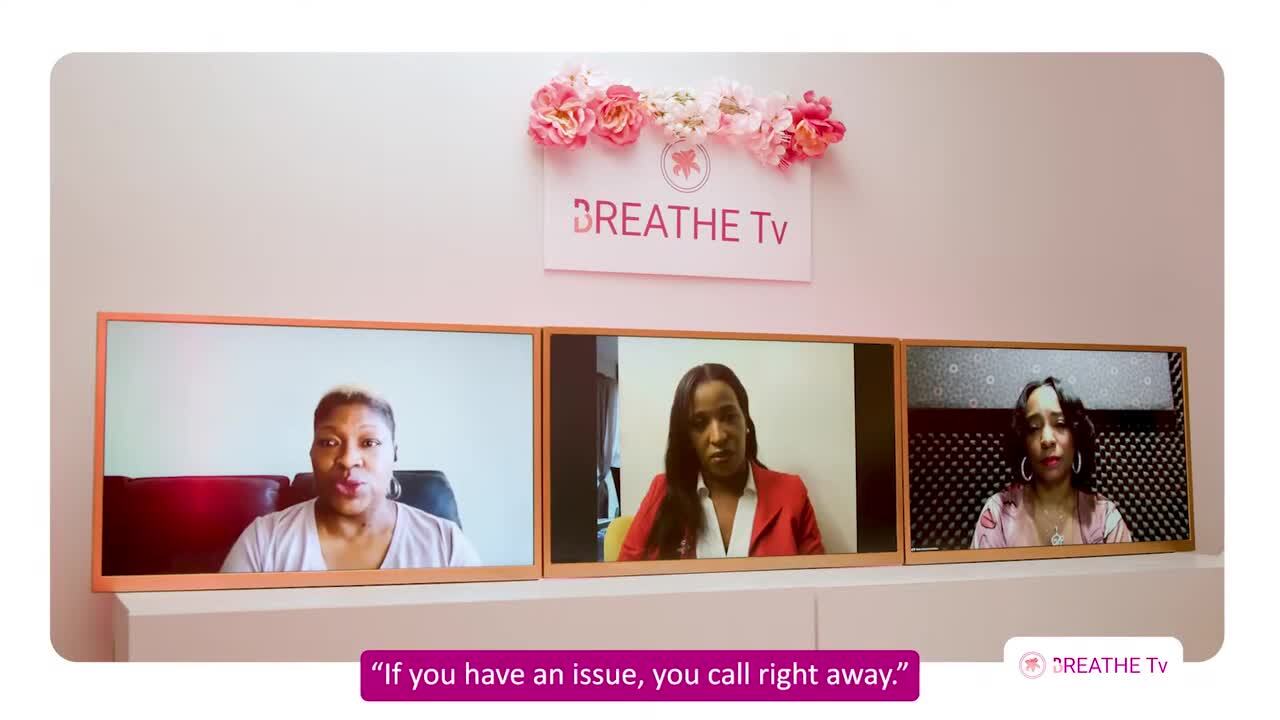
Hello. I'm your host, Dr. Ashanti Carter, chief academic liaison at blackdoctor.org, where wellness and culture connect. I would like to welcome you to today's session, Understanding ATTR Cardiac Amyloidosis, otherwise known as ATTR-CM. Now, ATTR-CM is a heart condition that's often under-diagnosed, especially in the Black community, and tonight we're going to learn more about it. So tonight's session and speakers are sponsored by BridgeBioPharma Inc., and we are so very fortunate to have three experts in heart health and ATTR-CM. Joining us to share their perspectives in alphabetical order are Dr.
Ola Akinboboye, Ms. Velma Henderson, and Dr. Barbara Hutchinson. Esteemed panelists, please introduce yourselves to our audience with your name, affiliation, and professional role. I'm gonna start with you, Dr. Akinboboye. Well, thanks, Dr. Carter, for the invitation to join this, important conversation about a disease that I'm quite passionate about. ol- I'm Dr. Ola Akinboboye. I'm a clinical professor of cardiology at the Donald and Barbara Zucker School of Medicine at Hofstra, Northwell. I'm also the medical director of Laurelton Heart Specialists PC. Wonderful. Wonderful.
Okay, Ms. Velma, introduce yourself. Yes, I'd be glad to. I'm Velma Henderson, and I am honored to be, among these distinguished professionals tonight. And while my background, my career, is that of a registered nurse, and I've had many years of experience working in cardiac care units and cardiac care Cardiology has long been my passion.
However, tonight I'm here in the role of a caregiver, family member, and patient advocate, and I'm delighted to be here. Thank you. Thank you, Ms. Velma. Last but certainly not least, Dr. Hutchinson. Yes. Thank you, Dr. Carter. I'm delighted to be here. I am Dr. Barbara Hutchinson, a cardiologist working in the community, in the DMV area, and I am just delighted to be part of this conversation tonight because for the past twenty years I've been fortunate to have diagnosed a lot of these patients and treated them. So, thank you for having me. Thank you. Thank you so much.
So let's jump into the conversation. So this is what I like to call Heart Health 101. So, Dr. Hutchinson, it's you and I for this one. So can you tell our audience, what does the heart do, and why is it so important to our overall health? That is such a great question to, to center our discussion tonight since we're gonna be talking about the heart. The heart pumps blood to all the organs in the body, and the blood that the heart pumps carries oxygen, and this oxygen, as you can well imagine, is important for cells to grow and function. But when the heart does not pump well or function well, there can be a ripple effect on other organs such as the lungs, the kidney, the brain, and the liver, and this can result in symptoms such as chest pain, shortness of breath, swelling in the feet, and fatigue.
Wow. Wow. Thank you for that, Dr. Hutchinson. So, do you mind walking us through the anatomy of the heart and just talk to us about how does ATTR cardiac amyloidosis impact- Impact the heart the heart and our, and our health?
So the heart is a pump, and it is made up of two upper chambers and two lower chambers, and these chambers are separated by valves that control the flow of the blood. On the right side of the heart, we have blood flowing in from the, the veins to the upper chamber and then to the lower chamber. On the right side, it pumps this blood to the lungs, where oxygen gets added to the blood. That blood then flows back into the left side of the heart, the upper chamber first, and then to the lower chamber via the valves, and then it pumps out to the rest of the body, up to the brain and all the way down to the toes.
Now, when we think of the normal pumping function of the heart, it ranges anywhere from about fifty to seventy-five percent.But there are several conditions that can cause this function in the heart to decrease or- and it can cause one to develop what we call a cardiomyopathy, where the heart function doesn't pump- or the heart doesn't pump as well. One such condition is actually ATTR cardiac amyloidosis. Okay. Okay, so let's, let's put a pin in this. So what actually is ATTR cardiac amyloidosis? What is that? So ATTR cardiac amyloidosis, or ATTR-CM as we may refer to it, is a form of heart disease that leads to the heart muscle getting stiff, which in fact impacts the way the heart is able to function.
The ATTR cardiomyopathy occurs when there is an important protein that's called transthyretin, or TTR for short, that becomes unstable. And when this becomes unstable, it can break down into smaller proteins, and they can fold abnormally into clumps of proteins that we often call amyloid.
When this amyloid builds up in the heart, it can cause It can affect the heart, it can affect the heart muscle, causing the heart muscle to be stiff and not work properly, and it can l- often lead to us being short of breath, having swelling in the feet, irregular heart function, and even affecting the nerves, causing carpal tunnel. And the ATTR-CM makes it even much harder for the heart to do its job, and it can impact p- a person's energy level and then their overall mobility. We can demonstrate this by an actual video. Here we see the four small proteins of the TTR bound tightly together.
These proteins or bonds then become very unstable, and they break apart, as shown in this video. After they break apart, they reform into these amyloid fibrils that then move around the body and can deposit in and build up in different organs, including the heart. This often results in symptoms that include fatigue, tiredness, shortness of breath, abnormal heart rhythm, nerve pain in the form of carpal tunnel, swelling in the legs, and even digestive problems. Oh my goodness, wow. Thank you so much for sharing this. Wow. That, that's a lot. That's a lot to take in. So Dr.
Hutchinson, can you tell me more about the types of ATTR-CM and who is mo- and who is most likely at risk? So there are two types of ATTR-CM. There's hereditary and there's wild type, and there are differences and similarities between the two. For the hereditary ATTR-CM, genetics play a key role here. It can run in families, and so often it can present very early, in the 40s, 50s.
And it tends to be very prevalent in African Americans, people from the Caribbean, people from the African diaspora, and even Portuguese are at heightened risk of having this hereditary form of ATTR-CM. The wild type CR- ATTR-CM, lifestyle here plays a factor, a, an important role, and this one tends to develop later in life, in your 60s and 70s, and it tends to be more common in men. So often we say, people, if someone in your family has heart issues where they have symptoms, like fatigue, shortness of breath, and signs of possible, ATTR-CM, it's very important, to get further testing in other family members.
That's right. That's right. Thank you so much for sharing that. So Dr. Hutchinson, I understand that this condition is often overlooked and sometimes even misdiagnosed in the Black community. Can you tell us why? Well, this is a great question, because, the ATTR-CM is the hereditary form is more common in the Black community. And unfortunately, it's often misdiagnosed or missed altogether. And some of this misunderstanding is because the symptoms of ATTR-CM can mimic other things. For example, you can have shortness of breath, and as you can imagine, you can have shortness of breath if you have underlying lung problems.
Fatigue, you can have fatigue if you have thyroid problems. Mm-hmm. Swelling in the feet. So it can look like other common, not only heart problems, but other metabolic problems. Mm-hmm. And so often, patients presenting with these symptoms may see many different, physicians all trying to solve the individual problems.
Mm-hmm. the, the shortness of breath, you go to the pulmonologist. the swelling in the feet, you may see your primary care doctor. But often, they go to several different specialists, and no one actually is able to connect the dots as to what is causing this problem.And I think this is also because of a gap in the overall awareness of this condition. Mm-hmm. Many people, including healthcare providers, may not even be aware that there's a specific genetic link in ATTR-CM, and that it's more common in African Americans. So I could see why it's missed because of the, the way it presents- Mm-hmm mimic other conditions, and I forgot to mention even the neurologic presentations.
So sometimes you could be seeing a neurologist for your carpal tunnel or your spinal stenosis for years, and no one is able to actually pull it together that it could all be coming from a genetic problem having other, condi- can be seen in other organs, including the heart. Wow. Wow. That's Man, that's a lot of knowledge, and thank you so much for sharing that. And just thinking about the amyloids and how it just impacts other organs, that is so helpful for us to know. That's why it's also important that with the schools, our, you know, that are training the next, you know, the next generation of healthcare providers, they are also up on, on the learning, so thank you for sharing this.
So all right, Dr. Hutchinson, with September being Healthy Aging Month, we know that as we age, things are gonna slow down and not work the way they used to.
Boy, oh, boy, can I tell you that. Mm-hmm. So tell us, how can people tell the difference between normal aging, heart failure, and something like ATTR-CM? Well, sometimes a, a lot of people think because you, as you get older, you must have certain things. you must have heart problems. You must have kidney problems. You must have nerve problems. Yes, as we get older, things slow down in terms of our body overall functioning well, but it doesn't necessarily mean that we c- we have to develop these things. Heart failure can lead As you get older, heart fa-failure can lead to shortness of breath, chest pain, fatigue, swelling in the feet and legs, and abnormal heart rhythm.
And as you could see, you can have heart failure even without having ATTR-CM. But I think it's important when you see these symptoms, even as we get older, is to try to find the underlying cause. because as you get older and you have congestive heart failure, what's the cause? Do you have obstructive coronary disease, or is it a genetic problem, or is it, something else? But always getting to the why as we get older and not necessarily attributing it to just the aging process. Right. Right. I, I like that. You know, the why. The why, that is so important. So thank you, Dr.
Hutchinson. So for this segment, we are going to talk about diagnosis. All right, Dr. Akinboboye, are you ready? I'm ready. Are you ready to talk about diagnosis? Yes, I am. All right. So Dr. Akinboboye, how would a person be diagnosed with ATTR-CM, and is there a screening or test that they can take?
So Now we are talking about, ATTR-CM, just to b-be very specific about what the topic is, ATTR-CM caused by ATTR cardiac amyloidosis. So what is ATTR-CM? ATTR-CM stands for ATTR cardiomyopathy. Now, I always like to break down all these complex, medical terms. cardio stands for heart, myo stands, for muscle, and pathy stands for disease. So essentially we're talking about heart muscle disease caused by ATTR, cardiac amyloidosis. So, there are two ways to diagnose a p- a person with ATTR-CM. Now, one method is, a non-invasive approach, in which we use a specific imaging technique that is able to detect the presence of amyloid fibrils, within the muscle of the heart.
Now, this approach is known as pyrophosphate imaging, it's often called, PYP for short. Now, the, the second approach is an invasive approach, called a biopsy, in which we actually go inside the heart and, and take a little piece of heart muscle- and test it for the presence of amyloid protein. Now, as you'll expect, people don't really, are not really thrilled about going into, having someone go into their hearts to take a piece of heart muscle, so the non-invasive imaging approach, is more widely used across the country than, the biopsy approach. So we generally typically employ one of these two diagnostic approaches when a patient presents with symptoms or physical exam that suggests that they might have ATTR-CM.Okay.
Okay, thank you for that. So earlier, we heard Dr. Hutchinson, she talked about the two different types of ATTR-CM.
So she talked about wild type and then genetic. So Dr. Akimoboye, can you say more about, the genetic ATTR-CM and if someone has been, you know, diagnosed or if they, if they may have it in their family, how soon should they get screened? So, as Dr. Hutchinson explained, ATTR-CM exists in two forms. we have a genetic or hereditary form, also known as hATTR, and a non-genetic form, also known as wild-type ATTR-CM or wtATTR-CM for short. Now, the, the hereditary form occurs when the condition is passed down through families, and this condition is passed down in such a way that a child has a fifty-fifty chance of inheriting, the genetic change when either parent carries the change.
Well, I would say that a-as of today, we do not have, official guidelines about when to start screening family members, when ATTR runs in the family. But what I believe is that most of my colleagues tend to start screening around age forty. Okay, so around age forty. All right. That's, that's good to know. That's good to know. So doctor, is it easy to diagnose ATTR-CM? Yeah, as a matter of fact, diagnosing ATTR-CM, is usually straightforward. I explained earlier on that we usually use the non-invasive imaging approach first, and in most cases, the results from this non-invasive imaging approach is usually conclusive.
However, if the non-invasive imaging approach is non-conclusive, then we proceed to do a heart biopsy. So when we approach it this way, we almost always come to a definitive answer. Okay. Okay, I like that.
I, I like that. So a person, you know, really shouldn't be afraid to go to the doctor and all of that because I like what Dr. Hutchinson said, you get to the why. So you really just need to see your doctor. So doctor, Dr. A, all right, let's talk about treatment. So if a person, let's say they've been diagnosed with ATTR-CM, what kind of treatment is available for them? Yeah, I must say that, we now have, multiple, treatment options, which we're fortunate about for addressing ATTR-CM. Now, this is particularly heartwarming for me because I was in this field when we didn't have anything to, to give.
Mm-hmm. We basically just made them comfortable, we gave them water pills to take care of their edema, and we just waited for them to pass on. but we now have options. But I'm gonna start by stating that we do not have a cure yet. Okay. But we can significantly slow down the progression of the disease. Okay. we can make patients feel better, and we can reduce their risk of getting admitted to the hospital, for heart issues, and we can also prolong their survival with these treatments. So that is, where we are today. And, we believe that we are moving forward, making a lot of progress, and hopefully, maybe at a point in time, we might be able to talk, talk about a cure.
I love it. I love it. Can you talk a little bit more about medications that are available? Yeah. So one of these treatment options is called, Atrvii, which, as shown on the slide, is a medication that is approved for the treatment of both wild-type and hereditary transthyretin amyloidosis to reduce death and hospital-related problems, heart problems.
I will point out that at this point, we do not know, if Atrvii is safe to use or is effective in children. Okay. Okay. That's good to know also. So Dr. Akimoboye, you talked about Atrvii, but how does it work? So A-Atrvii, also called akuramides, belongs to the class of treatments for ATTR-CM known as, stabilizers. So what does that mean? Well, it, it is called that because, and I Dr. Hutchinson explained, I mean, alluded to this. you the fundamental problem is you have, unstable bonds between the individual subunits of transthyretin. And so it stabilizes the transthyretin protein by strengthening the bonds that hold these individual four units together so that it, it makes it less likely to break down.
It's after those four units break down into individual units, that the individual units now have the tendency to misfold and collect in the heart, causing disease.Uh, we do know, we have seen this, as you can see at, at the visual here, we, we have, we have these four units that in patients with ATTR-CN tend to be unstable and tend to dissociate. And, when you use Atrvii, you actually make the bonds between the four subunits very tight and make it less likely for the subunits to break into individual pieces. And what we When we looked at this in the laboratory, we have seen that over ninety percent of these proteins have been stabilized, and this stabilization occurs within twenty-eight days of taking the treatment.
And as I explained above, by doing this, strengthening the, the bonds that hold the components together, making it less likely for them to break down, we can reduce the likelihood of these amyloid fibrils, accumulating, within the muscle of the heart.
Wow. Wow, that is amazing. That is amazing. Thank you so much. So we talked earlier about screening and, you know, time, all of that good stuff. So why is, why is it so important that, we treat, you know, this condition early with Atrvii? Well, it, it is so important because, we do know, and it was clearly proven, that Atrvii, was able to impact survival and also r-reduce the likelihood of, patients getting admitted to the hospital, for heart-related conditions. Atrvii was also proven to improve how people feel. It makes them feel better. And, and when you com- And this, when you compare them in a study to patients who did not, receive Atrvii, essentially patients who got placebo, which is just a drug without medication in.
and in, in a particular study, we saw an impact on survival, admissions to the hospital, for heart issues. this was seen as early as within three months of treatment. So consequently, the earlier someone gets started with Atrvii, the earlier we can potentially slow down the disease. Again, I will point out that what I've described to you are the results of a particular study, and individual results, may vary. Right. Right. And, and we understand that, Dr. Akimoboye, that individual results, yes, it does vary. But what a, what a powerful study, you know. And that's why it's so important to get tested.
Go to your doctor, you know, and just really have that conversation. So, all right, Dr. A, we've heard it before with, in taking any kind of medication, there are some possible side effects, right?
So can you tell us what are some possible side effects of taking Atrvii? So, so the, the, the possible side effects, may include, diarrhea and abdominal pain. Mm-hmm. for most patients, these side effects were mild and did not require discontinuation, of the medication. Wow. Wow. That's, that's great. That's great. Okay. So now what about this, Dr. Akimoboye? We've talked about, and I've, I've heard it from so many people, "Oh my gosh, medication, it's so expensive." "I can't afford it. Oh, you know, I, I need the medication." So are there any programs that are available to assist with, with financing this medication?
Yeah. I mean, you're touching on a key point there. I mean, you can't help people if they can't access the medications. Mm-hmm. But we're fortunate that, many programs were put in place by the manufacturer of Atrvii, to support all patients, regardless of insurance. as shown on this slide, here, the options that are available include, a co-pay assistance program in which, commercially insured patients can be eligible to receive, the medication for as little as $0 co-pay. there is also a patient assistance program through which, qualified patients may be eligible to get Atrvii, at no cost.
And one of the programs I like actually is, the QuickStart program in which patients may be eligible to get Atrvii at no cost if they are experiencing COVID delays. And why I like this program is being able to actually hand a, a patient a drug, a patient with such an, a, a, you know, important disease like cardiac amyloidosis, hand them a drug after you've been diagnosed in the office that can make them feel better, reduce their likelihood of, being admitted to the hospital for heart issues or, actual or, or most likely, prolong their life.
So these are very excellent programs. I would encourage people, to, who have been prescribed Atrvii, to, reach out to this, program, Forging Bridges. there, there's a whole team there that can be of help. they can be reached at 552-7455.Uh, to the full, and they can address all the issues around affordability. Wow, that's amazing. Thank you so much, Dr. Akomoboi. So you guys, it's here for you. It is here. So now, I'd like to shift the conversation as we hear from our care partner, and we want to hear a family perspective. All right, so Ms. Velma, let's, let's, let's jump into it.
Okay? Okay. So what can someone expect when navigating the ATTR-CM diagnosis journey? I wanna hear about you and those challenges. Okay? Well, if, if the person was lucky enough to encounter the two practitioners we've been listening to tonight, it probably would be a different journey. But, but for most people, it will not be that way, and it has not been that way. The journey from all some of these symptoms that the physicians have been talking about to a diagnosis of ATTR-CM can be challenging, and it can be difficult. Because often, the symptoms that they explain mimic other diseases.
I can remember, I can even feel it still when my life changed forever and the life of my family. When my brother, who was in his late fifties at the time, was diagnosed with ATTR-CM, and I'll just share some of what he had gone through before he got to that diagnosis. He had experienced, nerve pains, and he'd been diagnosed with carpal tunnel, and he would say, "I don't have carpal tunnel." He said, "Why is it affecting both?
They say it's because I use the computer." He, he said, "I'm one of those people, I only use one hand when I'm on the computer. Why do I have it in both hands?" So he suffered with what they diagnosed as carpal tunnel. He also had, other joint, had the hip replacement, knee replacement at a very early age because these amyloids form as, as we've heard, they form anywhere throughout the body. This progressed to kidney failure. His-- they couldn't understand why he's in kidney failure. There was no reason. But this is a young man who was, six-five, a athlete who'd been healthy, and all of a sudden he'd say, "I'm just falling apart." And he had every type physician you could possibly name because he kept going to different specialists.
And, eventually, he went into He heard the physician say that one of the things that can happen is cardiac arrhythmias. He went into AFib and he said, "What in the world is this? AFib?" So he went in AFib, and he was, you know, put on, you know, the things that you do for that, blood thinners, whatever, whatever. Eventually, though, he started to act come short of breath and have edema, you know, in his lungs, and they kept admitting him to the hospital for pneumonia. And they went, "Why does this young man keep getting pneumonia?" And he would say, "I don't have pneumonias.
There's something wrong." Eventually, they did a cardiac biopsy. Now, they were not looking for amyloidosis. That's not what they were looking for. They were just trying to see what is causing this, and everyone was shocked when the results came back.
This was in two thousand and eighteen, which was what? Six years ago. That's not a long time ago. And the biopsy was sent to the Mayo Clinic, and he called me. He said, "Come over here." At that time, he had been admitted to the hospital again, shortness of breath, just, just having a difficult time. And he said, "Look at this." And so the results had come back that he was diagnosed with, hATTR-CM, which is the hereditary type. And the letter went on to explain that because it was hereditary, that if he had siblings, then they should be tested because there was a fifty percent chance that, the siblings would also be carrying this, defective gene that, the physicians have talked about tonight.
Well, out of the five of us that were tested, there were three who actually had the disease. But let me just share with you now. Before to talk about the difficulties and the fact that even to this day, there are so many direct caregivers, physicians, nurse practitioners who don't know a lot about this disease. Because my sister at the time, who was also having heart problems, she was had gone into AFib. She was showing signs of heart failure. And I took gave her the letter, and I said, "Take this to your cardiologist and tell him this is what your brother has, and ask them to test you for this." The cardiologist now, this was a cardiologist.
It was not a general practitioner or intern. He said, "Oh, you don't have anything like that. You don't have it." So I insisted that she go to a center, and she did.
She was diagnosed not just, you know, as having the, the gene, but she also had really full-blown cardiac amyloidosis and died within the year. 'Cause remember, in two thousand and eighteen, there was no treatment. Now, the treatment came about in two thousand and nineteen. So my brother, he was too far advanced. It re-- he never got any treatment at all because it had not been approved. He died in eighteen. It was approved in two thousand and nineteen. Now, my, both of my sisters who were, were diagnosed did get treatment, but the one sister was, hers was so far advanced, it really did not help her very much.
And those of us who work in this field and work with people who have, heart failure, who have family members, it is not a, a pleasant disease. It i- it is, it-- they, they suffer. So the fact that there's treatment now is so exciting. But my third sister, because she wasTested and diagnosed earlier and received treatment, her quality of life was so much better. She did not go into the hospital for heart failure at all until she was at the very end, and she was able to enjoy so many things because she was, diagnosed and treated early. Now, even today, genetic testing is often available free of charge, but there's some follow-up things that have to happen if, if you h- if you're positive with the genetic test, there are other things that need to be done to really confirm that.
And, and if you don't have insurance, that's difficult to get, even today. So the, the path to diagnosis is often not smooth, especially for the folks who are more vulnerable because we already said people of color have higher incidents, and we're often the ones who, who struggle, you know, trying to, you know, just, just meet our activities of daily living and often will not have the insurance coverage that we need.
So it, it's a challenge still to this day, but there is hope because you've heard about some of the things that are available, and we have, I'm sure, hear some more things tonight about things people can do. But you have to work at it. It does not happen easily. Wow. Wow. I just want to say I, I'm so sorry for your loss and, and thank you also for sharing, that powerful story with us and, and our audience, Ms. Velma. Thank you so much. And so as you discussed, those challenges, from what I heard- Mm-hmm there is a lack of knowledge, right? Mm-hmm. Because our healthcare professionals, it, it just isn't taught.
Mm-hmm. Yes. Right? And we heard that from Dr. Hutchinson, because this disease, it does impact other, other organs. there was something that was disturbing that I also heard, which is, that sometimes our healthcare professionals, they don't listen to us. Oh. Right? So- This, they dismiss us. I think that's one of the most To be dismissed, to have someone say, and especially in this situation when I'm saying to you, "My brother's dying with this, and I have all these symptoms," and to have someone say, "Oh, you don't have anything like that." You know, that A- a- and it happens.
And, but people are not trying to do us harm. They just don't know. What I, I had shared that I worked in the cardiac care unit, I'd never heard of this disease, and I was in a hospital that we were basically taking care of people who were underserved. We had a lot of heart failure. You know, we were treating a lot of it, but I had never heard of it.
I also served on a national board, which is the National Coalition for Women with Heart Disease. I was a board member for eight years. Mm-hmm. And so many things came up. You know, SCAD is something new that came up, and we, there's a lot of research on that. I'd never heard anything about cardiac amyloidosis. So, you know, people, when people don't know, they don't know. That's, so that's why- Yeah these kind of forums are so important. It's just, it's just really, really important. Absolutely. Absolutely. And a forum like this- Mm-hmm where our healthcare providers, they're learning, and then we have our audience, you know- Mm-hmm our, our patients, people in the community, our loved ones, they're learning too.
So this is great because you know at BDO we're, you know, a trusted name in health- Yes and wellness. Yes. Right. So, Ms. Velma, I, I do want to ask you, just what advice would you give to someone who's just been diagnosed with, with ATTR-CM and also to the people, you know, that's caring for them, like our caregivers? Because I'm in that sandwich generation and- Mm-hmm you know, sometimes when people are they're not feeling well, they're just a tad bit grumpy. Mm-hmm. So, you know- Yes what advice would you give? Well, I would say that we, we have to listen, and we have to be available.
We have to provide support. Sometimes it might be that we have to be the ones that will make the appointment because we're gonna be the advocate. We might say, "No, that, that doesn't sound right.
You know, I don't like what, what you're looking like. It does Let's make an appointment to go and see a specialist, and I will take you." And s- and going there and listening and, listening to what is being said and, and often explaining things that maybe the person might not understand. But really, and also letting people know things can be better that, you know, that we don't have to, to suffer. Usually, there's always something where we might not be able to cure it, but we can make it better. So I would say, you know And then if you find out you've gotten that diagnosis, you want to encourage your family members to be tested because sometimes that's difficult because, you know, some people don't want to know because they're afraid.
But when we can say, "Yeah, but if we test you early, and if you need treatment, we start it, you know that your life would be a lot better." So certainly encouraging, family members to, to get tested. Now, I mentioned about my siblings, but my, the physicians and the s- s- the data says that there's a 50% chance that if you have four children, probably two of If you have it, probably two of them will have the, the, gene. My sister had two children, and in her case, it was 100%. My, my nephew and my niece both carry the gene, and they have been in advantage of, of early testing.
And they're now entering their early 50s, and, and they are being followed, and they're being monitored to looking for changes so that if they start to s- show signs, you know, of heart failure, that they can start treatment.
My brother had one son. The son has it, so that's 100%. So, so, it's, it, it's important that if you get that diagnosisWork with your family because you want them to have often Certainly, we're looking forward to the outcome being different and better for my nieces and nephews than it was for my sisters and brothers. Absolutely. And, and you said something that was key, and you said talk to your family members. So even as the holidays are coming around- sitting at the, at the dinner table with your family and just really talking about, you know, your health, "Hey, go and get tested." Mm-hmm.
watching what we eat, all of that, it's, it's so, it's so important. So, thank you. Thank you for that. So, Ms. Velma, I do have one more question for you. So, how In what other ways are you a voice for the community on ATTR-CM? Well, I present at community groups, in my church. We've had, several forums at my church that we had had other clinicians to come in. And it's really funny because, now I, I didn't want everyone leaving the workshop thinking they had ATTR-CM. But a lot of folk went to the doctor and said, "Well, look, you know, my feet were swelling, you know, and you never talked to me about this." And so what we do say is, though, you most likely, you, you don't have it, and we don't want you to have it, but we'd better be safe, safe than sorry.
So I also, work with other groups, nursing groups, in terms of getting, getting the word out about it. You know, we have something coming up, that we'll be doing very soon.
It's, it's a walk-run, and we'll be talking about ATTR-CM in our community. That's gonna be on October 4th, and that's sponsored by the, Black Nurses of Southern Maryland. We'll be doing that. So we just look forward for every opportunity to get the word out because people are talking about it now. Someone, said to me, just last week, "Oh, I saw a commercial about that disease you were talking about." And they'd never heard about it before. And that's just it just 'cause there's treatment available. That's, that's, you know, if we can, can alleviate some of the suffering, even if we can't, can't cure it.
And who knows? We alleviate the suffering, we delay some of these serious symptoms, and, and maybe there will be a cure, you know, before folk reach the, the end stages. So I take advantage of every opportunity to talk about it, to pass out lit-literature, to partner. And I, I can't stress enough the fact that when, when you're working with groups like, say, blackdoctors.org, that already have a good reputation, you know, that, that gets you in the door because people say, "Okay, if they are supporting this, then it must be, it must be the right thing to, to do at this time." Absolutely.
Absolutely. And of course, to our sponsors, BridgeBioPharma Inc.- Oh, yes. Yes you know, that's, that's amazing. But Ms. Velma, I wanna, I wanna pause because you said something that really intrigued me. You said, "You know, I present at my, at my church." Mm-hmm. And a lot of churches across the country, you know, I'm, I'm gonna say it.
So for me, I was actually a health minister at my church. Mm-hmm. And we would present, you know, workshops such as this. So- you know, thank you, brava, for just- Yeah spreading the word. And once again, thanks to, BridgeBioPharma Inc.- Yeah for, for just hosting this. This is, this is wonderful. So keep up the great work, Ms. Velma. I appreciate you. Thank you. Dr. Carter? Yes. Yes, Dr. Akintoboye. Spend a few minutes to highlight something very important that Ms. Henderson said. Sure. And, you know, again, Ms. Henderson, my sympathy, on, on the loss of your sister. you did mention that although, she got treatment, she was too far gone- Mm-hmm and she didn't really benefit from the treatment.
So the key point here is the importance of early treatment. See, by the time patients present in what we call stage four heart failure, quite often, you know, starting treatment at that point is, like shutting the, barn door after the horse has escaped. So it, it, it's really important to initiate these treatments very early. And again, if you look at the most common, genetic mutation that causes this condition, which is the most common mu- the most common mutation in the United States, it's called a V122I mutation. that is seen in anywhere between 3 to 4% of people of African descent.
So that's a whole lot of people. Mm-hmm. Mm-hmm. So when you, when you have a condition that is deadly, that early intervention is the, is, is the key, and you have a therapy that can mitigate this horrible prognosis, it seems to me that- Mm-hmm at least, at least to my mind, that there's an urgency.
It's an urgency to get the word out. Yes. Mm-hmm. Mm-hmm. Let people know that, you know, if you believe you have this condition, and I've had some patients tell me they went to their doctor, and the doctor said, "Uh, don't worry about it." Mm-hmm. Don't worry about it. Keep pushing. go online, look for amyloid treatment centers. Get to someone who understands this disease so that you can get to treatment. Yes. Yes. Yes. That's right. That's right. Amen. Amen. Yeah. Absolutely. And, and that, that leads me into this next question, and this is for you, Dr. Hutchinson. You know, and, and thank you so much, Dr.
Akintoboye, because that's important. We have to stop-And s- if someone says, "No," what my mom tells me, "N-O, that's next opportunity. That's a- Mm-hmm a next opportunity for someone to tell me yes, someone who's going to listen to me." So for you, Dr. Hutchinson, in our communities, especially in the Black community, heart disease, it runs deep. We know this. I mean, myself, I lost my, grandfather to a massive heart attack. He died in his sleep. You know, why should we, as Black people in particular, be asking our doctors about ATTR-CM? You know, after hearing, Ms. Velma's story tonight, I'm sure all the listeners, will be motivated, to ask their doctors about ATTR-CM, and for one, to prevent a late diagnosis.
We've heard that echo tonight, and it's important to bring it to the attention because we know that, African American, we are at risk for heart disease in general, and genetic diseases like ATTR-CM are even more common in, in, in Black.
So in our communities, we need to ask the doctors. In other words, we need to be our own advocates. And if you ask one and don't have a good answer, keep moving until you find someone that can answer you or give you good, responses to your questions when you ask about ATTR-CM testing, especially if you have symptoms, some of the symptoms we talk about tonight, carpal tunnel, spinal stenosis. You've been to every neurologist. You've had several surgeries on both wrists for carpal tunnel, spinal stenosis. You've had abdominal discomfort. You've had visual problems that no one seems to be able to find.
It's important to ask your provider, could these symptoms be pointing to, ATTR-CM, or if you have heart failure that no one seems to know why. We need to be advocates, so that's why it's important for Blacks to ask their doctors, one, to prevent late diagnosis, because as we've heard, the earlier you get on the train- That's right the more likely you are to be on the train for a long time. That's right, and get to that destination of a better quality of life. I love it. I love it. Thank you, Dr. Hutchinson. So Ms. Velma, what are some myths or misunderstandings about heart disease of ATTR-CM that you've heard in communities of color, especially in the Black community?
Well, I think the, the number one one is that as you get older, you s- you get it. You know people, "Well, I got a, I got a little touch of heart disease, little touch of heart failure , little heart trouble, you know, but, like, s- that's the way it's supposed to be." That's not the, the way it's supposed to be, and that's, "Well, my mama had it, you know, and my granddaddy." Well, that's a good sign that maybe there's something genetic going on there that we need to, to research and, and look a little further.
But people in, like, our community are often afraid of genetic testing. They don't trust it too much. Mm-hmm. You know, we, you know, we've heard horror stories, you know, about what the government does to us, and, and people internalize that, and they don't, don't trust it. "Well, I don't want the government to know all that about me, because they'll use it in some way that's, that's, that's not good." So we have to try to overcome that, to talk about the benefits of it. We're also afraid of clinical trials, and we don't, don't believe in those either, you know. and yet, you know, the only way we can understand how things affect us is if some of the clinical trials involve us.
So those are some of the, the myths and mis- misperceptions that we, we have to work against, which is why it's important that the information comes from groups who the community trusts. Again, we, we look at this collaboration, you know, between BridgeBio and BlackDoctors.org, that's a good example, you know, of collaborations with groups who some already trusted, which is why when we take it to the churches, because the churches trust people who look like them and people who believe as they do. So that's why it's important to help us overcome some of those myths, because, 'cause I am tired of hearing s- data that always says, "Well, even if we get it less often, we die more often." You know?
I know. I'm just tired of that, you know? So we, we need to try and, and, and get around some of these, these myths and, things that are, that are just not true.
And, you know, I always say we have to face what's facing us. You know, we, we can't stick our heads in the sand and keep dying before, earlier than everyone else. That's right. That's right. And you, you mentioned about trust. So, you know, Dr. Hutchinson, how can we build trust around treatments like Atrivio in communities that have often been left behind, like the Black community and other communities of color? I think we could begin by educating those providers that care for us in those communities. Mm-hmm. Because the providers cannot think about a treatment or if they don't know about it, and very often patients trust their providers.
So if we could begin by educating those providers in the community, that's where the trust begins. Mm-hmm. I love it. Dr. Akimoboye, you wanna weigh in? one of the challenges we have quite often is, um-Many people in the, in the Black community, tend to get their care in the community, and they may not often, you know, go to big centers and all of that. So sometimes that is a challenge. my What I actually, you know, recommend is that please don't be reluctant to travel. you know, this condition sometimes there might be a need to access specialized care, or maybe you need some special imaging, like, magnetic resonance imaging of the heart that may not be available in the commun- your community.
if you need to travel to get to a specialized center, that, you know, that should be done. So, you know, I, I That's, again, these are the key things.
As Dr. Hutchinson said, we need to educate more in the community, and we need to encourage patients to follow through until they get the answers that they need. Absolutely. Absolutely. I, I love that. I love that. So to close out today's session, Dr. Akomoh-Boye, I wanna hear your concluding thoughts. So what are some specific steps So you talked about traveling, but some specific steps that someone can take today if they're concerned about themselves or a loved one who may be suffering with these, these symptoms. So, you know, you, we have people that are watching live, and it's, "Oh, yeah, you know, yeah, both of my wrists do hurt.
Oh my gosh, yes, I've been having that abdominal pain." What should they do, Dr. Akomoh-Boye? Well, usually the first port of call for most, patients in the community is their primary care provider. Mm-hmm. sometimes this primary care provider might be a physician, might be a nurse practitioner, and, you know, as alluded to before, you know, you may run into a situation where the know-how is just not there. a- again, I would encourage, patients to not be shy about requesting for a referral. That's right. you're having symptoms that sounds like ATTR-CM, and you don't feel like your, that your, like, your primary care doctor is on top of it, ask for a referral.
And if you end up with a cardiologist, and again, you still don't get the feeling that this person is really addressing the problem that you're having, by all means try to look for specialized centers.
There are amyloid treatment centers all over the country. you can, you go online and find these centers, and even if you have to travel, go out there. It's very important to get to someone who can make a diagnosis and make it quickly so you can initiate treatment that can potentially prolong your survival, reduce your likelihood of getting admitted to the hospital, for heart-related issues, and actually make you feel better. I love it. I love it. So Ms. Velma, what do you wish more people knew, not just about ATTR-CM, but about advocating for their heart health and overall health?
Well, I wish people knew that it's okay to do that, that- Oh we are not subservient. And even if it's your primary care physician, it's your nurse practitioner, you are the person that's the patient. You are the one that's important. So it's okay to talk back. It's okay to ask questions. You don't have to just accept what someone tells you. Because af- my brother, when he was talking about, "I don't have anymore," he was so sure that he did not. And if we know something is We know our bodies better than anyone. Mm-hmm. So you need to advocate for yourself. You need to fight, fight, fight.
Keep, keep pushing. Just make a nuisance of yourself. It's okay. That's right. And, and if you can't do it, then get some loud mouth friend that you have. We all have a loud mouth friend- who w- will talk for us, and take that person with you to, to, to speak for you, to be your advocate, because no one cares as much about us as we should care about ourselves.
It's just, that's just not doable. We have to be, we have to be our advocate, and we have to advocate for our families. And, you know, as, especially, you know, as mothers and grandmothers, you know, that's, that's, that's our role. People depend on us for that, so we, so we need to, to do that. Just keep, keep pushing. Don't, don't give up. Keep pushing. Wow. I love it. I love it. Thank you so much, Ms. Velma. So to members, of our audience, you may have seen Morgan Freeman speak about, ATTR-CM on, on TV. So even though Morgan Freeman does not live with ATTR-CM, he decided to use his voice to raise awareness about ATTR-CM and Atruby.
So let's go ahead and take a look at what he has to say. A diagnosis doesn't define you, even ATTR cardiac amyloidosis. You've come a long way. Your path was never set in stone. You charged ahead. So why would life with ATTR-CM define you? You have the power of choice. Atruby is an oral medicine used to treat adults with ATTR-CM to reduce death and hospitalization related to heart problems. People taking Atruby saw an impact on health-related quality of life and were 50% less likely to be hospitalized for heart issues, giving you more chances to do what you love with who you love.
Tell your doctor if you are pregnant, plan to become pregnant, or are breastfeeding, and about the medications you take. The most common side effects were mild and included diarrhea and abdominal pain. If you have ATTR cardiac amyloidosis, ask your cardiologist if Atruby is right for you.
It's time to get busy living. That is right. It's time to get busy living. So I would like to thank our esteemed panelists for sharing their perspectives with us today, and thank you to our audience, and as well as to our sponsor, BridgeBio Pharma Inc. Woo. Yes. So to learn more about ATTR-CM and Atruby, please visit www.attruby.com. Once again, that is www.attruby.com. And of course, don't forget to follow us, blackdoctor.org, on all your social media platforms. So that's bdo.org. All right, esteemed panelists, thank you so much. Thank you. And to everyone else, stay healthy.
Bye now. Thank you. Thank you. Thank you. Bye-bye. Bye-bye. Thank you.

By subscribing, you consent to receive emails from BlackDoctor.com. You may unsubscribe at any time. Privacy Policy & Terms of Service.