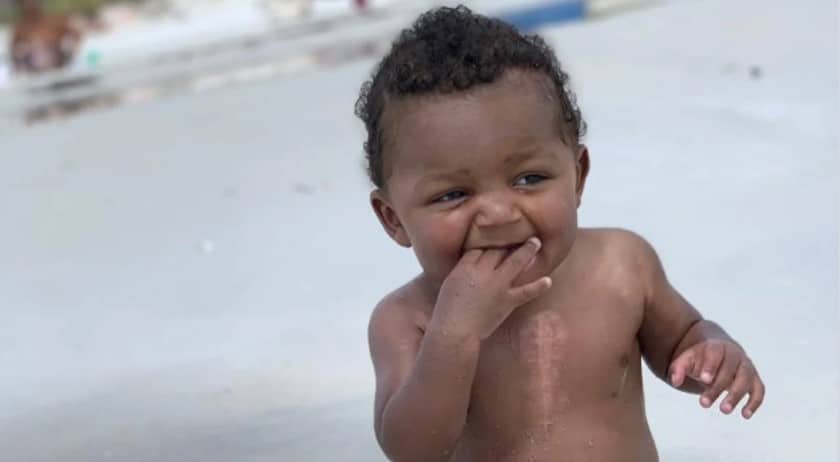
 Photo via Samantha Snell
Samantha Snell drove to her doctor’s office in Uniontown, Ohio, for a routine ultrasound. The mother of three was 23 weeks along and eager to get a glimpse of her new baby boy. “Getting an ultrasound is fun and cute,” Snell, who at the time was working as a phlebotomist shares. “But this was a totally different experience.” In the exam room, the technician got quiet and went to fetch a doctor. Something was going on with the baby’s heart, the doctor said.
He left the room and returned with five colleagues. Snell started to panic. The doctors ordered additional tests.
RELATED: Is Your Baby’s Heart Healthy?
Results revealed her baby had hypoplastic left heart syndrome, a congenital heart defect where structures on the left side of the heart don’t properly develop, impacting blood flow in the heart. Snell had never heard of HLHS. She cried for days.
“I was a wreck,” she says.
In the following weeks, she learned about the multiple surgeries he’d need from birth. Doctors asked if she wanted to end the pregnancy.
“That’s when I realized this was pretty serious,” she adds. “I told them terminating wasn’t an option.”
Snell was anxious but tried to keep herself in good spirits.
“It would cross my mind every once in a while that everything wasn’t going as planned,” she shares. “But if you focus on that, you’ll be miserable. I focused on being as educated as I could be so when he was born I knew what was coming.”
At 39 weeks, doctors induced her. Baby Amir was born in an operating room packed with a dozen doctors. Snell caught a glimpse of his face before doctors connected him to an incubator, heart monitors and two intravenous lines to deliver medications.
Amir was transferred to a children’s hospital. Snell was devastated she couldn’t ride with him in the ambulance because of COVID-19 pandemic rules. She followed in her car, crying the whole way. Two days later, he was transferred again.
Amir’s first surgery, at 5 days old, was the riskiest. During the eight-hour procedure, doctors inserted a shunt to open an artery and increase blood flow in his heart. “It was 50% he’d make it, and 50% he wouldn’t,” Snell says.
The surgery was a success, but there was a complication. The baby’s oxygen levels plummeted, and his left lung seized up. Doctors had to open it. After surgery, he was on a ventilator as he recovered.
“It was trying times,” Snell’s mother, Karla Mansfield notes. “After surgery, Samantha says, ‘We can finally breathe.’ It was a very long day.”
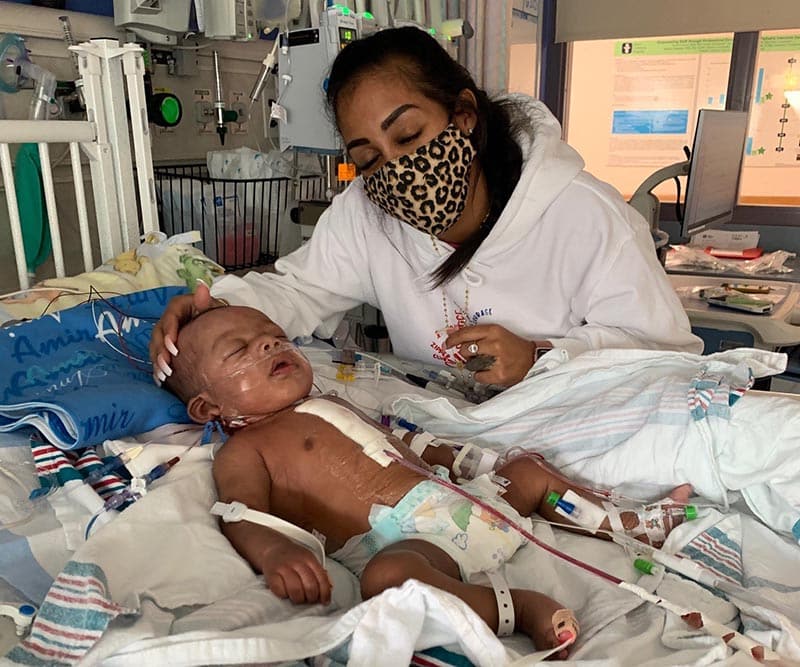 Photo via Samantha Snell
Amir came home a month later on eight medications and round-the-clock oxygen. At four months, he had surgery No. 2.
When doctors placed a catheter in his heart, it stopped twice. The procedure to redirect blood flow from his upper body to his lungs ultimately went well. A week later, doctors inserted a stent to keep Amir’s arteries open.
Amir had another hiccup – he got COVID-19, likely from his siblings who were back in school in person. Luckily, he only had a fever for 24 hours.
At just 1 year old, Amir has had what seems like a lifetime of issues. He’ll have the stent until he outgrows it, likely in his teens or early 20s. His oxygen levels, which are consistently low, also have to be monitored. But, after a delay in crawling, he’s currently walking around like other kids his age.
“He had a late start, but he’s all the way caught up,” Snell shares. “He’s exceeding all expectations.”
In the next few years, Amir will need another surgery. Snell knows that many kids with HLHS end up needing a heart transplant.
“Right now he’s doing great,” she says. “But he’s never going to be out of the woods for heart failure.”
One of the hardest parts has been caring for Amir while balancing the needs of her other kids: Serenity, 16; Prosperity, 14; and Leland, 12. Snell’s mother brought the kids to see her while Amir was in the hospital.
Snell has since left her job to open a daycare. It gives her more flexibility for Amir’s doctors’ appointments. She’s active with the American Heart Association and cut the ribbon at the organization’s recent Heart Walk in Akron. Family members dressed in T-shirts printed with “In this family nobody fights alone” and carried Amir during the walk.
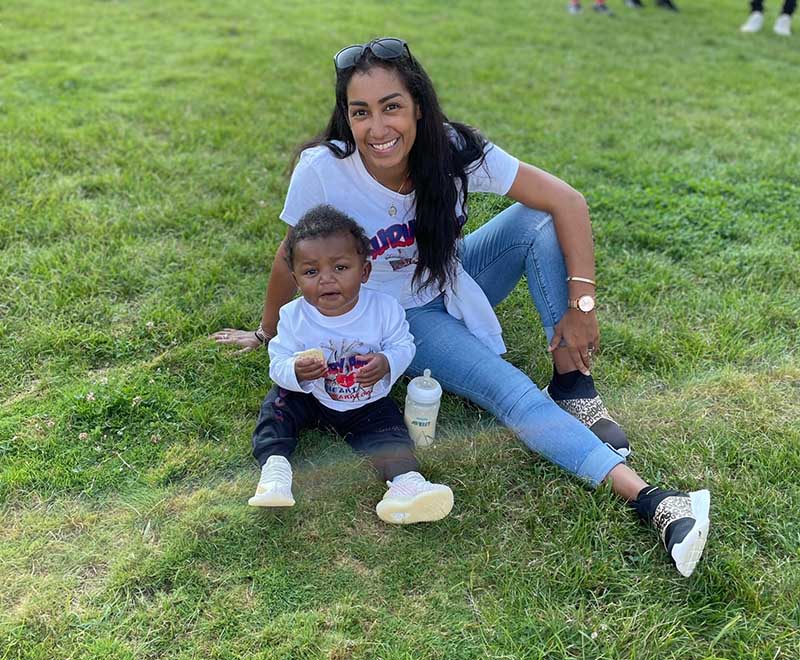 Photo via Samantha Snell
Find support. For parents who have a child with a disability, Snell says it’s critical to find support. She’s found solace in an online group of moms who have children with heart conditions. Having someone to vent and relate to is crucial for parents of children with disabilities.
Be an expert. Snell says it’s also important to be informed about your child’s treatment and care – and to be an advocate. Don’t be afraid to speak up, ask questions, get multiple opinions and do your own research. You should also be seeking out the best doctors available to your child and remember if you are not happy with the level of care they are giving your child, you have the right to switch. However, remember to let the doctor do their job.
Be encouraging. Remember to be encouraging to your child when things get difficult. Take the time to love, appreciate and uplift them as their parent in a way only you know how.
Be an advocate. “Be a part of the plan,” Snell concludes, “because at the end of the day, these babies can’t talk and they don’t know what’s best for them. You’re the one advocating for your child, no one else is going to be able to do that.”


By subscribing, you consent to receive emails from BlackDoctor.com. You may unsubscribe at any time. Privacy Policy & Terms of Service.