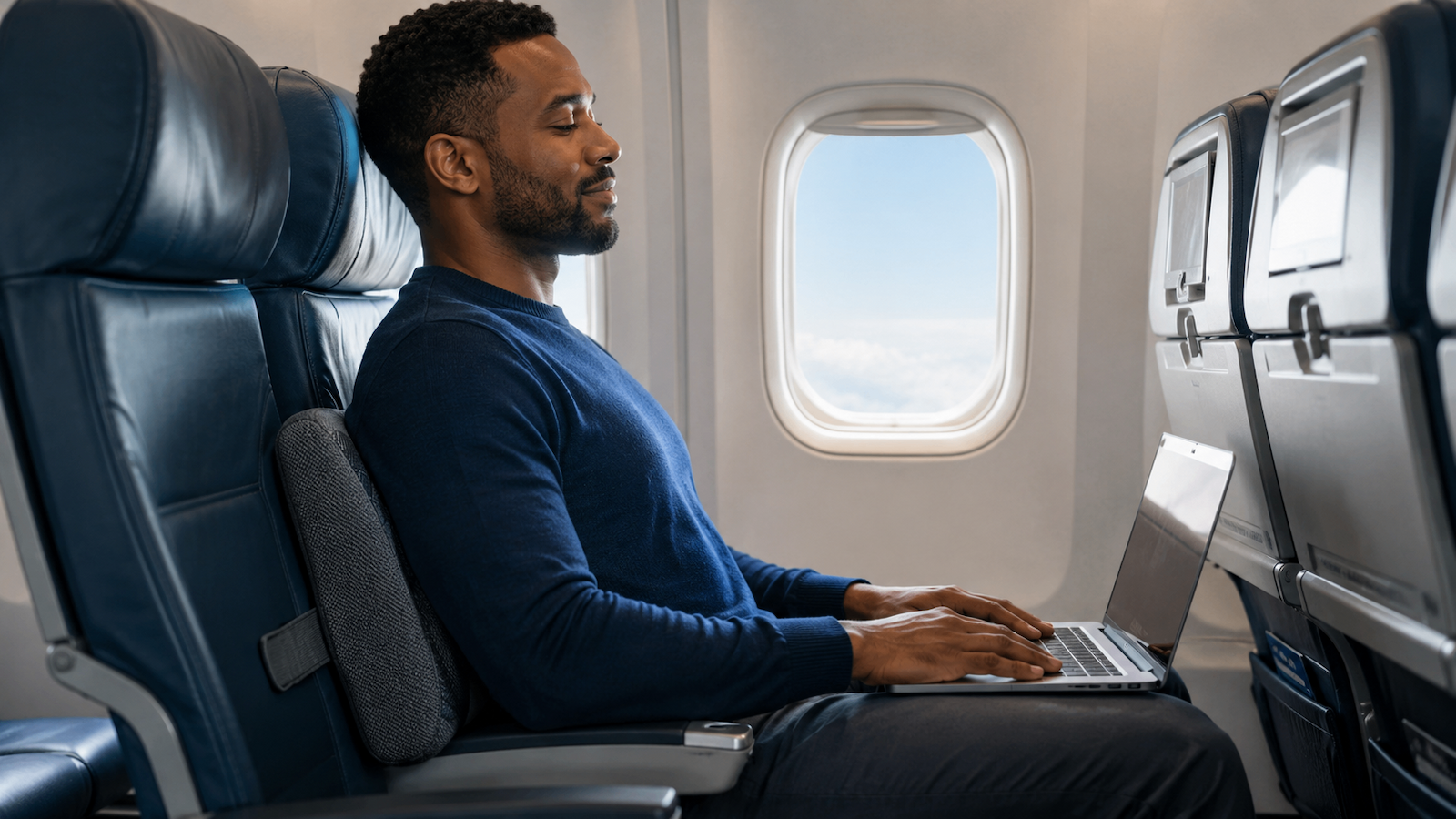
For many travelers, a long flight is little more than an inconvenience. But if you live with chronic back pain, sciatica, degenerative disc disease, arthritis, or recurring muscle tension, several hours in a cramped airplane seat can quickly turn the beginning of your vacation—or business trip—into a painful experience.
Prolonged sitting places sustained pressure on the spine, tightens the hip flexors, reduces circulation, and can increase stiffness in the muscles that support your lower back. Add in limited legroom, lifting heavy luggage, dehydration, and disrupted sleep, and it’s easy to understand why so many people step off a plane feeling worse than when they boarded.
The good news is that a little planning goes a long way. From choosing the right seat to packing a few simple comfort items, there are practical ways to reduce pain before it starts.
Here are seven expert-backed strategies to help make your next long flight much more comfortable.
Your comfort begins long before boarding. If you experience chronic back pain, your seat selection can make one of the biggest differences during a long-haul flight.
Whenever possible, choose an aisle seat. Having direct access to the aisle makes it easier to stand up, stretch, and walk around without waiting for other passengers to move. Regular movement helps reduce stiffness and prevents your muscles from tightening after sitting for extended periods. Experts from Spine Capital and other orthopedic specialists recommend aisle seating specifically because it encourages movement throughout the flight.
If your budget allows, consider seats with extra legroom, such as exit rows or premium economy. Additional space lets you change positions more frequently and reduces pressure on your hips and lower back. When selecting a seat, try to avoid the very back of the aircraft if possible. Rear rows often have limited recline and experience more noticeable turbulence, which can contribute to muscle tension.
RELATED: Back Pain Ruining Your Plans? Try These 6 Remedies
How you sit matters just as much as where you sit. Many travelers unknowingly slump forward as the flight progresses, especially while watching movies or scrolling on their phones. This posture places additional strain on the lower back and neck.
Instead, try to sit all the way back in your seat so your back is fully supported. Maintain the natural curve of your lower spine by placing a small lumbar pillow, rolled-up sweater, or travel towel behind your lower back if needed. This helps distribute pressure more evenly and reduces stress on the spinal discs.
Keep both feet flat on the floor whenever possible, rather than crossing your legs. Crossing your legs can shift your pelvis out of alignment and increase lower back discomfort over time. If you’re shorter and your feet don’t reach the floor comfortably, consider using a portable footrest.
Also, avoid sitting on bulky items such as your wallet or phone. Even a slight imbalance under one hip can affect spinal alignment during several hours of sitting.
Finally, raise your reading material or tablet closer to eye level rather than constantly looking down. Poor neck posture often contributes to upper back tension that can spread throughout the spine.
One of the worst things you can do for chronic back pain is remain completely still. Movement increases circulation, lubricates joints, and prevents muscles from becoming tight. Even small movements performed regularly can significantly reduce stiffness. Aim to stand up and walk the aisle every 30 to 60 minutes whenever it’s safe to do so. If turbulence or the seatbelt sign prevents walking, perform gentle movements from your seat instead. Some easy in-seat exercises include:
These exercises help improve blood flow while reducing muscle tightness. According to the CDC’s Yellow Book, prolonged air travel also increases the risk of blood clots, particularly on flights lasting four hours or longer. The current range is about 1 in 4,656 to 1 in 6,000 for flights over 4 hours. Regular movement benefits both spinal comfort and overall circulation.
RELATED: Could Your Shoes Be Causing Your Back Pain? Here’s What to Look For
Your carry-on should include more than entertainment and snacks. Creating a small pain-management kit allows you to address discomfort before it becomes severe. Consider packing:
The CDC also recommends travelers with chronic medical conditions carry medications and essential health supplies in their carry-on luggage—not checked baggage—to ensure they’re accessible if needed. Having these items within reach can make a significant difference during a six-, eight-, or twelve-hour flight.
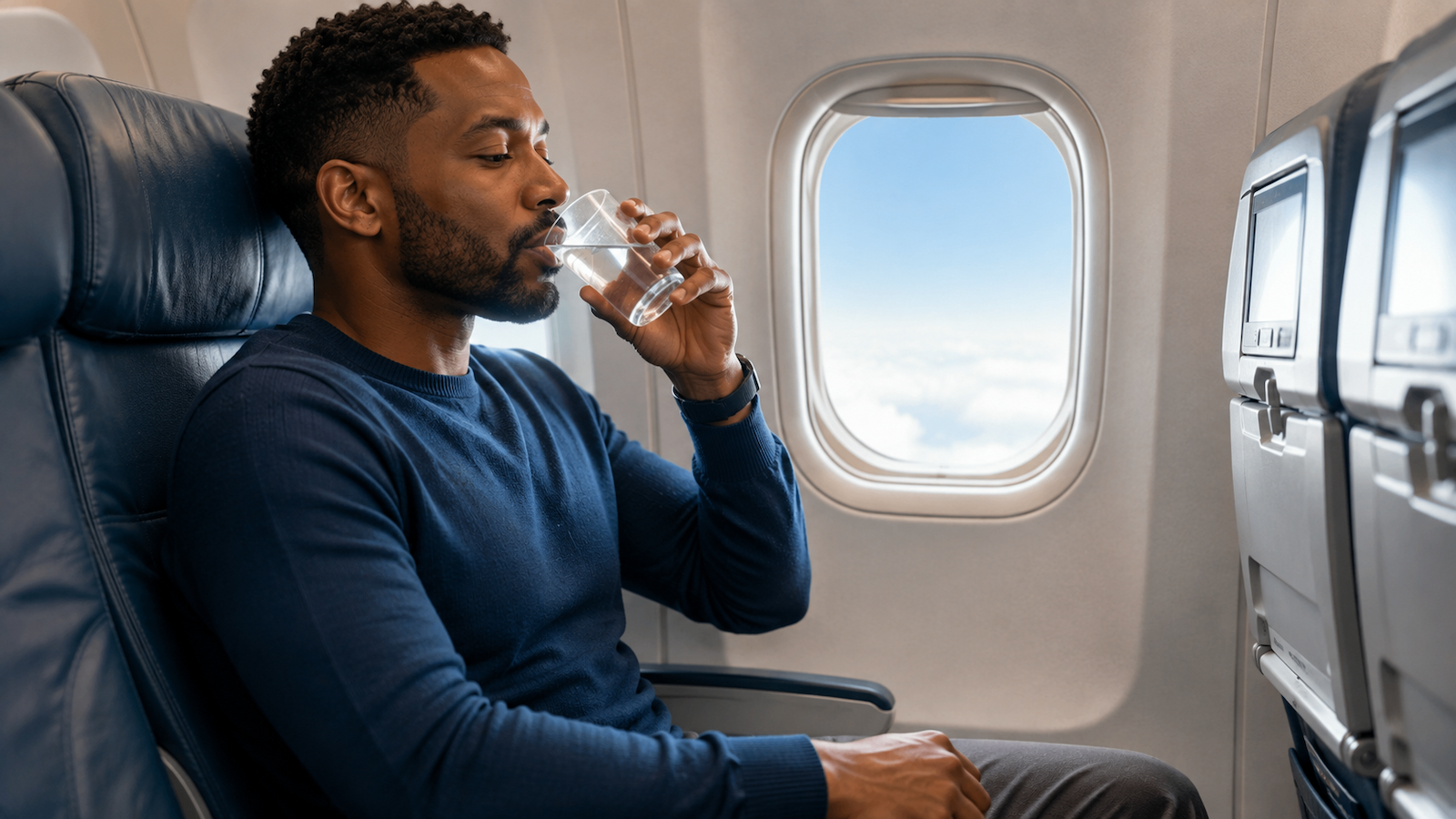
Most people don’t associate hydration with back pain, but dehydration can contribute to muscle tightness and stiffness. Airplane cabins have extremely low humidity levels, causing travelers to lose moisture more quickly than they realize. Drink water consistently throughout the flight instead of waiting until you feel thirsty.
Try to limit alcohol and excessive caffeine, both of which may increase dehydration. While that pre-flight cocktail may seem relaxing, it could contribute to tighter muscles and poorer sleep quality during your journey. Your food choices also matter. Heavy, greasy, or salty meals can increase bloating, making it even more uncomfortable to sit for extended periods.
Instead, choose lighter meals with lean protein, fruits, vegetables, nuts, or yogurt that provide sustained energy without leaving you feeling sluggish.
Sometimes the most painful part of flying isn’t the flight itself—it’s wrestling with your luggage. Improper lifting can trigger a back injury before your trip even begins. When lifting a suitcase into the overhead compartment, avoid twisting your torso while holding the weight. Instead, face the luggage directly, bend at your knees when appropriate, and lift in one controlled motion. If your bag feels too heavy, don’t hesitate to ask a flight attendant or another passenger for assistance.
Rolling luggage with four spinner wheels can also reduce strain compared to carrying heavy shoulder bags. If you’re using a backpack, wear both shoulder straps rather than slinging it over one shoulder. Uneven weight distribution forces one side of your back to work harder, often increasing muscle fatigue. Healthcare experts also recommend lifting luggage in stages whenever possible, rather than making a single awkward overhead movement. (Mather Hospital)
Managing back pain starts before you even leave home. A gentle stretching routine before heading to the airport can loosen tight muscles and improve flexibility before hours of sitting. Focus on stretching your:
Once you arrive at your destination, resist the temptation to collapse into bed immediately. Instead, spend 10 to 20 minutes walking, performing gentle mobility exercises, or stretching again. Light movement helps restore circulation and reduces the stiffness that often develops during prolonged sitting.
While you may not be able to control the size of your airplane seat or the length of your flight, you can control how you prepare for it. Choosing the right seat, maintaining good posture, moving frequently, staying hydrated, and packing a few supportive essentials can dramatically reduce discomfort before it builds.
If your back pain is severe, worsening, or accompanied by numbness, weakness, or loss of bladder or bowel control, speak with your healthcare provider before traveling and seek immediate medical care if these symptoms develop. With thoughtful planning and a few simple habits, you can spend less time focusing on your back—and more time enjoying your destination.


By subscribing, you consent to receive emails from BlackDoctor.com. You may unsubscribe at any time. Privacy Policy & Terms of Service.