
African-American mothers breastfeed at lower rates than other groups of women for a myriad of reasons, and August, being Breastfeeding Awareness Month, is a good time to call attention to the health benefits for both mom and baby.
Maria Wright, MD, pediatrician with Kaiser Permanente in South Sacramento, says one big barrier is negative myths about breastfeeding that have been passed down for generations. Some of these myths include beliefs that the practice will affect the size and shape of your breasts; it is painful; or doing it will affect the bond between the baby and the father.
“There needs to be more positivity and support for our new moms,” she said.
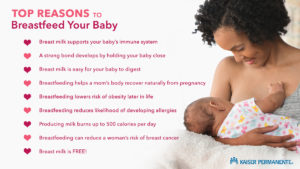
The benefits of breastfeeding begin as soon as moms start. Even immediately after birth, breastfeeding releases hormones that can help the uterus return to its pre-pregnancy size and reduce uterine bleeding following birth. There are also long-term benefits:
1. A thirty-year study from Kaiser Permanente showed that women who breastfed for
six months or more across all births had a 47% reduction in their risk of developing type 2 diabetes compared to those who did not breastfeed at all.
2. Women who breastfed over a cumulative period of 15 months or longer had a 53% lower risk for developing multiple sclerosis than women who had not breast-fed, according to a Kaiser Permanente Southern California study.
3. Overall, breastfeeding has been found to reduce a mother’s risk of hypertension, type 2 diabetes, and ovarian and breast cancer.
4. Breastfeeding has many health benefits for babies because it reduces the risks of asthma, obesity, type 2 diabetes, ear and respiratory infections, and sudden infant death syndrome (SIDS).
Breastfeeding is important, given the protective effects of breastfeeding against type 2 diabetes. African Americans are almost twice as likely to be diagnosed with diabetes as non-Hispanic whites, according to the Office of Minority Health.
Moreover, breastfeeding leads to metabolic changes that could reduce risks of
hypertension. African American women are disproportionately affected by hypertension, and yet breastfeeding continues to lag behind this group of women compared to the general population.
“Breastfeeding helps women lose weight, which helps reduce the risk of hypertension and diabetes,” Dr. Wright added.
To increase the rate of breastfeeding among black infants, interventions are needed to address barriers experienced disproportionately by black mothers, including earlier return to work, inadequate receipt of breastfeeding information from providers, and lack of access to professional breastfeeding support. Enhanced understanding of these barriers could improve the effectiveness of interventions, according to the Centers for Disease Control and Prevention.
There are certain benefits to giving baby nothing but breast milk. One benefit is the cost – breast milk is free. Increasingly, Dr. Wright said formula is an out-of-pocket expense.
Dr. Wright said many new moms turn to formula because they need to return to work. She offered a
few tips on how to keep up with breastfeeding while working.
Some women might assume their workplace won’t make accommodations for pumping moms, but Dr. Wright points out that by federal law, employers are required to support breastfeeding mothers to express breast milk for 1 year after each child’s birth, by providing mothers with reasonable break time and private, non-bathroom space to express their breast milk.
Also, Dr. Wright recommends that women pump breast milk and store in the freezer – it can last several months – so they have a back-up supply if necessary.


By subscribing, you consent to receive emails from BlackDoctor.com. You may unsubscribe at any time. Privacy Policy & Terms of Service.