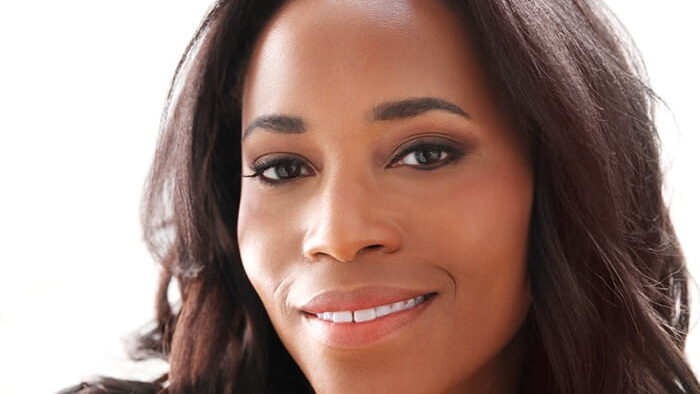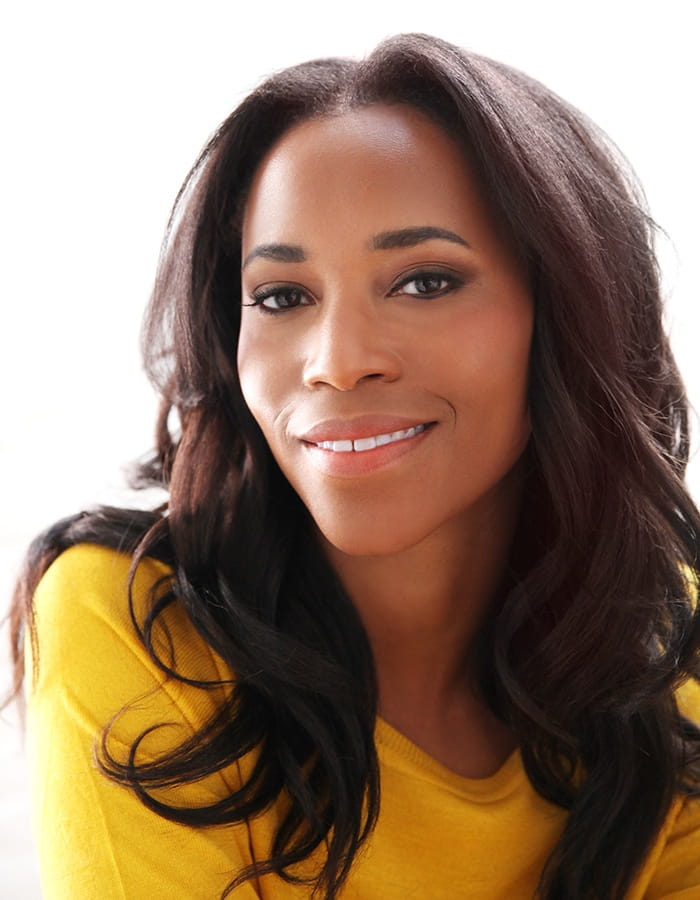
Grammy and Tony Award nominee and licensed marriage and family therapist Valisia LeKae was just 34 when she was diagnosed with ovarian cancer.
At the time, she didn’t have access to biomarker testing and rarely saw herself—or other young Black women—represented in ovarian cancer educational resources. Today, she’s determined to change that by helping ensure more young Black women have access to the information, representation and care they deserve.
LeKae remembers the moment she received the life-changing news vividly.
“At that time, I was in the middle of a hit Broadway show. I was in Motown: The Musical, starring as Diana Ross, and I have always been regular about my gynecological routine checkups,” she tells BlackDoctor.
Around that time, LeKae, who was very active, suffered a fall and needed to have an endometrioma removed because it had tripled in size over the course of a year.
However, the pathology report came back with something unexpected: clear cell carcinoma, a type of ovarian cancer.
“What I remember most is really just being shocked because I was very young, and at the time, there were no faces that looked like me in any of the resources—websites, pamphlets, none of it,” LeKae adds.
The diagnosis lit a fire under her because she knew there were other people who looked like her and were in her age group who were feeling invisible, too.
“That really led to me becoming an advocate, to use my voice to help women understand the disease, as well as to empower them and give them a roadmap to how you face something that’s so challenging, such as ovarian cancer,” she shares.
LeKae’s diagnosis was also eye-opening when it came to the inclusivity she wanted to see in doctors, research and clinical trials.
“Ovarian cancer doesn’t have a type. It doesn’t care if you’re rich, you’re poor, you’re Black or white, but people want to know their stories are being shared. People want to know that they’re being seen, validated, [and] heard in those experiences. And I just never wanted anyone to feel invisible. I never wanted anyone to feel underrepresented, particularly young Black women,” LeKae explains.
Black women may face unique challenges when it comes to ovarian cancer, including disparities in diagnosis, treatment, and outcomes. According to Janet Hildebrand, PhD, ovarian cancer is diagnosed less frequently among Black women, with about 9.4 cases per 100,000 Black women. However, Shirley Mei, MD, notes that Black women are 20 percent more likely than white women to be diagnosed at a later stage, when the disease can be more difficult to treat.
These disparities can also affect survival, according to the Resilient Sisterhood Project. Joellen Schildkraut, PhD, MPH, explains that Black women with ovarian cancer tend to have poorer survival outcomes, even after accounting for factors such as stage and treatment. The five-year relative survival rate is about 41 percent for Black women with ovarian cancer, compared with 48 percent for white women. Differences in outcomes may reflect a combination of factors, including delays in diagnosis, access to and quality of care, and potential differences in tumor biology.
To help combat this, LeKae emphasizes the importance of routine checkups, getting yearly gynecological exams and staying up to date with physicals.
She also highlights the importance of being in tune with your body.
“Ovarian cancer symptoms are similar to when you’re menstruating, so it can feel like you’re having menstrual cramps or bloating. But I’m always encouraging women, when those symptoms are lasting a little bit too long, maybe have that conversation with your doctor,” LeKae advises.
Although LeKae didn’t have anyone in her family who had been diagnosed with ovarian cancer, she also stresses the importance of discussing your family history with your relatives.
“I witnessed my mother’s gynecological journey. She never hid anything from me. One of the first things I did after getting out of college was get a routine gynecological exam, and then it just became a staple for me,” she says.“And that was something that actually saved my life. Years ago, before I was diagnosed with ovarian cancer, I had a small ovarian cyst. It was very tiny, and my doctor and I talked about that constantly, making sure that I had pelvic ultrasounds, making sure that I was monitoring that.”
When the cyst eventually tripled in size, and it was time to have it removed, LeKae says that decision came after she had been diligent about keeping up with her care and having ongoing conversations with her doctor.
“I really want to encourage women that you have the power to utilize your voice in the health care space to talk to your doctor. You are the expert in your life. And together with your doctor’s expertise, you can get the care that you need,” LeKae notes.
For LeKae, knowledge has truly been power.
“When I was diagnosed, I wanted to know everything. I wanted to know what type of treatments I could have, what does this disease mean for me, what is my survival rate, all of those things,” she says.
“And I know that receiving an ovarian cancer diagnosis can be challenging, can be fearful, but nothing tempers anxiety like action. And sometimes that action is just empowering yourself with knowledge and care, so that you can really feel comfortable having the conversation with your doctor and ultimately really having a personalized treatment plan that’s for you. That is more centered around your care and who you are,” LeKae adds.
She wants people to walk out of the doctor’s office feeling validated, seen and heard. For her, having knowledge and a doctor who collaborated with her helped her feel energized throughout her journey.
That was the case throughout her diagnosis, while receiving care and even after treatment. For LeKae, making sure people feel heard remains incredibly important.
LeKae also highlights the importance of continuing to prioritize your health after you’re officially declared cancer-free.
“I still get checked often, 10-plus years later, just to monitor it. And so I think it’s important to recalibrate and have a relationship with your doctor—one that you feel trusts you, one that you feel respected, and one that you feel validated, seen and heard,” she notes.
More than a decade ago, when LeKae was receiving treatment, biomarker testing was not an option. Today, she is helping others understand the important role it can play in their cancer journey.
She is partnering with AbbVie’s Faces of Ovarian Cancer campaign to elevate the experiences of Black women living with ovarian cancer and encourage people to ask about biomarker testing.
“Biomarker testing is really a tool that helps you have a personalized treatment plan,” LeKae explains. “Every cancer is different. Just because one person had a regular standard treatment plan doesn’t mean your treatment plan is going to be like that.”
“And so having biomarker testing really is a tool that allows women to have the conversation with their doctors, and it also helps them understand their disease,” LeKae notes.
At the end of the day, you want to know that the treatment being formulated for you is being formulated for you and your body. It’s not a one-size-fits-all approach, LeKae explains.
For her, understanding her disease was very important. She advises having open and honest conversations with your doctor and asking questions such as:
RELATED: The Ovarian Cancer Appointment Checklist: Questions to Ask Before You Leave
As a marriage and family therapist, LeKae also highlights how cancer has shaped the way she thinks about emotional and mental health.
“If you’re coming into this journey with anxiety and depression, those symptoms are exacerbated when you get diagnosed with ovarian cancer. And so the mental health and well-being of a real ovarian cancer patient is one pillar. The person is equally important,” she explains.
LeKae didn’t seek help until later in her journey. But when she did, her doctor immediately recognized that the heaviness of everything she was experiencing was weighing on her. She offered LeKae a card and said, “Here, here’s someone to talk to.”
“Sometimes it’s about having the conversation and getting it all out. Sometimes we sit with those emotions inside of our bodies, and that can feel very uncomfortable for us, particularly when we’re already having treatment,” LeKae shares.
She encourages people to start with a conversation at home with their family because it’s not just the patient who is experiencing the diagnosis. The entire family is affected.
“You are the person who is getting the personalized treatment, but your family members are scared as well,” she says.
“I think having those conversations really allows us to be present in the moment, be activated in the moment, and find ways to help each person be supportive. And I think that is really important—having all of those tools in addition to having a doctor who really supports you, educates you, and values you in the journey,” LeKae adds.
Ovarian cancer is not as visible as other diseases, even though it is one of the deadliest gynecological diseases. That’s one reason being part of the Faces of Ovarian Cancer campaign was so important to LeKae.
The campaign has given her another platform to empower and educate women, particularly by advocating for and promoting biomarker testing.
“I’m really excited, as a Black woman, as a healthy young Black woman, as a woman who’s been in remission for 13 years, to get out there and talk more about this,” LeKae says. “But more than anything, I want to be able to support young women of color. I want to be able to support all women in this journey because I know it’s a difficult thing.”
Today, LeKae is in what she describes as one of the greatest seasons of her life.
She feels like she has an opportunity to use her platform and her voice. Three years ago, she went back to school to earn her master’s degree and become a licensed marriage and family therapist. She is also an active auditionee and continues to perform in theater and concerts.
“I feel like I have a real full life now. Although there are many professions, I do believe that there is one purpose, and that is to use my voice as an instrument of love and healing,” she shares. “And it really makes me excited to be able to get to do that because I’m still here. I still get to be active in this journey. I still get to advocate for young women of color. I still get to educate people about ovarian cancer, and I’m going to continue to fight this in a way that makes it even more visible.”
For LeKae, the job is never finished.
“As much as I get to evolve into doing different things every year, my life becomes greater because it gives me an opportunity to live and to soar. And I feel very fortunate to get the opportunity to continue to do that. I’m really in a good season of my life,” she says.
If readers could take anything away from LeKae’s story, she hopes they understand that ovarian cancer can impact anyone.
“I can’t reiterate enough that ovarian cancer can happen to anyone. You don’t have to be white and in your 50s. You can be 34, you can be an actress, you can be a schoolteacher. It can happen to anyone,” she adds.“And I think it’s really important to really educate yourself around your body. I think it’s really important to continue to have routine health exams. I think it’s important to feel empowered to utilize your voice in those medical spaces with your doctor.”
She also emphasizes the importance of talking with family members about their lived experiences and medical histories.
“I also think, once again, it’s important to have these conversations with your family about your lived history and about your family members’ diagnoses and diseases within the family.”
LeKae also hopes others will see that a diagnosis is not a death sentence.
“I am here. I am a person with lived experience. I am still fighting and educating and advocating and bringing awareness,” she concludes. “And I want people to know that every advocacy, or every level of advocacy, doesn’t have to look so big and doesn’t have to be on such a large scale. Advocacy starts at home. Advocacy starts with that conversation. Advocacy starts within your community.”
LeKae wants people to understand that there are resources available and that taking the first step can be as simple as starting a conversation, learning more about your health and using your voice.
For more information about biomarker testing and downloadable tools, visit biomarkerboost.com.


By subscribing, you consent to receive emails from BlackDoctor.com. You may unsubscribe at any time. Privacy Policy & Terms of Service.
Enter your name and email to receive the download link.