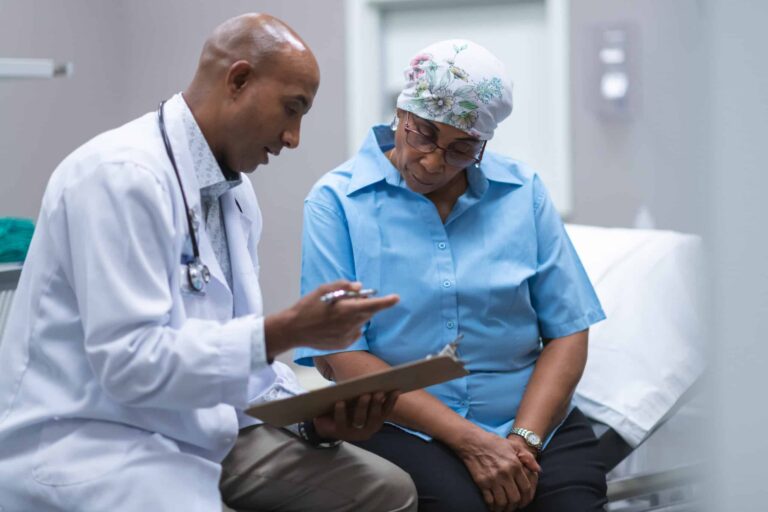
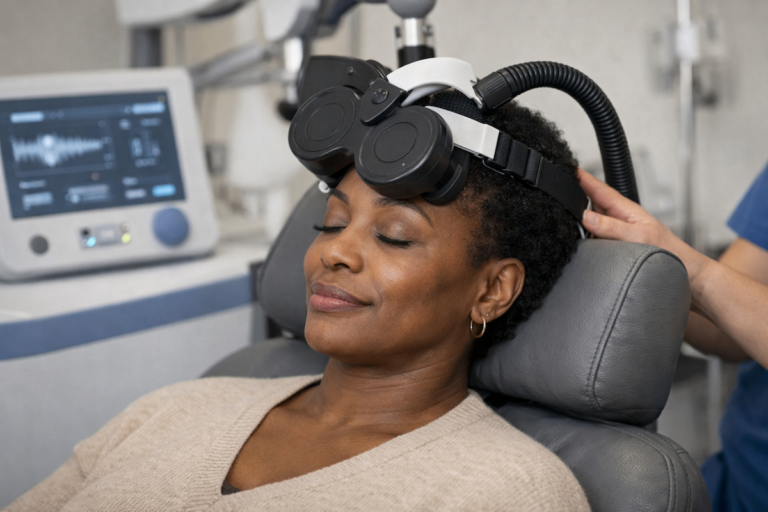
When cancer returns after often emotionally and physically challenging treatment, options can feel very limited. However, this may not be the case for much longer. Researchers at Sarasota Memorial Hospital have recently opened new ovarian cancer clinical trials, looking at promising treatments for women with advanced disease.
For Black women, this is a big opportunity. They often face more aggressive forms of ovarian cancer and higher death rates, yet are far less likely to be included in research studies. Ultimately, this leaves big gaps in knowledge about which treatments have the best outcomes.
In this article, we’ll break down what the Sarasota Memorial trial is about, the challenges Black patients often face when participating in clinical trials, and how we can advocate for greater access and inclusion.
The Sarasota Memorial clinical trial is focused on a medication called Mirevtuximab Soravtansine (often shortened to Mirevtuximab). Healthcare providers are testing various schedules for administering the drug to determine if one is more effective and easier for patients.
The trial is open to women with ovarian, peritoneal (peritoneum), or fallopian tube cancers that have returned after chemotherapy. These types of cancers can be difficult to treat when they return, and many women run out of standard treatment options quickly.
So, why should Black women pay attention to this news? It’s because they’re often left out of potentially life-changing research. Too many cancer studies include mostly white patients, which means healthcare providers can’t accurately determine how well new treatments will work for Black patients. Making sure the Black community is represented in studies like this one could lead to better, more personalized care.
While clinical trials can offer access to cutting-edge care, Black patients are underrepresented in them. That underrepresentation doesn’t happen by accident—there are real barriers that keep us out.
These barriers include:
All of these things add up to a system where Black women face more barriers with fewer opportunities, even though they carry many of the disparities in ovarian cancer.

Here are some ways doctors, researchers, and communities can make clinical trials like Sarasota Memorial’s more accessible for Black women:
When these steps are taken, clinical trials can serve all patients—not just a select few.
This new trial is an opportunity to test a medication that could help women with difficult-to-treat ovarian cancers. However, for it to make a difference, Black women should be included in the research.
Here’s what Sarasota Memorial could do to make the trial more inclusive:
If the trial is successful, it should not only prove that the medication works for recurrent ovarian cancer but that it works for all women, including Black women.
Sarasota Memorial’s ovarian cancer trial is a hopeful step forward for women with difficult-to-treat ovarian cancer. But for this research to make a significant impact, they need to include the people who are often excluded—Black women.
Clinical trials aren’t just about science—they’re about the people. Ensuring that Black women are part of science is the only way to ensure these treatments truly work for us.

By subscribing, you consent to receive emails from BlackDoctor.com. You may unsubscribe at any time. Privacy Policy & Terms of Service.