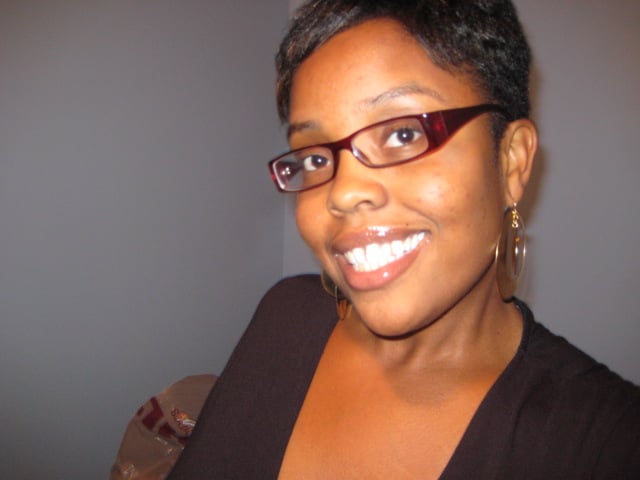
After losing her mother to breast cancer at 14 years old, Lorraine Gibson lived with the fear of the “pink elephant in the room,” unable to speak about how the loss affected her or about breast cancer. Bright Pink, a national nonprofit focused on the prevention and early detection of breast and ovarian cancer, helped Lorraine get her voice back.
“Bright Pink gave me the confidence to have conversations with my family; gave me the confidence to have conversations with my doctors. It gave me the right questions to ask so that I can plan out preventative care and treatment,” Lorraine said.
Lorraine is now an Ambassador for Bright Pink, using her voice to speak out about breast cancer, particularly to other women who are high risk.
She shared her journey with BlackDoctor.org in this Q&A.
BlackDoctor.org: Was the possibility of breast cancer something that was on your radar before your mother’s passing? Was there a history of it in your family?
Lorraine Gibson: Before my mother passed away, breast cancer was somewhat abstract for me. I was about 10 years old when my mother received her initial diagnosis, so breast cancer was still rather vague for me. I remember my mother and my sister telling me, “Mama had to go to the hospital and have surgery to remove the cancer in one of her breast.” I remember being a little girl and hearing that my mother had to get a special treatment to help her cancer go away. A few years later, I began to understand that my mother had a mastectomy, which left a deep scar on her chest; and chemotherapy treatments that resulted in hair and weight loss. Prior to my mother’s diagnosis, as far as I knew, there was no history of breast cancer in our family. Breast cancer was not a topic that we discussed and I believe that it was a bit of a shock to my entire family. I didn’t quite know how to feel but I knew that life was changing. I knew that it was serious. Things became even more serious after the breast cancer came back after my mother had been in remission for nearly 4 years.
BlackDoctor.org: Walk us through life after your mom received her diagnosis.
LG: As I mentioned earlier, I was young when my mother received her initial diagnosis and I remember my family trying to keep life as normal as possible for me. My mother’s biggest concern was making sure that her girls (3 daughters and 1 granddaughter) were okay. Even though her appearance changed due to the mastectomy and the chemotherapy, she eventually went into remission. My family was relieved. My mother was a survivor.
For a while, things went back to normal. My mother gained healthy weight, her hair grew back and she went back to work. Life was good again! Then when I turned 14, things changed. We received news that the cancer came back and this time it was much more aggressive.
Sometimes it is difficult to explain how my mother’s health affected me. My sisters, my niece and I were mama’s girls. So watching her health decline was as if watching my Wonder Woman slowly lose her power. Over the course of the year, my mother became frail and physically weak. Eventually, she was unable to go back to work and the doctors said, “At this point, we want to make her as comfortable as possible.” Therefore, my father, my mother and my sister decided that it was time for mom to come home. We had a hospital bed set up in the living room of our two-bedroom apartment. I was a teenager, just starting my first year in high school, and every day I came home and saw my mother laying in a hospital bed. I held it together as best as I could in school but I was internally broken. I could not speak about it. I did not have the proper words to describe the pain I felt. I wanted life to be the way it used to be. But my mother was not getting better – she was getting worse.


By subscribing, you consent to receive emails from BlackDoctor.com. You may unsubscribe at any time. Privacy Policy & Terms of Service.